
How to restore antique and original single stage paint with Meguiar's #7 Show Car Glaze

Mike Phillips

Administrator
Staff member
Joined
May 21, 2021
Messages
2,599
Reaction score
1,542
Points
113
Location
Stuart, Florida
Website
themikephillipsforum.com
How to restore antique and original single stage paint with Meguiar's #7 Show Car Glaze

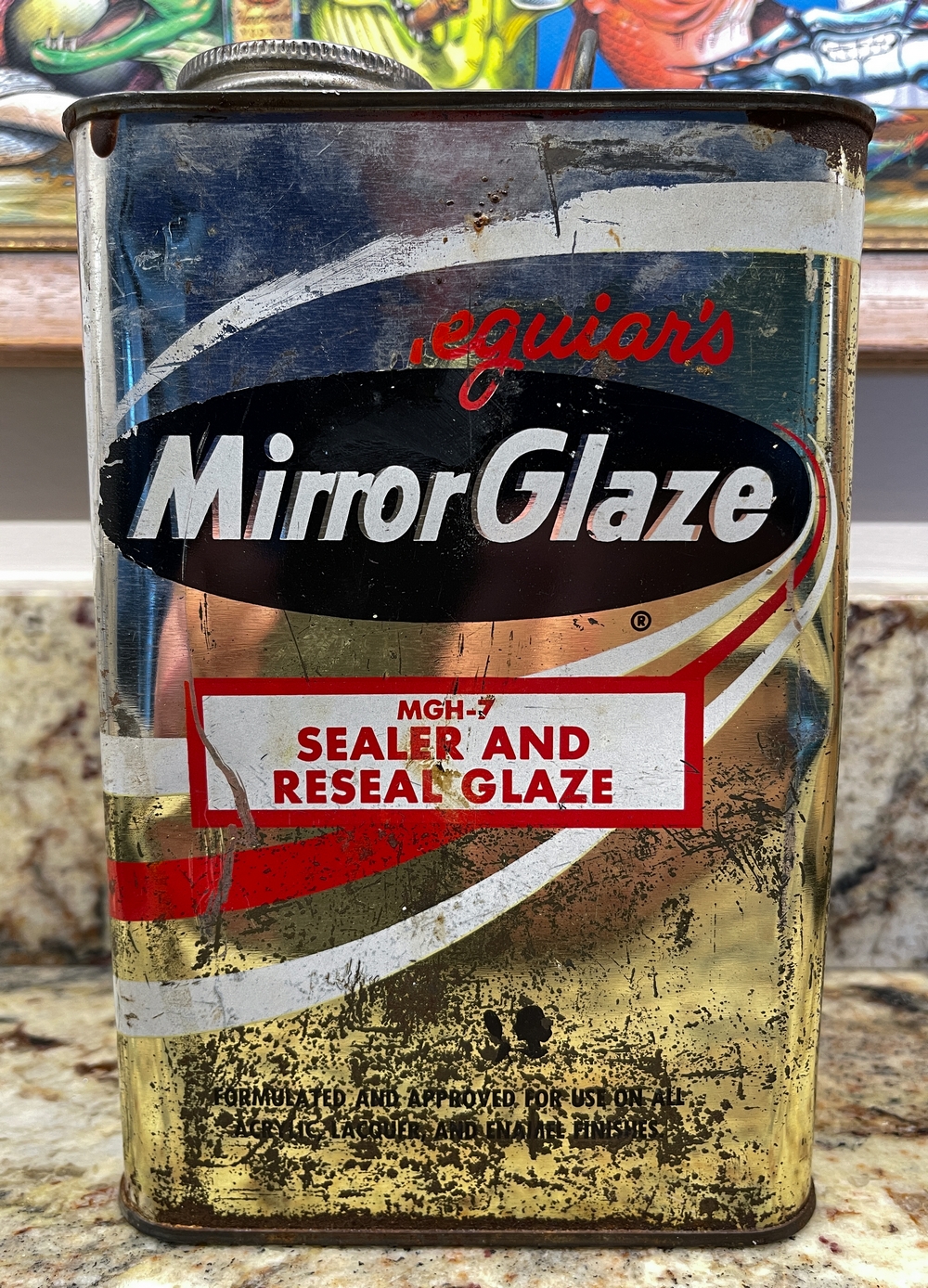
MGH-7 Sealer and Reseal Glaze aka Meguiar's #7 Show Car Glaze

This a very rare half gallon can of #7. Most of these were thrown away after they were empty or have rusted out over time.
full


Helping others restore original paint

I can no longer count how many people I've helped over the decades to restore the original and/or antique single stage paint on their cars and other things.

I always have upcoming project cars, like Barn Finds, with oxidized, single stage paint that it is IMPORTANT to the owner to save the original paint, not re-paint it. And people have a way of finding me to ask questions and get help so this is a dedicated forum group for this topic.

:)
 
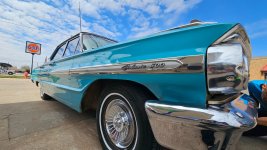
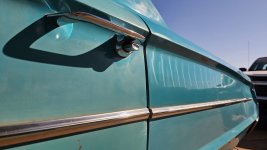
This is our 3rd Restorative job with single stage paint. This was the original paint from 64 or 65 on a Ford Galaxy 500. Unfortunately, i don't have a lot of experience on these vehicles or education. I included the best before picture of the oxidation that i have in my files. i read where someone mentioned an original artical you wrote in the 90's about correcting this paint. I was hoping to find the article but haven't been able to. i don't fully understand the "why" behind hand polishing the surface. What makes hand polishing work better than machine polishing? I understand that less material is removed but isn't there a required amount to remove to make it through and remove the oxidation? My apologies if these questions are amatuer.
 

Attachments

  • 20260328_150120.jpg
    20260328_150120.jpg
    1.4 MB · Views: 1
  • 20260324_103123.jpg
    20260324_103123.jpg
    881.5 KB · Views: 1
This is our 3rd Restorative job with single stage paint. This was the original paint from 64 or 65 on a Ford Galaxy 500. Unfortunately, i don't have a lot of experience on these vehicles or education.

I included the best before picture of the oxidation that i have in my files. i read where someone mentioned an original article you wrote in the 90's about correcting this paint. I was hoping to find the article but haven't been able to.

Here's the link to the article I wrote in 2010

The Secret to Removing Oxidation and Restoring a Show Car Finish to Antique Single Stage Paints


i don't fully understand the "why" behind hand polishing the surface.

Good question. And just to note, you can restore antique and original single stage paint all types of ways including machine polishing.

My original article, the link above, is merely one method for how to do this process.

And here's the key important aspect, for SOME cars, the original or antique single stage paint my be thin and borderline past the point of no return.

So if you want to take the most CAREFUL approach, then rubbing the paint down using the Number #7 Technique is an option.

The idea being to rub the paint down with this product using a heavy or wet application and then letting the oils soak in overnight.

Then you can repeat this process as many times as you see fit OR remove the oily film and machine polish.

I wrote it for the extreme OCD people that their primary goal is preserving the original paint.


What makes hand polishing work better than machine polishing?

I wouldn't say it's BETTER - I would say it's more CAREFUL.

It helps to keep in mind, as a person that has written over 1000 articles on the Internet and published 6 how-to books on this topic, I have to write for a very wide spectrum of people. Some people want speed, some want careful.


I understand that less material is removed but isn't there a required amount to remove to make it through and remove the oxidation?

The answer is yes. For paint that has turned chalky from years and even decades of neglect, IF the goal is to preserve the original paint as much as is possible, then the goal is to remove the chalky layer and get down to a fresh, hard base of paint, otherwise you're not reaching the goal for creating a fresh, shiny finish that's rich in color.


My apologies if these questions are amateur.

They are actually great questions.

I'd recommend reading the entire article and even go through all the pages for my original article. Here's stats

12,143 Words
91 Photos


There are 16 pages in the thread and while some of the pictures from other people have disappeared, there are still some pretty amazing before and after pictures from people that put this technique into practice.


Mike
 
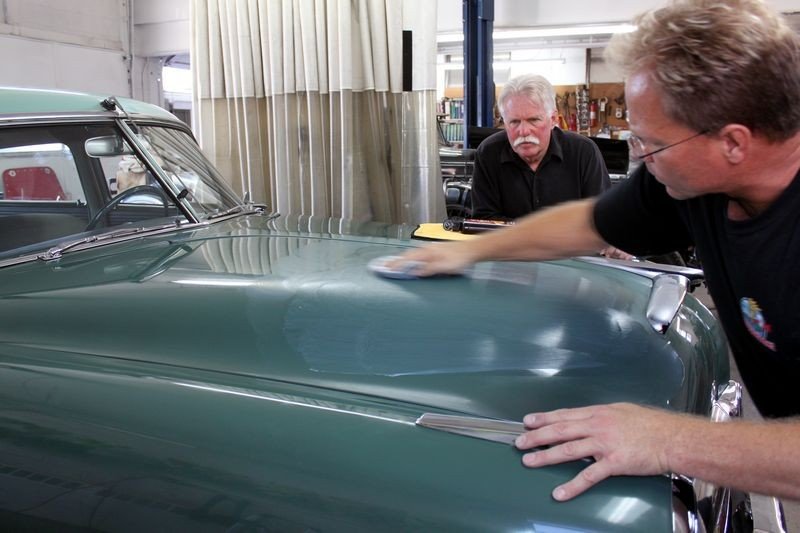
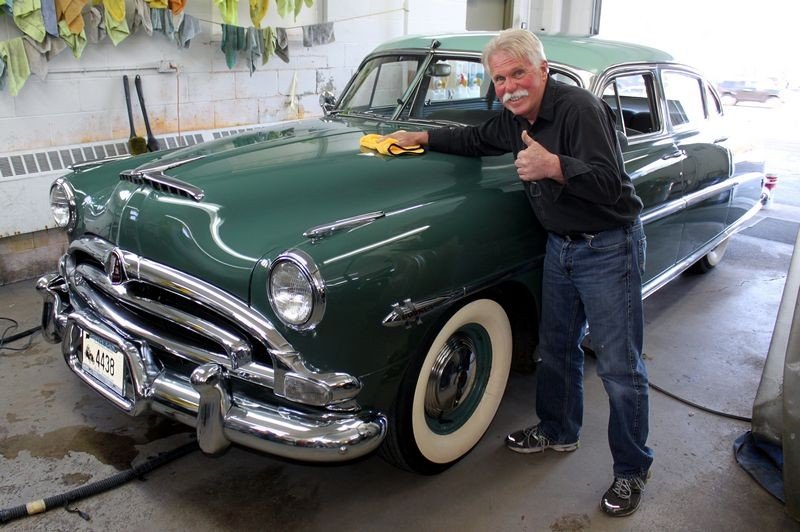
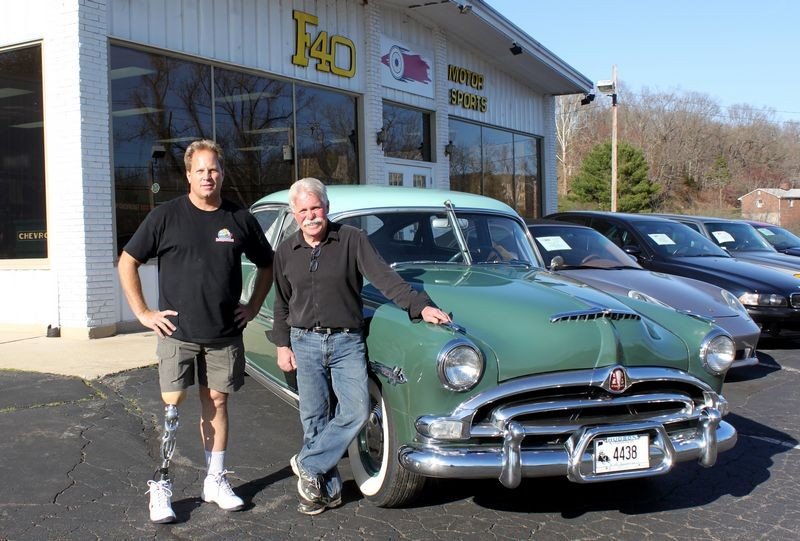
Here's a video I made when I hand-rubbed the original paint on a 1953 Hudson Hornet for Wayne Carini.

In this video, I show where BLACK PRIMER is showing through and because what was most important to Wayne was to preserve the the original paint.

I told him if he let his inhouse detailers buff out the paint, (at that time they only had rotary polishers and crap compound), that the areas were the black primer was showing through would GROW. And they would create new black patches as the original paint was super thin.

Sor for Wayne, it was important to be careful, not fast.


Here's Wayne watching me intently hand rub the original paint

full


Here's Wayne giving me the Thumbs-Up after inspecting the final results.

full


full


I never tell people my way is the only way, I'm just sharing ONE way to do this type of work.

And for the record, there are plenty of old cars with single stage paint that I NEVER hand rubbed, but machine polished from start to finish.

It just depends on the paint, the car and the owner.

At our our most recent class in February, I had a Barn Find 1965 Plymouth Valiant and after teaching the Comet Wash Technique, I used this car to train people on how to use a rotary polisher with a 8" wool pad to cut out the remaining oxidation FAST.

And of course, after that, we switched over to orbital polishers.


Mike
 
Back
Top