
The Most Difficult Paint I Have Ever Corrected

JR107

New member
Joined
Aug 14, 2023
Messages
13
Reaction score
9
Points
3
Location
North Carolina
So I have been building an airplane the last couple of years, and one the the not so fun parts of it is the process of making molds. (Building - or rather modifying an existing one for racing)

The paint used on the plugs that the molds will be pulled from is a modified polyester urethane. Essentially a cross between a gel coat and an old school urethane. All I can say is that it is absolutely humbling how much it sucks to correct in order to achieve a "Class A" finish.

Mike - I may have found the perfect training aid for some of your classes. This is the 6th plug I have made and it doesn't get any easier. The main reason is due to how hard the paint is, every defect has to be fixed as you progress or it just will not be removed by the time you get to the compounding stage.

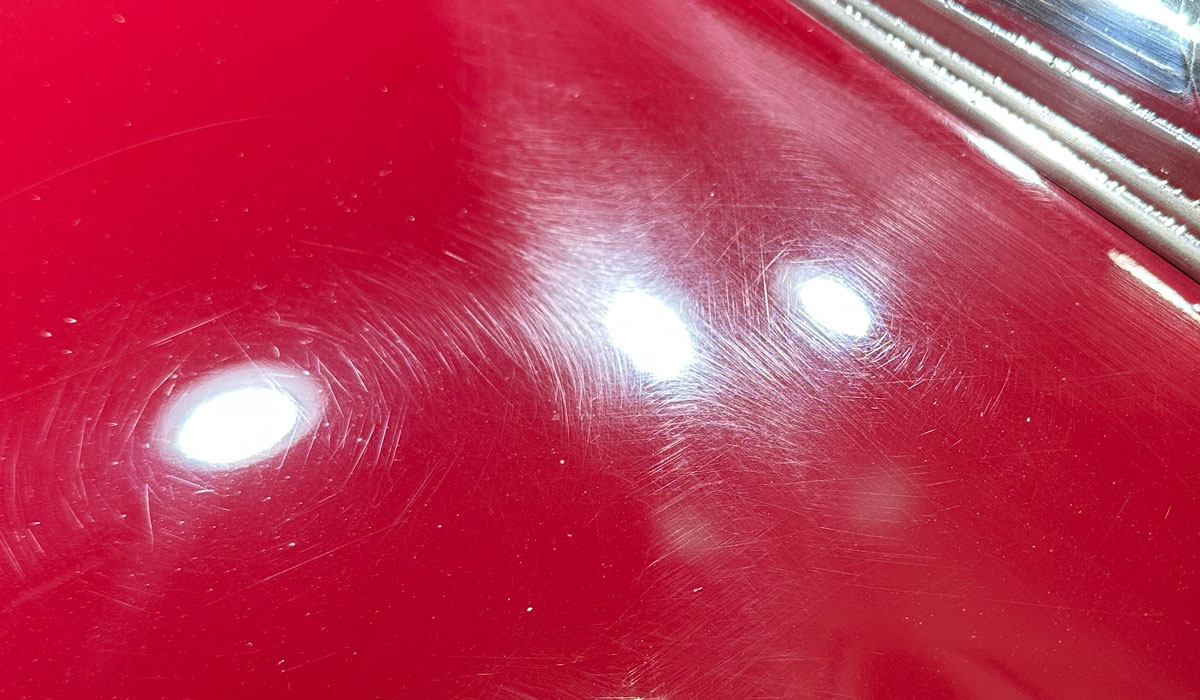
Here are the pics (click for full size): 1st image has been blocked from 80 grit, 120, 220, 320, 400, and then wet sanded 400, 600, 800, 1000, 1200, & 1500. Sanding aid is 10ml ONR in 16oz water.
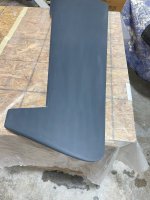
IMG_0806.jpg

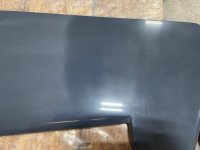
2nd image is one pass with Meguire's M100 on a rotary with wool pad. One pass = L to R, up to down, L to R slow to medium movement at ~ 2500 rpm.
I have found that Menzerna SH Cut 300 works faster but produces significantly more heat so therefore I switched back to M100.
IMG_0811.jpg

Shocking just how many 1500 grit scratches are left. This was mainly to demonstrate just how hard the paint is. I learned by about the 2nd plug that sanding to 2000 was required.

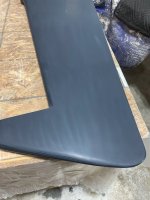
3rd image wet sanded compounded area with 2000 grit cross hatched like the rest of them.
IMG_0822.jpg

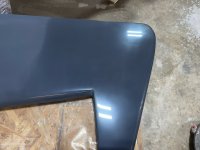
4th image is yet another pass with rotary and M100
IMG_0824.jpg

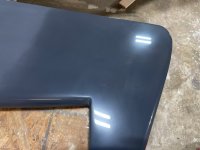
5th image is another pass with rotary and M100. Gyeon Prep was used between each pass and before each picture. Still a few marks remaining after a total of 3 passes or 9 times overlapping.
IMG_0827.jpg

Last image is after a fourth pass with rotary and then a finish pass with Sonax Perfect Finish, Rupes Fine Microfiber on a Flex XCE. On some vehicles you would have some shinny metal after 12 total passes of a rotary 🤣
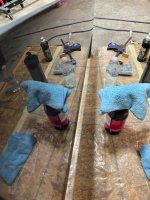
IMG_0844__.jpg

Another strange behavior of this paint is the lack of holograms. The overhead shop lights are 30,000 lumens each and are 25 foot off the ground so plenty bright to be able to see one or two, but even with a Scangrip w/out overhead lights there is not the first hologram.
 
So I have been building an airplane the last couple of years, and one the not so fun parts of it is the process of making molds. (Building - or rather modifying an existing one for racing)

The paint used on the plugs that the molds will be pulled from is a modified polyester urethane. Essentially a cross between a gel coat and an old school urethane. All I can say is that it is absolutely humbling how much it sucks to correct in order to achieve a "Class A" finish.

Is it possible there is a better paint for this type of part making?

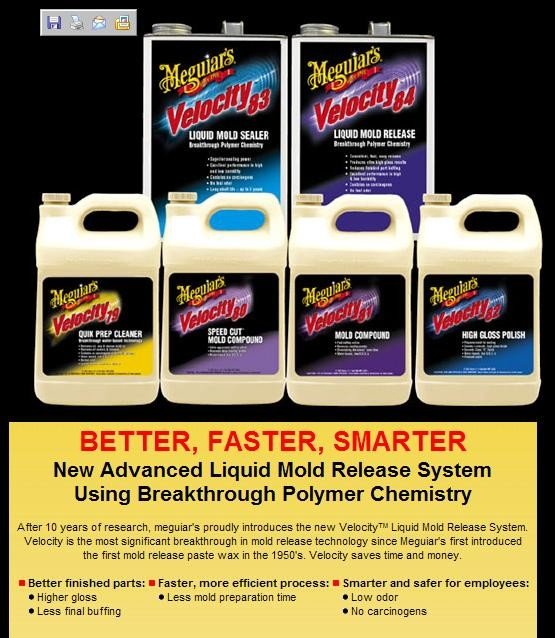
At one point in my life while working for Meguiar's, I was in charge of writing all the label copy, a flow chart and the application directions for the Meguiar's Velocity Mold Release line. As a part of learning how each product worked so I could accurately write about each product, I went to a lot of Fiberglas manufacturing plants to observe their processes. Point being, there must be a better paint for this type of custom mold and part making?


Sad to say, after years of research, Meguiar's killed-off this line.

full


I'm sad that I packed around the original full size flow chart for each product and the process but eventually threw them away. I wish I had them now, this was a fun project to write all of the copy for including all the copy for the front and back labels.


Mike - I may have found the perfect training aid for some of your classes. This is the 6th plug I have made and it doesn't get any easier. The main reason is due to how hard the paint is, every defect has to be fixed as you progress, or it just will not be removed by the time you get to the compounding stage.

The process you describe is also the process for sanding and polishing metal. After each initial sanding step, you must completely refine the depth of the sanding marks with the next step, because the step after this won't refine them.

Same goes for sanding car paint, each follow-up sanding step must fully remove the previous depth of sanding marks because the next step won't do it.

I've had some super hard paints in my classes over the years and of course, I teach the class how to tackle them, but in a perfect world, you want paint to be polishable, that is the average person with access to average tool, pads and products can work on it. Not super experienced, veteran detailer.

Hats off to you for even tackling such a project.

🍻
 
At one point in my life while working for Meguiar's, I was in charge of writing all the label copy, a flow chart and the application directions for the Meguiar's Velocity Mold Release line. As a part of learning how each product worked so I could accurately write about each product, I went to a lot of Fiberglas manufacturing plants to observe their processes. Point being, there must be a better paint for this type of custom mold and part making?


The process you describe is also the process for sanding and polishing metal. After each initial sanding step, you must completely refine the depth of the sanding marks with the next step, because the step after this won't refine them.

There probably is something better but I can imagine the cost associated. I have tried automotive paint on a few small things but curing times are significantly longer. This stuff is pretty darn cool in the sense it is a one-and-done paint. Bonding primer / high build filler / paint / top coat. I sprayed that plug the other day and rolled it out in the sun, was ready to sand in 2 or 3 hours.

It seems Meguiar's only kept one product from that old school line & renamed it. Diamond Cut 2.0 since it mentions "tested in high solids production shops". I might have to try it and experiment some.

As to the sanding: I probably shouldn't be the one painting this plane. Not for the lack of skill, but rather OCD. Part of me just wants to paint it white like the rest of em' to avoid it the amount of wet sanding.
 
It seems Meguiar's only kept one product from that old school line & renamed it. Diamond Cut 2.0 since it mentions "tested in high solids production shops". I might have to try it and experiment some.

The Diamond Cut 2.0 is/was old abrasive technology as compared to product they introduced later on, this would include products like M105, M110, M100.

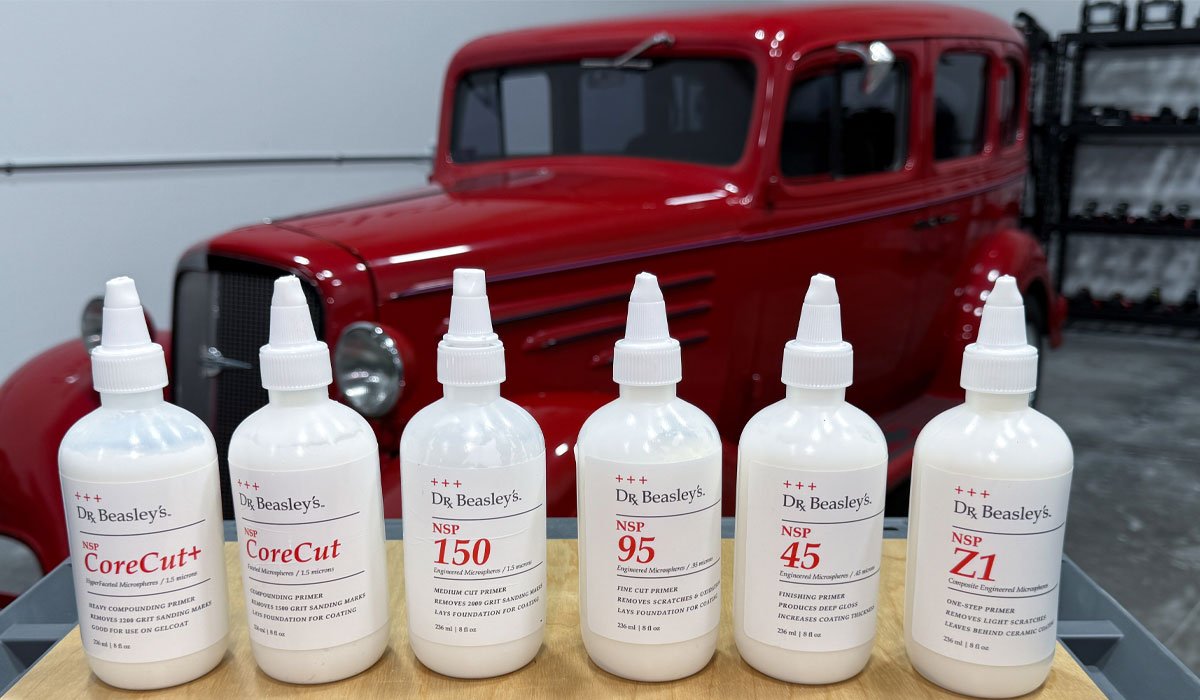
You might like our CoreCut and even CoreCut+ Both of these cut incredibly fast. The CoreCut+ was actually developed to remove DEEP oxidation out of neglected gelcoat boats and bypassing the sanding step. It cuts really fast and most people should never be using the CoreCut+ on factory paint.

I've used CoreCut+ for some custom paint jobs after sanding, so there is an automotive application, a person just needs to know what they are doing.

full


As to the sanding: I probably shouldn't be the one painting this plane. Not for the lack of skill, but rather OCD. Part of me just wants to paint it white like the rest of em' to avoid it the amount of wet sanding.

I notice a lot of detailers, as they get older, they seem to purchase white and light colored metallic cars. :)


Mike
 
You might like our CoreCut and even CoreCut+ Both of these cut incredibly fast. The CoreCut+ was actually developed to remove DEEP oxidation out of neglected gelcoat boats and bypassing the sanding step. It cuts really fast and most people should never be using the CoreCut+ on factory paint.

I've used CoreCut+ for some custom paint jobs after sanding, so there is an automotive application, a person just needs to know what they are doing.
I just ordered a bottle of it! I have 6 molds to polish and 1 remaining plug. Four of the molds are gel coat and two are epoxy for high temp curing under vacuum so i will definitely be putting it to the test.

There is an old thread somewhere discussing abrasives and gelcoat & I dont know if you ever found the answer; but the reason lighter abrasives turn shiny gel coat dull is due to the nature of gel coat itself. Vinyl ester or polyester resin / gelcoat is not naturally shiny straight out of a spray gun or brush or whatever. Manufacturers add a gloss additive that is a styrene soluble wax. The wax is some copolymer containing other things that essentially fill the porous structure of the resin. So when you take, for instance, a swirl remover w/ an orbital polisher to otherwise "glossy" gel coat you are mainly abrading out the very thing making it glossy. Hence the need for heavy or large abrasives and fast rotary polishers to not only remove the stuff from the pores but also correct the paint. It is also the reason on oxidized gel coat that you can see some minor results with just about any polish. The chalkiness is typically the leftover binders & pigments which doesn't take much to remove from the surface.

You can read about some of the additives from an old patent # 2,595,911. Granted it's from 1952, but that is when fiberglass and resin technology first started taking off. For reference, Toray (the company) started making production carbon fiber filament in 1971.
 
I just ordered a bottle of it! I have 6 molds to polish and 1 remaining plug. Four of the molds are gel coat and two are epoxy for high temp curing under vacuum so i will definitely be putting it to the test.

There is an old thread somewhere discussing abrasives and gelcoat & I dont know if you ever found the answer; but the reason lighter abrasives turn shiny gel coat dull is due to the nature of gel coat itself. Vinyl ester or polyester resin / gelcoat is not naturally shiny straight out of a spray gun or brush or whatever. Manufacturers add a gloss additive that is a styrene soluble wax. The wax is some copolymer containing other things that essentially fill the porous structure of the resin. So when you take, for instance, a swirl remover w/ an orbital polisher to otherwise "glossy" gel coat you are mainly abrading out the very thing making it glossy. Hence the need for heavy or large abrasives and fast rotary polishers to not only remove the stuff from the pores but also correct the paint. It is also the reason on oxidized gel coat that you can see some minor results with just about any polish. The chalkiness is typically the leftover binders & pigments which doesn't take much to remove from the surface.

You can read about some of the additives from an old patent # 2,595,911. Granted it's from 1952, but that is when fiberglass and resin technology first started taking off. For reference, Toray (the company) started making production carbon fiber filament in 1971.
I thought I knew how to buff paint untill I did my first Gelcoat Boat.
The typical tips and tricks I’ve got for cars, trucks, show cars etc went straight out the window. Straight to the wool on a rotary with heavy compound, for hours and hours.
Made a call to @Mike Phillips while contemplating my life choices / the reason I even exist and got it straightened out. Haha.
Whole different breed. Some day soon I will paint a show car or truck with gel coat just for the sake of correcting and perfecting it. In fact I think Mikes son or son in law did it, which is where I got the idea actually. A black Chevy if I remember correctly….
 
I thought I knew how to buff paint untill I did my first Gelcoat Boat.
The typical tips and tricks I’ve got for cars, trucks, show cars etc went straight out the window. Straight to the wool on a rotary with heavy compound, for hours and hours.
Made a call to @Mike Phillips while contemplating my life choices / the reason I even exist and got it straightened out. Haha.
Whole different breed. Some day soon I will paint a show car or truck with gel coat just for the sake of correcting and perfecting it. In fact I think Mikes son or son in law did it, which is where I got the idea actually. A black Chevy if I remember correctly….
They really are different - even spraying them. I use a GX4 HVLP from a company called The Gelcoater which has a tip size of 4.8mm. High build primer spray guns usually have tip size of 2.0-2.4mm. When spraying if you think its about to run, you still havent sprayed enough LOL.

If you really want to question the meaning of life: I'll send you a 2'x2' panel painted in the primer I showed in the first post. 50 mils of paint to play with.
 
So I have been building an airplane the last couple of years
Sorry to post rather late but I've been away from the forum for a bit--it's hard to tell the scale from your pictures, is that a full-scale airplane or a model?
 
I thought I knew how to buff paint until I did my first Gelcoat Boat. The typical tips and tricks I’ve got for cars, trucks, show cars etc. went straight out the window. Straight to the wool on a rotary with heavy compound, for hours and hours.

Made a call to @Mike Phillips while contemplating my life choices / the reason I even exist and got it straightened out. Ha ha.

Whole different breed.

Agree - when salvaging deeply oxidized gelcoat boats or after sanding to remove deep oxidation - the rotary polisher with a full size, 8" 4-ply, twisted wool cutting pad is the way to get the job done in a time-efficient manner.


Some day soon I will paint a show car or truck with gel coat just for the sake of correcting and perfecting it.

In fact I think Mikes son or son in law did it, which is where I got the idea actually. A black Chevy if I remember correctly….

You are correct. My son-in-law, who is also a custom boat builder, painted this 1992 Chevy using


Here's a short video,


And here's a thread on this truck, including the exact paint he used to spray his truck.

Can you use a DA polisher to remove sanding scratches? - LIVE Online Detailing Class - Wednesday July 17th 2024

full


And for what it's worth, the truck still looks amazing!


Mike
 
Back
Top