

Water spots on antique car paint

tommyholt

New member
Joined
Jun 19, 2026
Messages
2
Reaction score
2
Points
3
Location
Nashville Tennessee
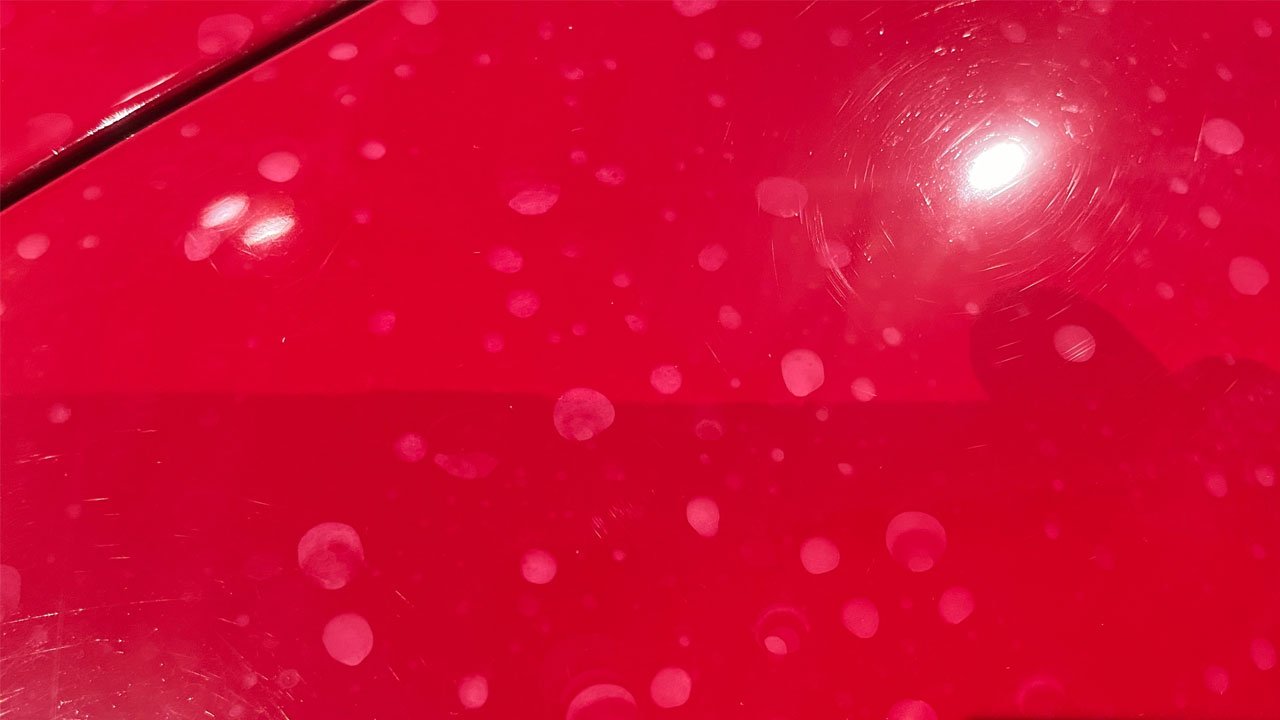
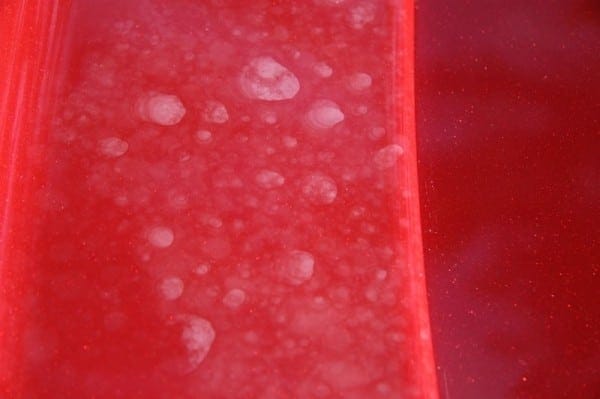
I have some particular concerns about a car with water spots. The car is a 1958 Tatra with original paint. It was left in the rain at car show. Someone told the owner that the paint was “very thin” so they left them all alone and there has not been any attempt to remove them chemically or mechanically.

In other to have as much information as possible I went ahead and measured the paint depth and the burgundy panels range from 12-21 mils whereas the white top ranges from about 9-12 mils.

I’m curious why the white paint is so much thinner. Is this about the process they used? Did someone polish the white top more aggressively than the other panels for some reason?

But my main question is what would be a relatively safe way to reduce or remove these water spots from the burgundy panels? The car is a Soviet Czech vehicle and it’s the first one I’ve detailed so I’m wondering if they used more/less/different primers or if there is anything else to consider before proceeding, or not.

Original resized
full


Cropped and resized - 1280x720
full


Thank you!
 
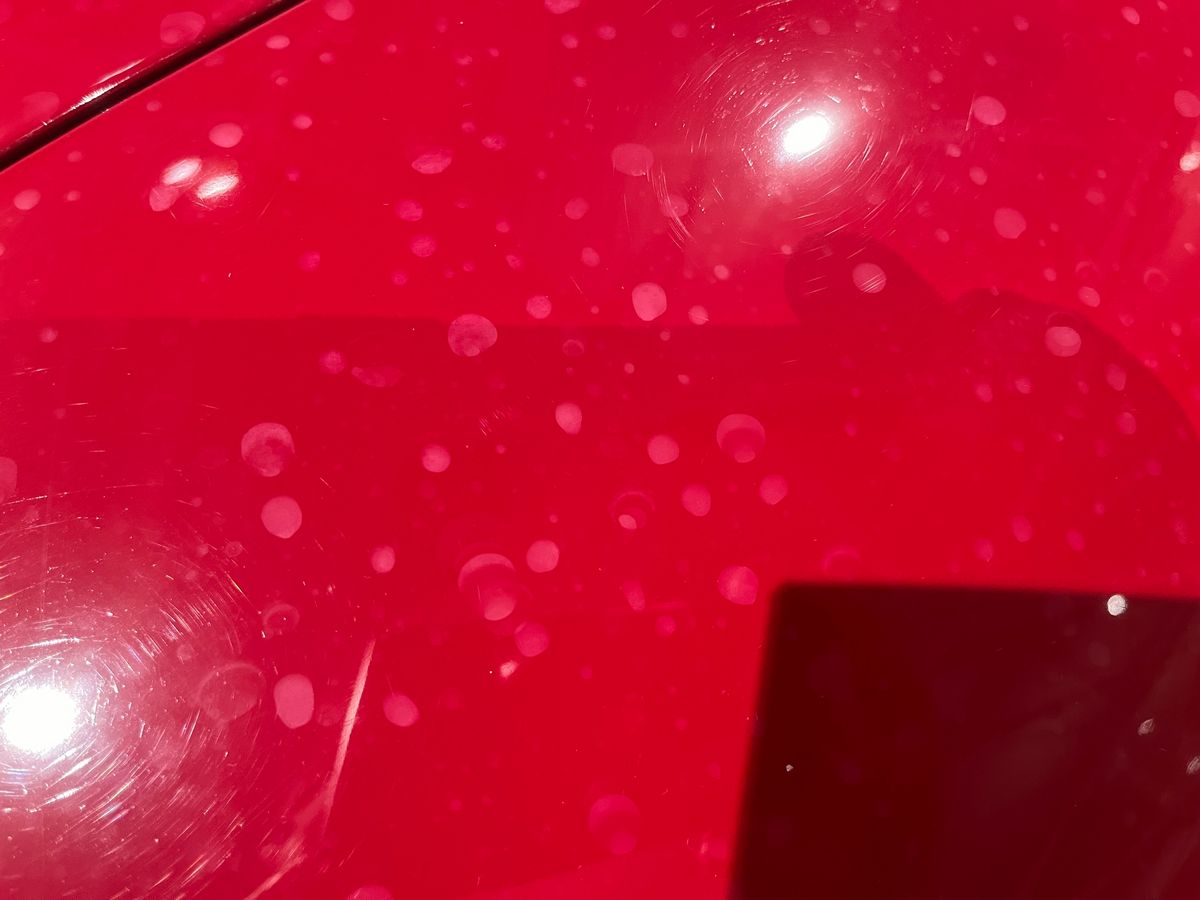
Wow! Now those are some horrible water spots.


First - I took the liberty to resize your original picture - hope you don't mind.

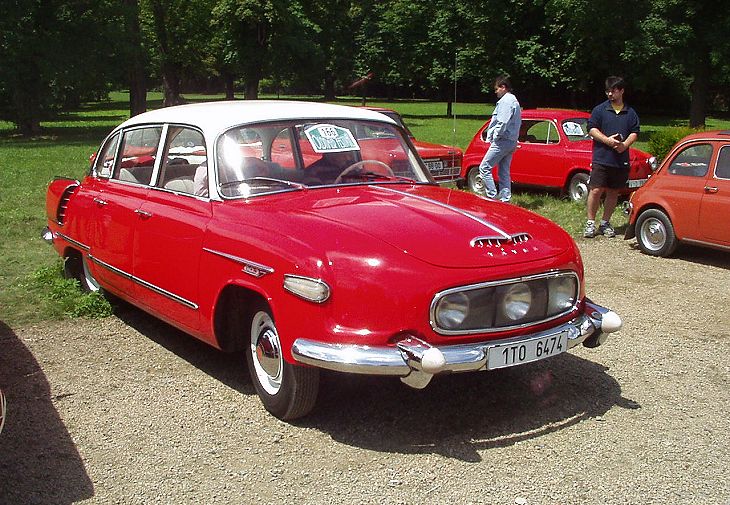
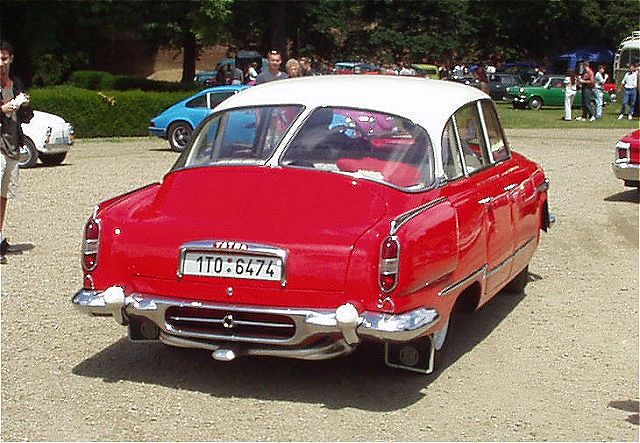
Second - I had to look this car up because I've never heard of it before.


The 1958 Tatra 603

full


full


Lots of info here

Tatra 603


Very cool. :)
 
More...

Here's a recent article on Water Spots and in this article, there is a picture of this exact type of water spot. It's shown under Type 7

The Best Way to Remove Water Spots

Here's the pertinent portion for this type of water spot from the article above.


How to Remove Type 7 Water Spots – Whitish Colored Water Stains IN Single Stage Paint​

Type 7 water spots are primarily found in older single stage paints like solvent-evaporation lacquers and enamels. Older single stage paints tend to be soft and permeable, or porous. Liquids introduced to the surface of these types of paints can actually penetrate and be absorbed INTO the paint. When this happens, the paint will have what looks like a white cloudy stain. This typically happens where water has pooled and then dwelled for some measure of time.

Modern clear coat paints tend to be harder and a lot more impermeable, or non-porous, so liquids like contaminated water will not penetrate easily INTO the clearcoat. Thus Type 7 Water Spots tend to only affect single stage paints.

I have seen clear coats with whitish colored water stains, but these tend to be isolated to the very top surface or topical and this is because it’s harder for liquids to penetrate into clearcoats.

Type 7 water spots on vintage single-stage paint, showing milky white oxidation patches where minerals have absorbed into the porous paint pigment.

Because this staining effect is IN the paint or below the surface, the only way to remove this type of water spots is via a mechanical polishing process. This means testing a polish and if this isn’t working effectively enough, then you may have to test a more aggressive compound.

Caution: With this type of water spot, in my personal experience you cannot remove it 100%. To try to do so will end up with you buffing off so much paint that you expose the primer under the colored or pigmented layer of paint. Once you buff through the paint and expose the primer, the only way to fix this new problem is to repaint the affected areas.


Mike
 
I have some particular concerns about a car with water spots. The car is a 1958 Tatra with original paint. It was left in the rain at car show. Someone told the owner that the paint was “very thin” so they left them all alone and there has not been any attempt to remove them chemically or mechanically.

Sounds about right. Unlike modern clearcoats, which are very solid or impermeable - while single stage paint, especially old-school single stage paint, are very open or permeable.

Impermeable is an adjective describing a material, surface, or membrane that does not allow liquids or gases to pass through it

Permeable refers to a material, membrane, or surface that contains pores or openings, allowing liquids or gases to pass or diffuse through

This is why old single stage paints get white looking water spot that are IN the paint - not on the paint. And this makes them difficult and RISKY to try to remove.


In other to have as much information as possible I went ahead and measured the paint depth and the burgundy panels range from 12-21 mils whereas the white top ranges from about 9-12 mils.

I’m curious why the white paint is so much thinner. Is this about the process they used?

This would be my guess, that the thinner white portions were painted differently. Perhaps the entire car was painted white and then the read sprayed over the white paint, which would make these sections thicker. Just a guess and probably wrong. :)


Did someone polish the white top more aggressively than the other panels for some reason?

That's too big of a difference for it to be caused by compounding and polishing. I'm sure there's a better explanation.

But my main question is what would be a relatively safe way to reduce or remove these water spots from the burgundy panels? The car is a Soviet Czech vehicle and it’s the first one I’ve detailed so I’m wondering if they used more/less/different primers or if there is anything else to consider before proceeding, or not.

Thank you!

This is the tricky part. In my own expereince, the only way to remove or reduce these types of water spots is to polish the paint. That is, abrade the surface and try to remove the white portions until you get back to the red portions.

The problem with this is - do you have enough paint? If you don't - you'll hit primer.

Tough nut to crack for sure.

If it were me? I would educate the owner, even send this person the link to this thread and then after discussing the plan of attack - I would do some very light polishing, cross my fingers and hope for the best.

If the owner is adamant that the spots must be removed - OR - he will have the car repainted - then this gives you the licence to go after them with a compound. Just be sure to have some sort of release of liability if the paint correction hits primer.

I'm not sure if any of the above helps, again, this is a tough problem to fix for any one, any tool, any pad or any product.


Mike
 
Sounds about right. Unlike modern clearcoats, which are very solid or impermeable - while single stage paint, especially old-school single stage paint, are very open or permeable.

Impermeable is an adjective describing a material, surface, or membrane that does not allow liquids or gases to pass through it

Permeable refers to a material, membrane, or surface that contains pores or openings, allowing liquids or gases to pass or diffuse through

This is why old single stage paints get white looking water spot that are IN the paint - not on the paint. And this makes them difficult and RISKY to try to remove.


This would be my guess, that the thinner white portions were painted differently. Perhaps the entire car was painted white and then the read sprayed over the white paint, which would make these sections thicker. Just a guess and probably wrong. :)


That's too big of a difference for it to be caused by compounding and polishing. I'm sure there's a better explanation.


This is the tricky part. In my own expereince, the only way to remove or reduce these types of water spots is to polish the paint. That is, abrade the surface and try to remove the white portions until you get back to the red portions.

The problem with this is - do you have enough paint? If you don't - you'll hit primer.

Tough nut to crack for sure.

If it were me? I would educate the owner, even send this person the link to this thread and then after discussing the plan of attack - I would do some very light polishing, cross my fingers and hope for the best.

If the owner is adamant that the spots must be removed - OR - he will have the car repainted - then this gives you the licence to go after them with a compound. Just be sure to have some sort of release of liability if the paint correction hits primer.

I'm not sure if any of the above helps, again, this is a tough problem to fix for any one, any tool, any pad or any product.


Mike
Thank you so much for the reply! This owner would prefer a conservative approach for sure. I have used p21s paintwork cleanser years ago and I liked it. I’m thinking that a product like that with super fine abrasives (or no abrasives) is the way to go. Other product suggestions are certainly welcome.
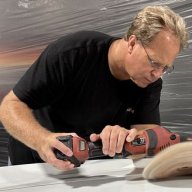
If the owner allows it I’ll use a micropolisher to make a tiny test spot in an inconspicuous area to see if a one step polish might be safe and worthwhile.
 
Thank you so much for the reply! This owner would prefer a conservative approach for sure. I have used p21s paintwork cleanser years ago and I liked it. I’m thinking that a product like that with super fine abrasives (or no abrasives) is the way to go.

Other product suggestions are certainly welcome.

If the owner allows it I’ll use a micro-polisher to make a tiny test spot in an inconspicuous area to see if a one step polish might be safe and worthwhile.

The P21S Gloss Enhancing Paintwork Cleanser is a NON-ABRASIVE polish. My guess is - it won't work as these spots are IN the paint. Thus to remove them - you must remove a little paint.

If it were me, I would test a soft foam polishing pad and a fine-cut or ultra-fine-cut polish using a simple dual action polisher. I do like your idea of using a micro-polisher with a small pad to test a small section.

Moving forward - after any correction is done - I would strongly recommend SEALING the surface to "help" prevent water from soaking into the paint. Generally speaking, these old single stage paints like an old-school carnauba wax.

When you're done, maybe share a few after pics like this,

The Front Side Angle Shot - Photography for the Car Detailing World by Mike Phillips

full


Mike
 
Back
Top