
371 Pictures - 2-Day September 2025 Car Detailing Class - 8 Cars Detailed! - No Chairs! - ALL Hands-on PLUS REVIEWS!

More...

Next up...
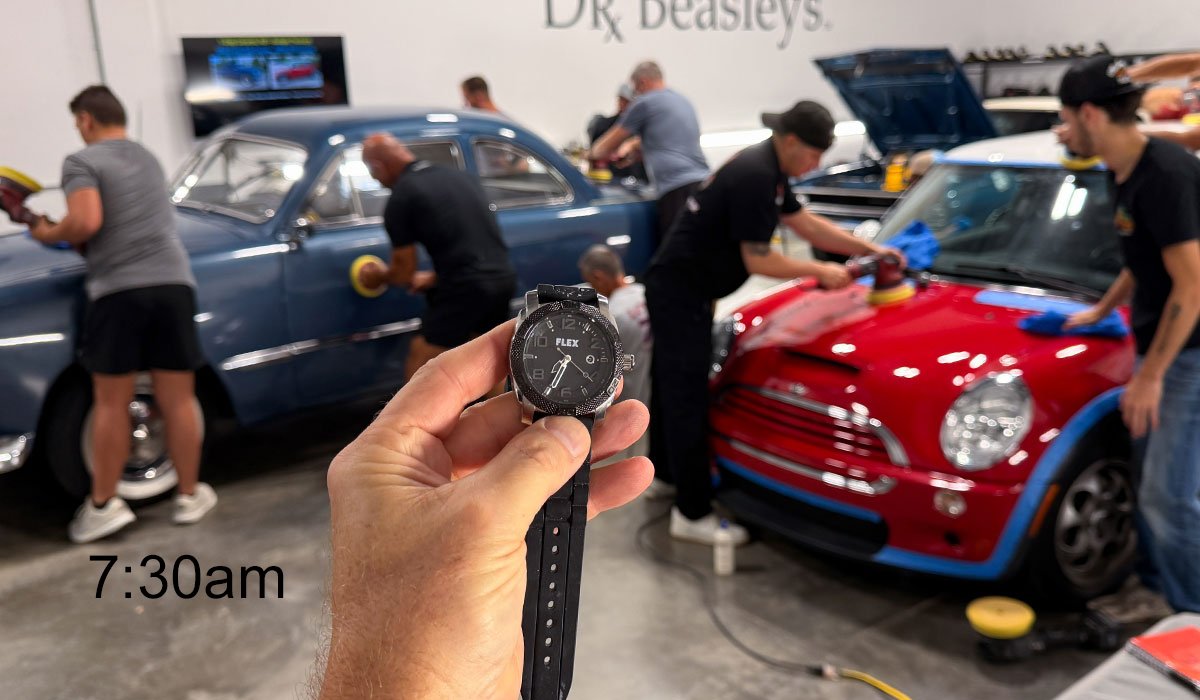
We get started at 7:30am SHARP! We left off Saturday, late afternoon, by finishing the 1970 Satellite and the 1979 Corvette. So, we pick back up covering the third of the three primary topics for the paint correction and ceramic coating class by learning how to do a 1-Step Ceramic AIO Paint Correction.

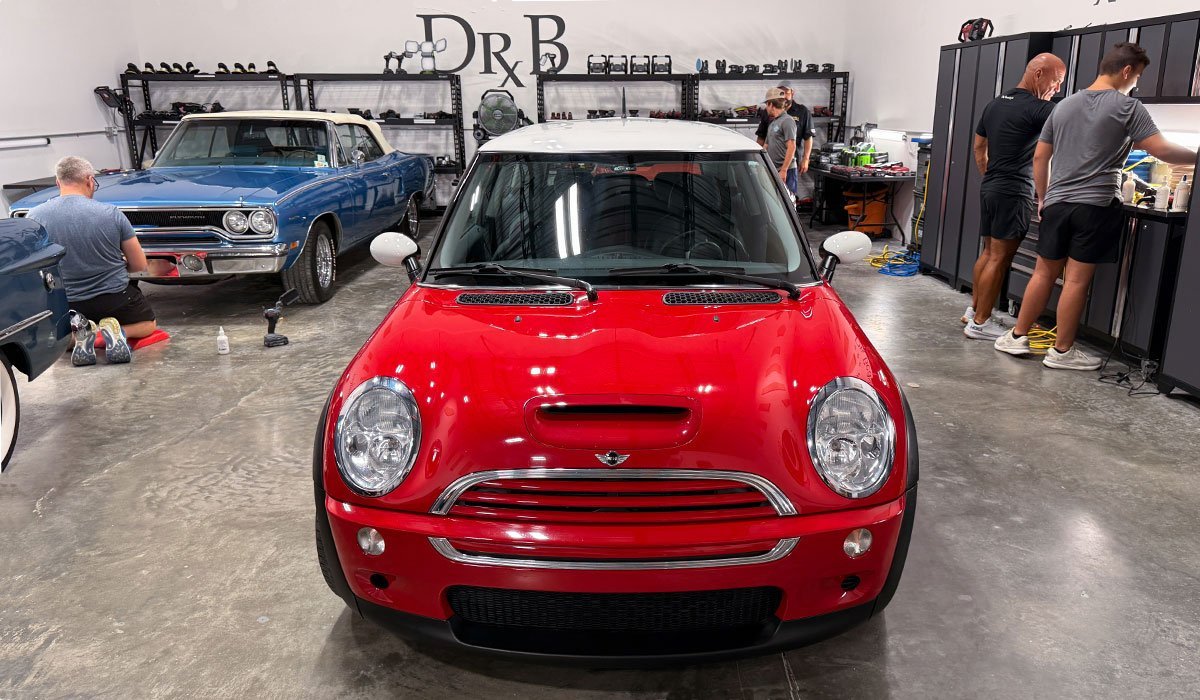
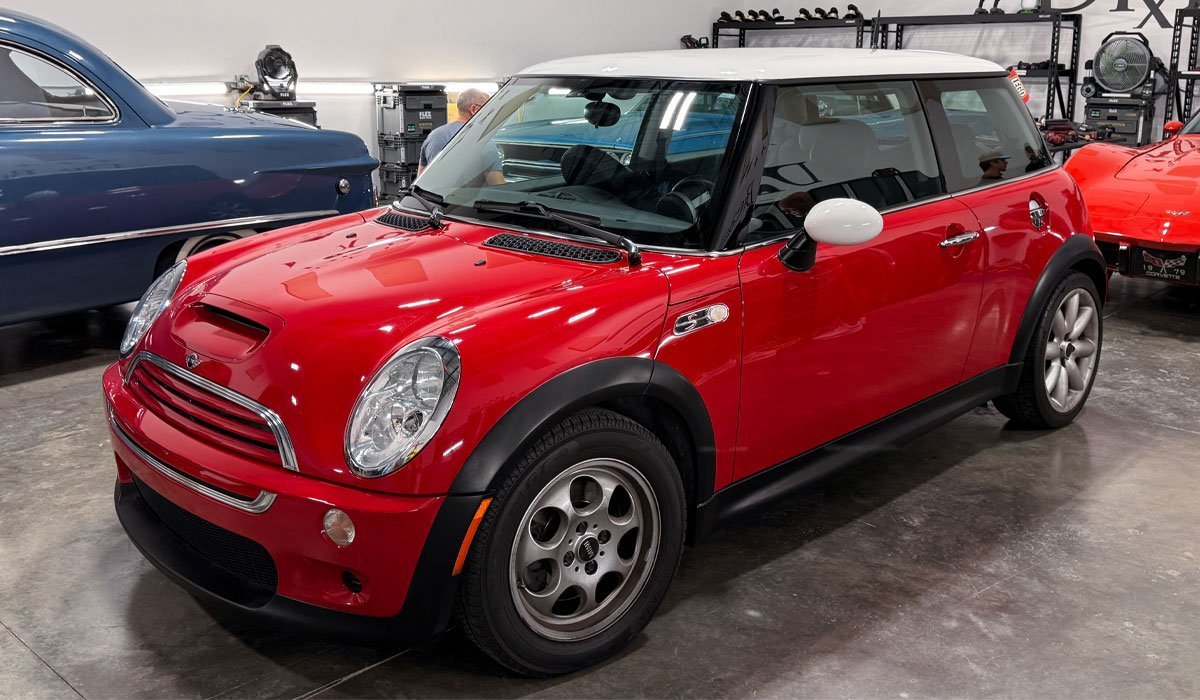
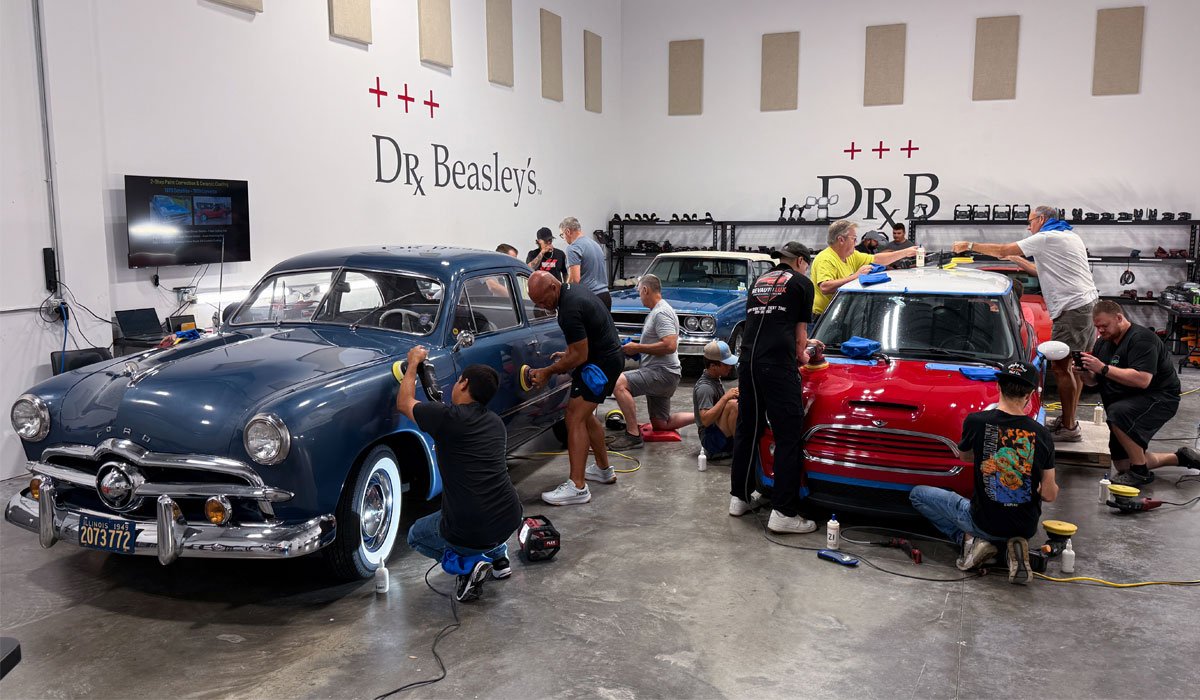
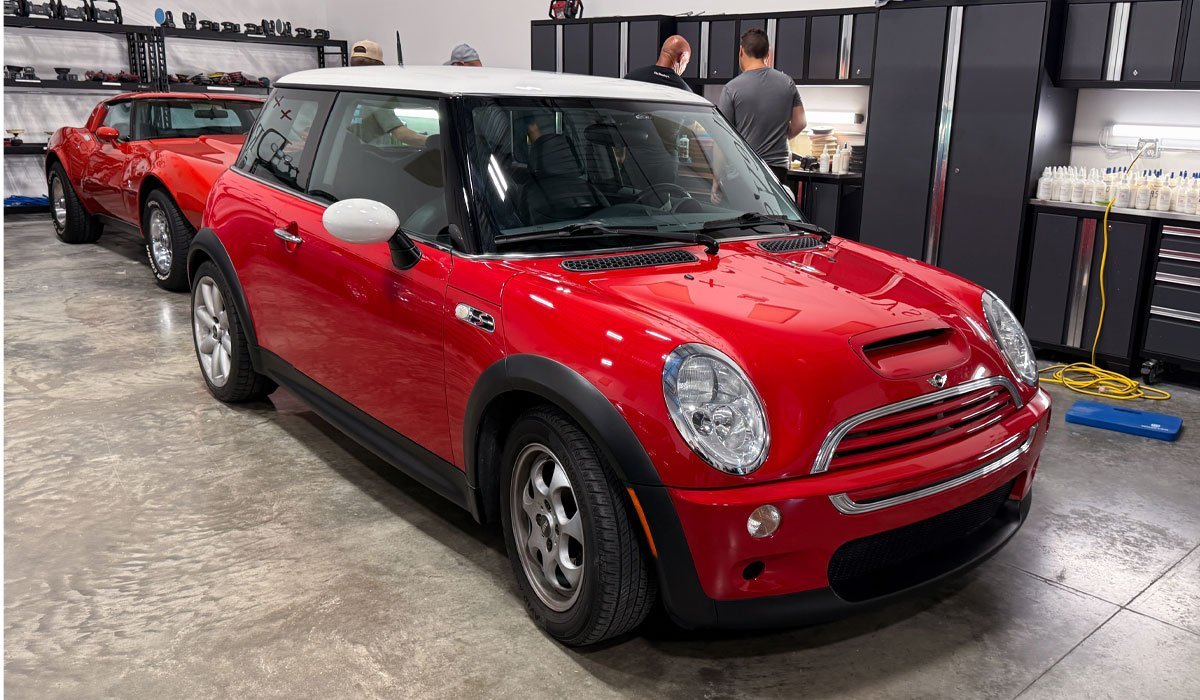
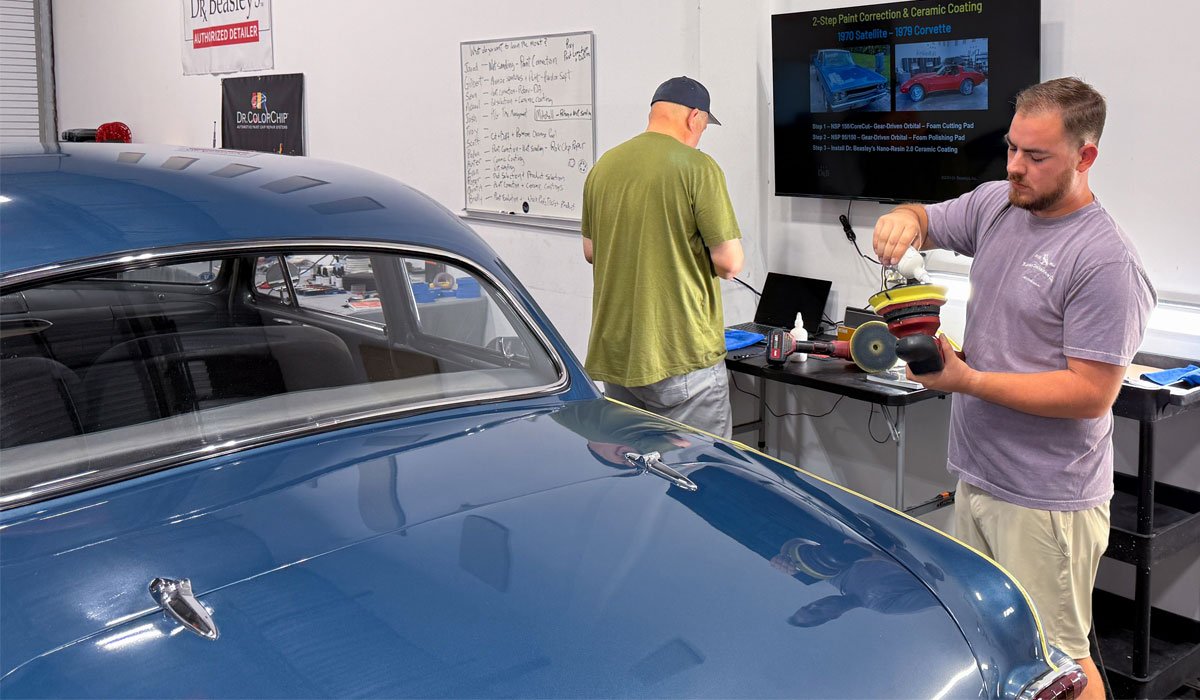
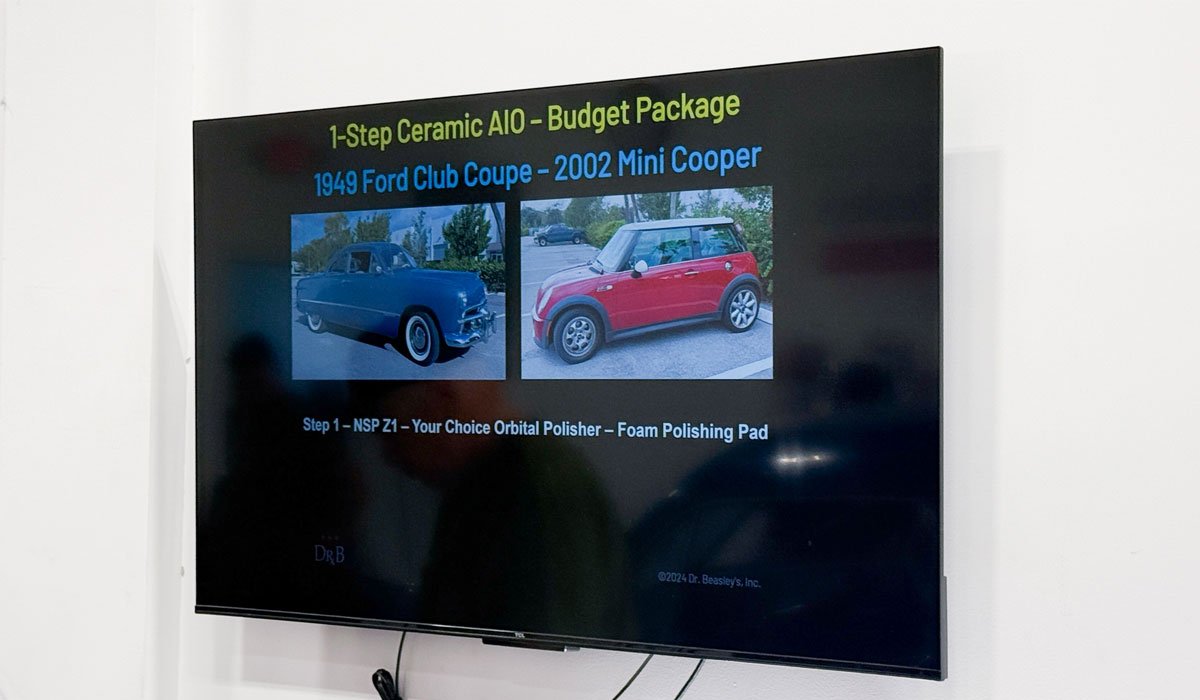
For this the class will be training on a 1949 Ford Club Coupe and a 2002 Mini Cooper.
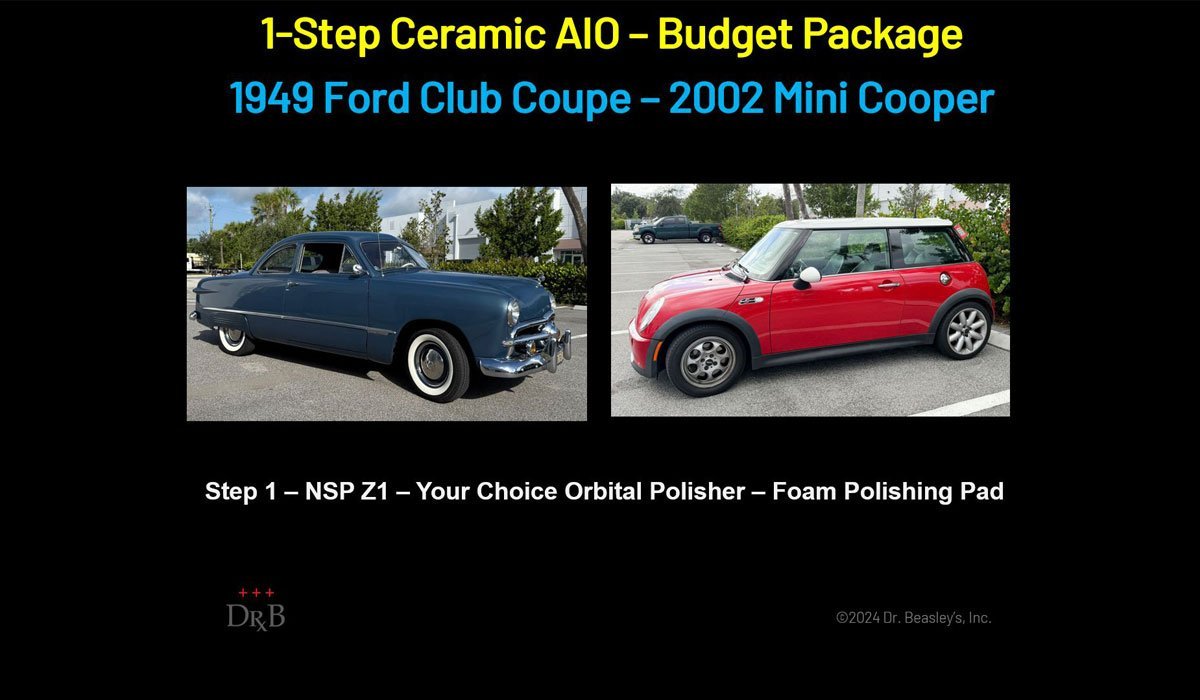
full


1-Step Ceramic AIO Paint Correction using Dr. Beasley's Z1
Z1 is a one-step ceramic all in one, this means, it compounds, polishes and protects in a single step. For this type of detailing, I bring in cars that have problems, but their not near as bad as the first 4 cars this class detailed. And this is by DESIGN. But look at the after pictures and understand, these results were achieved doing a SINGLE PAINT POLISHING STEP to the paint. Pretty amazing.


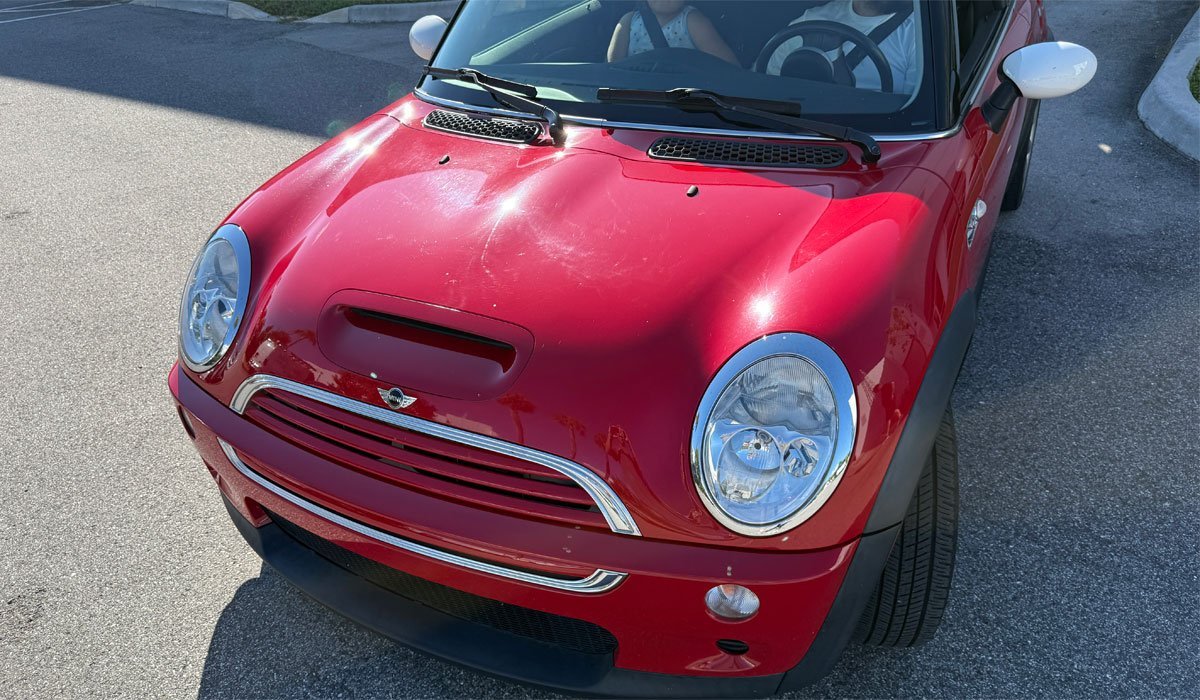
First, here's an arrival video that shows the before condition


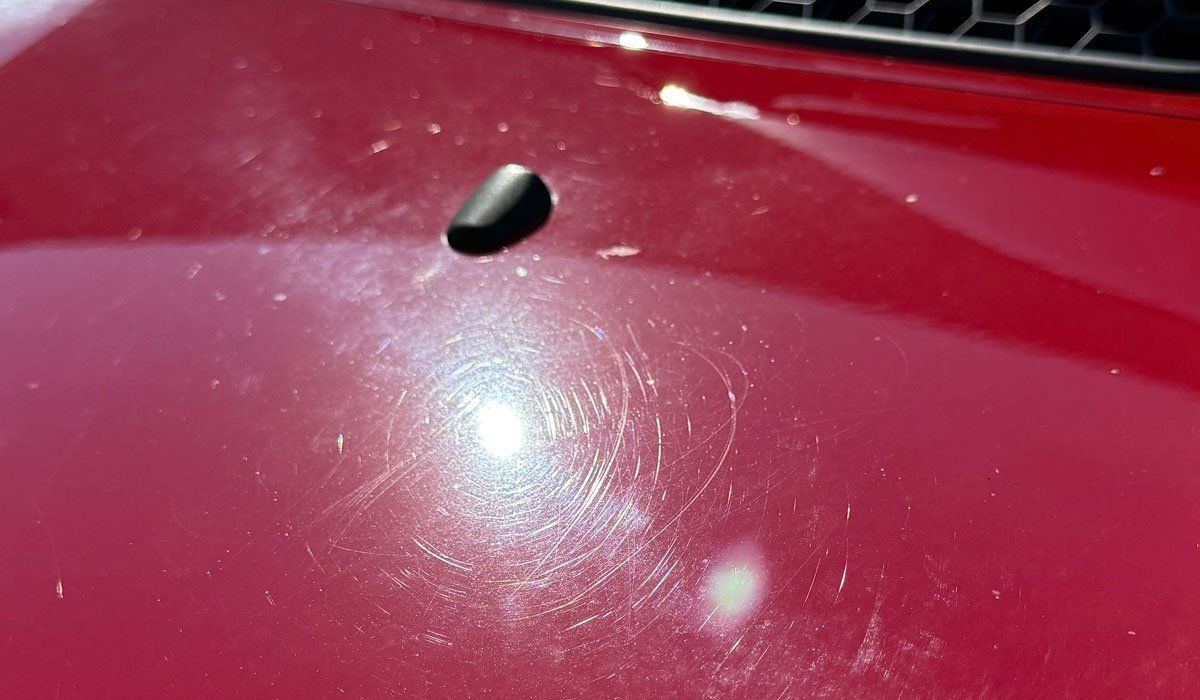
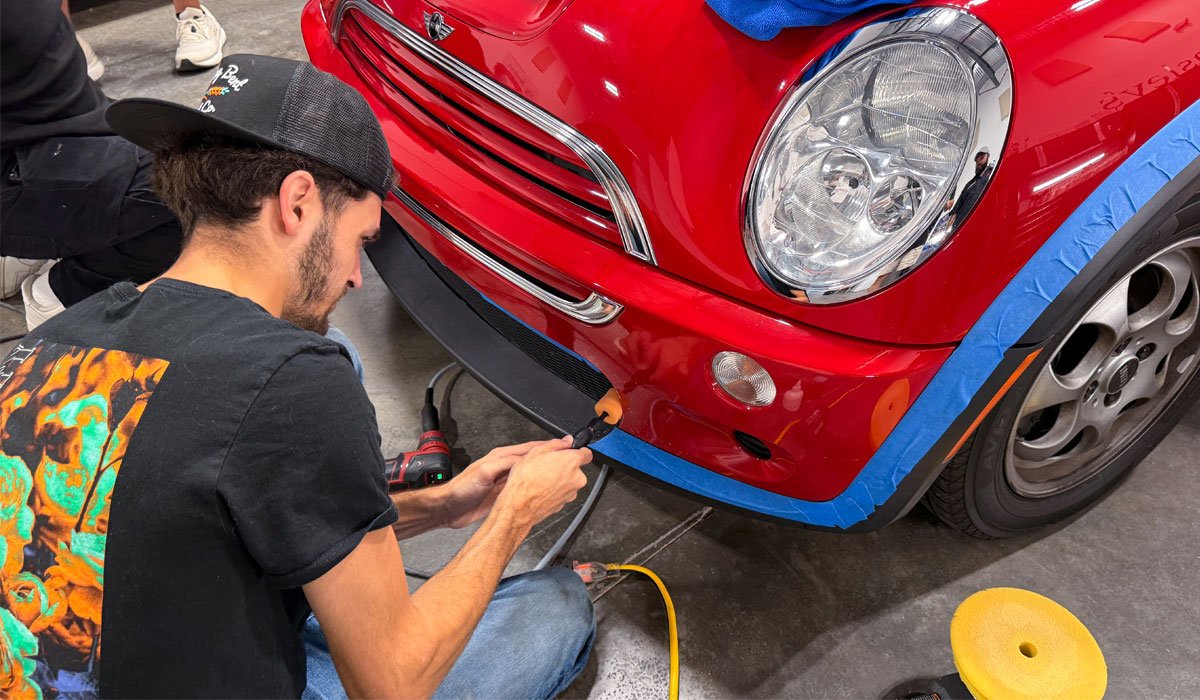
2002 Mini Cooper - Before Shots
full


full


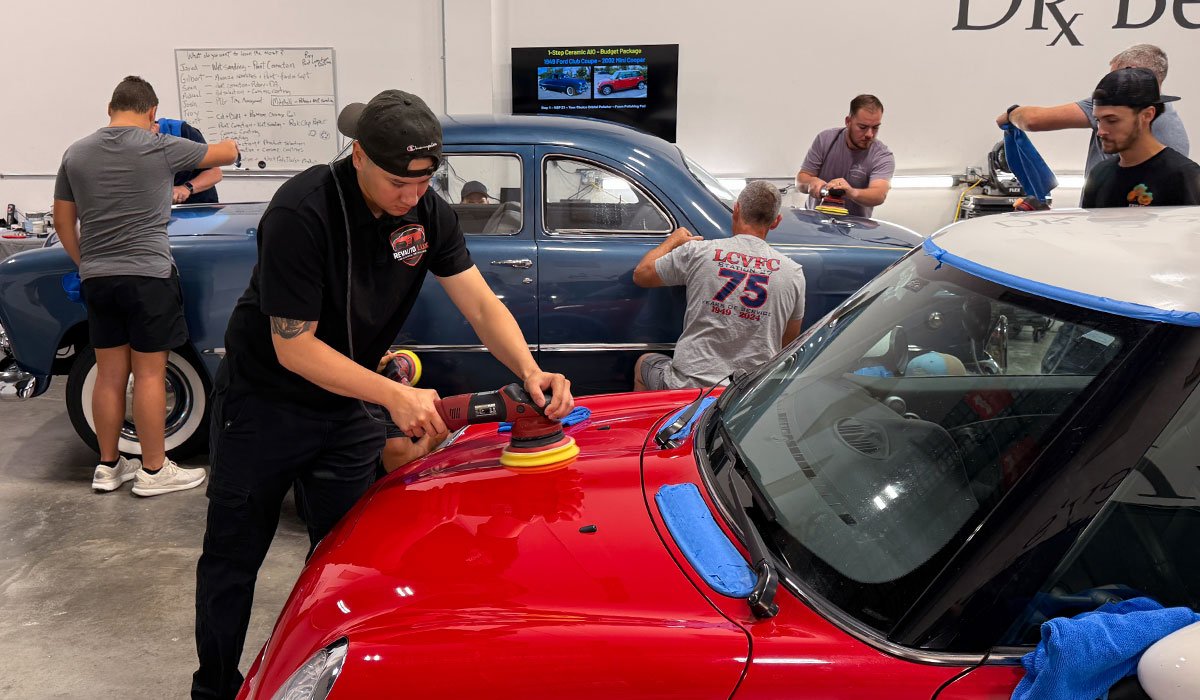
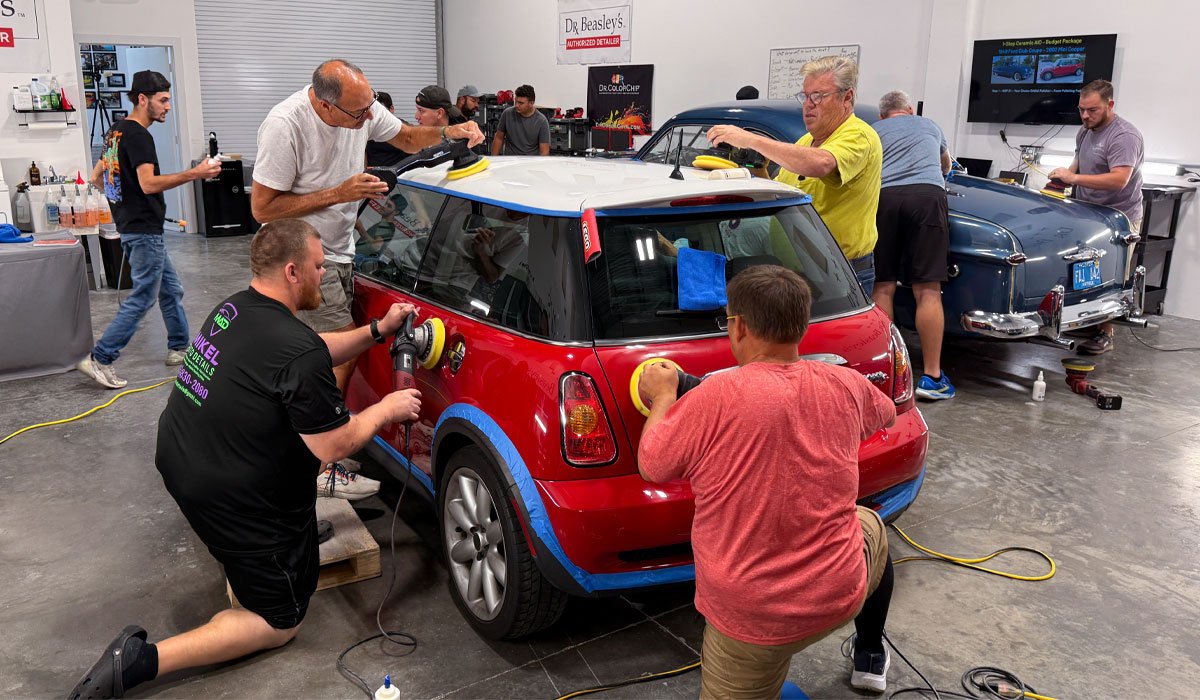
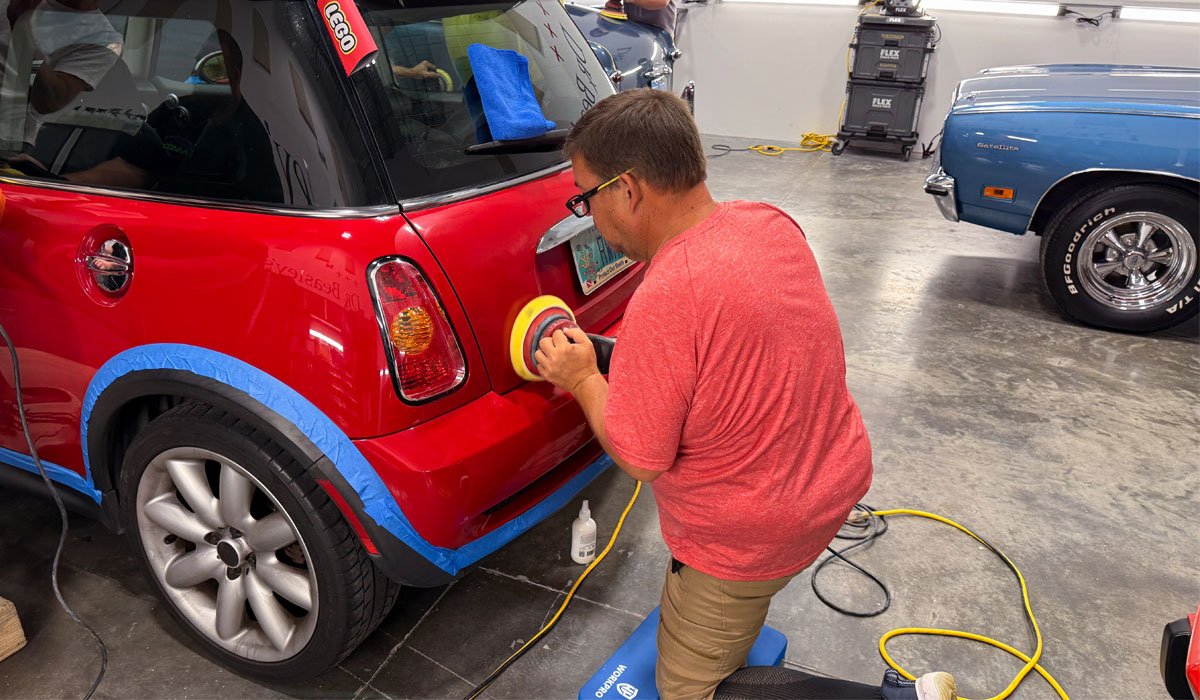
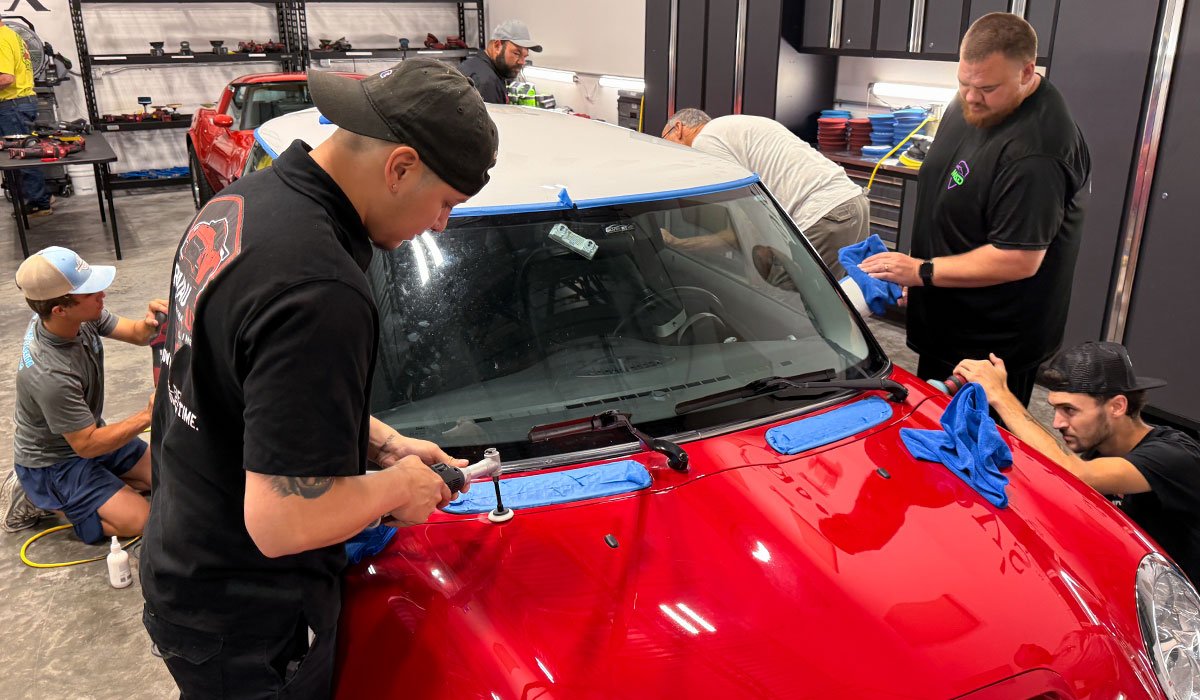
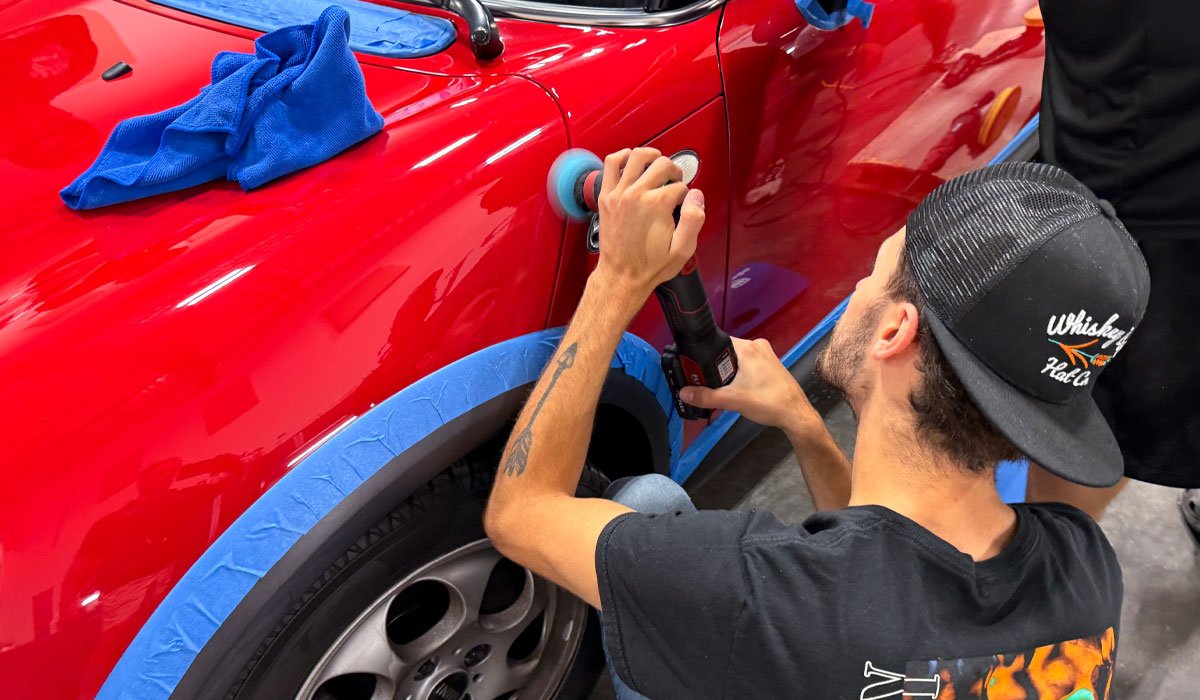
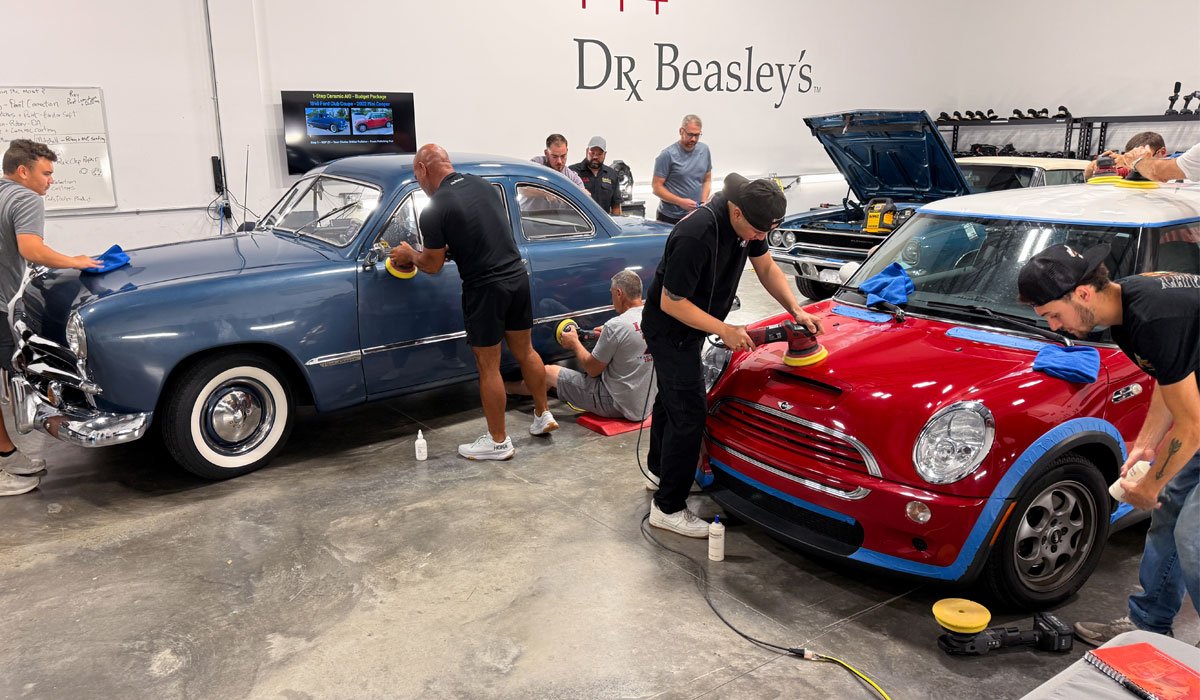
It's GO TIME!
If you can't get out of bed early for our class, might want to find a cushier class with chairs that starts at the crack of afternoon.
full


full


full


full


full


full


full


full


full


full


full


full


full


Here's the final results!
full


full


full


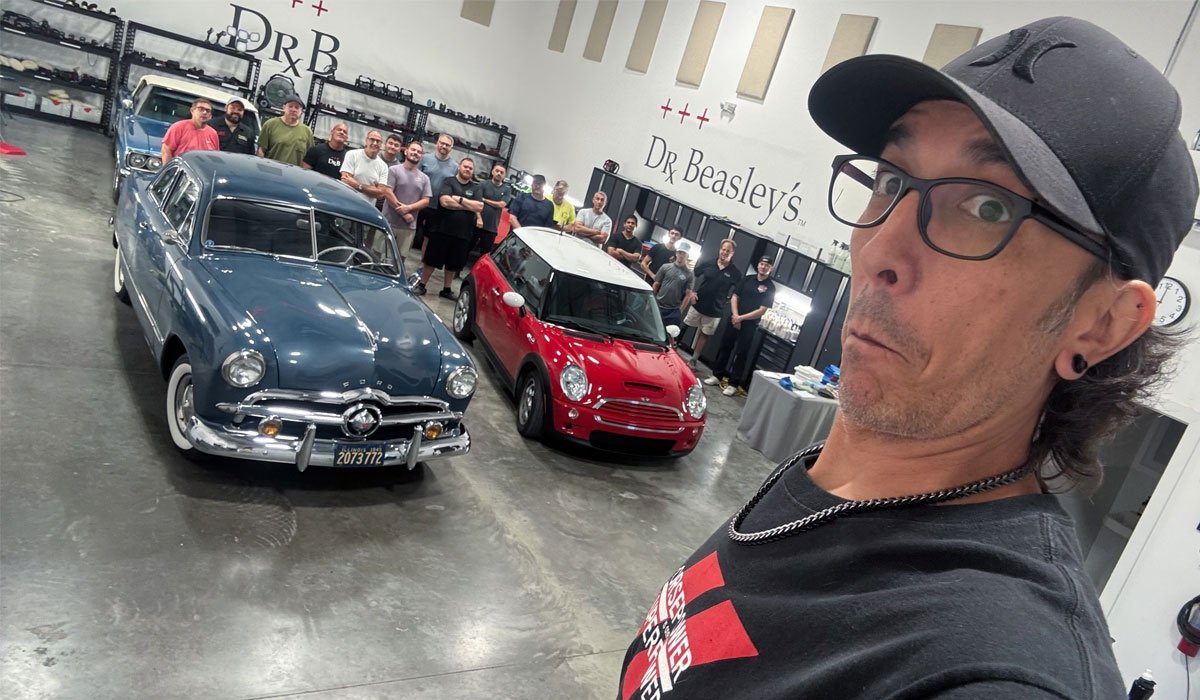
Here's the group shot with Yancy taking a great shot!
full


Mike
 
Last edited:
More...

1-Step Ceramic AIO Paint Correction using Dr. Beasley's Z1
Z1 is a one-step ceramic all in one, this means, it compounds, polishes and protects in a single step. For this type of detailing, I bring in cars that have problems, but their not near as bad as the first 4 cars this class detailed. And this is by DESIGN. But look at the after pictures and understand, these results were achieved doing a SINGLE PAINT POLISHING STEP to the paint. Pretty amazing.

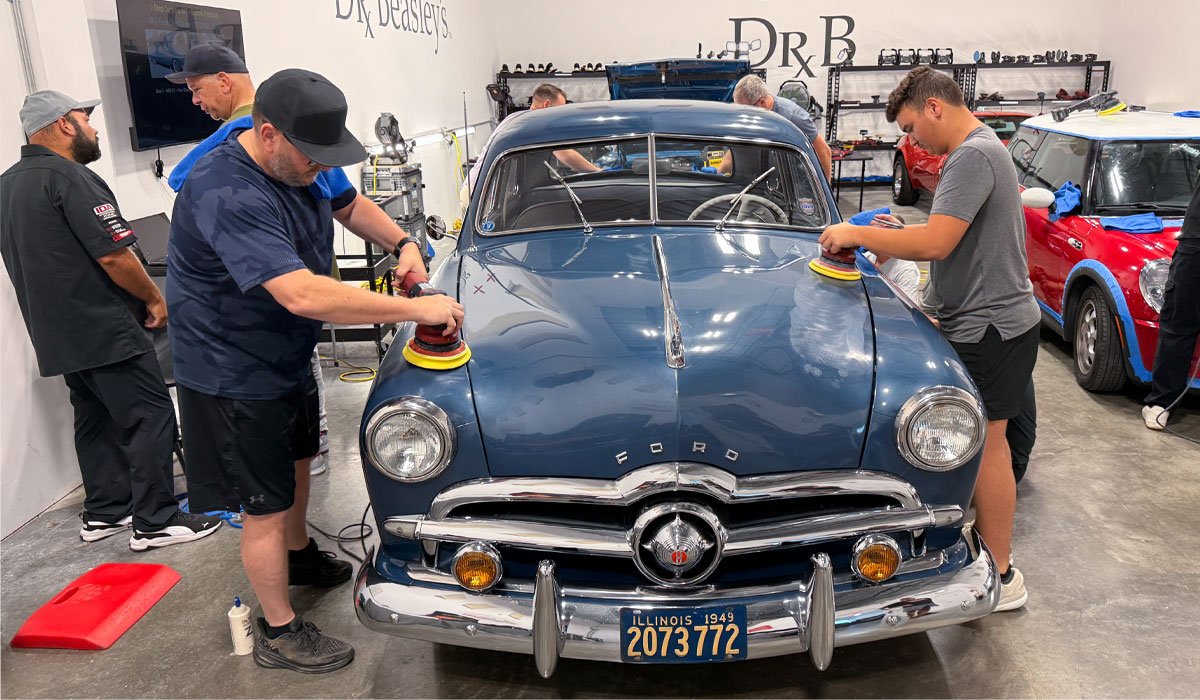
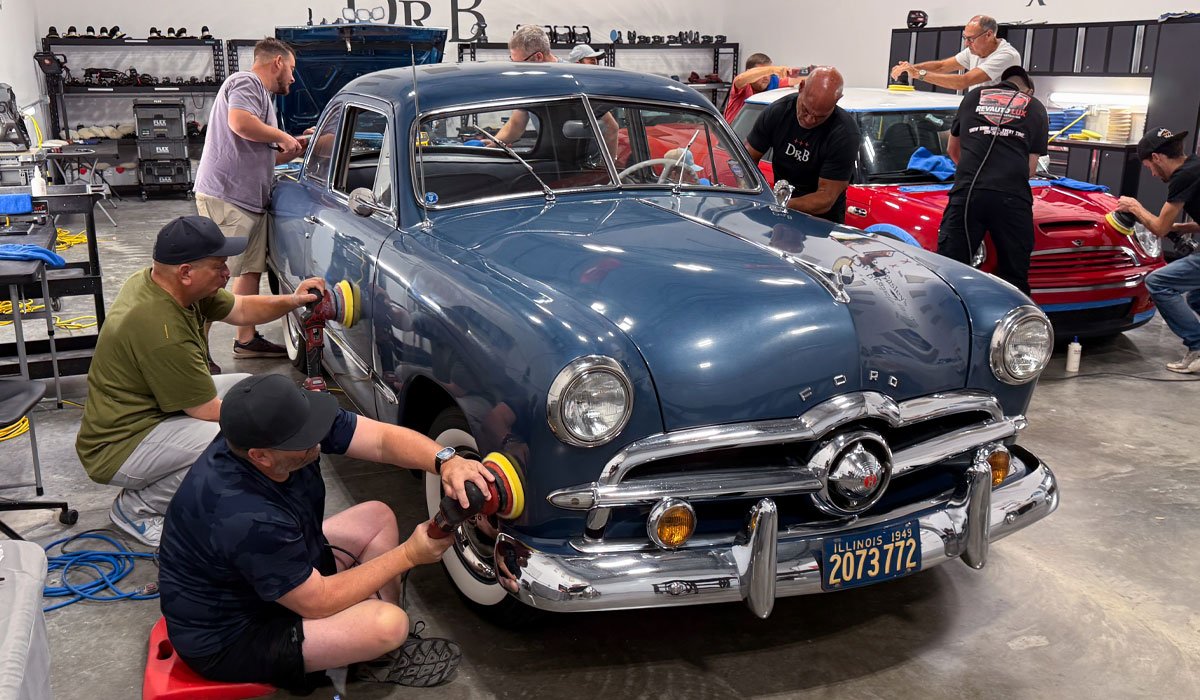
While one half of the class is working on the 2002 Mini Cooper, the other half of the class tackles the 1949 Ford Club Coupe.


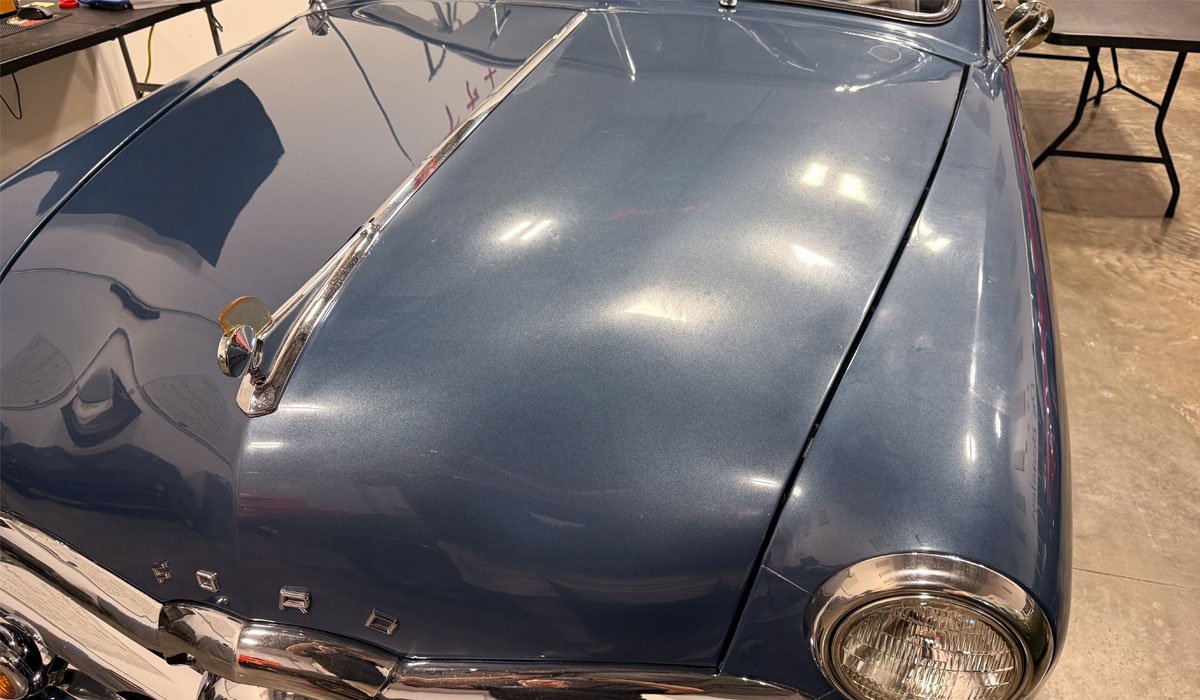
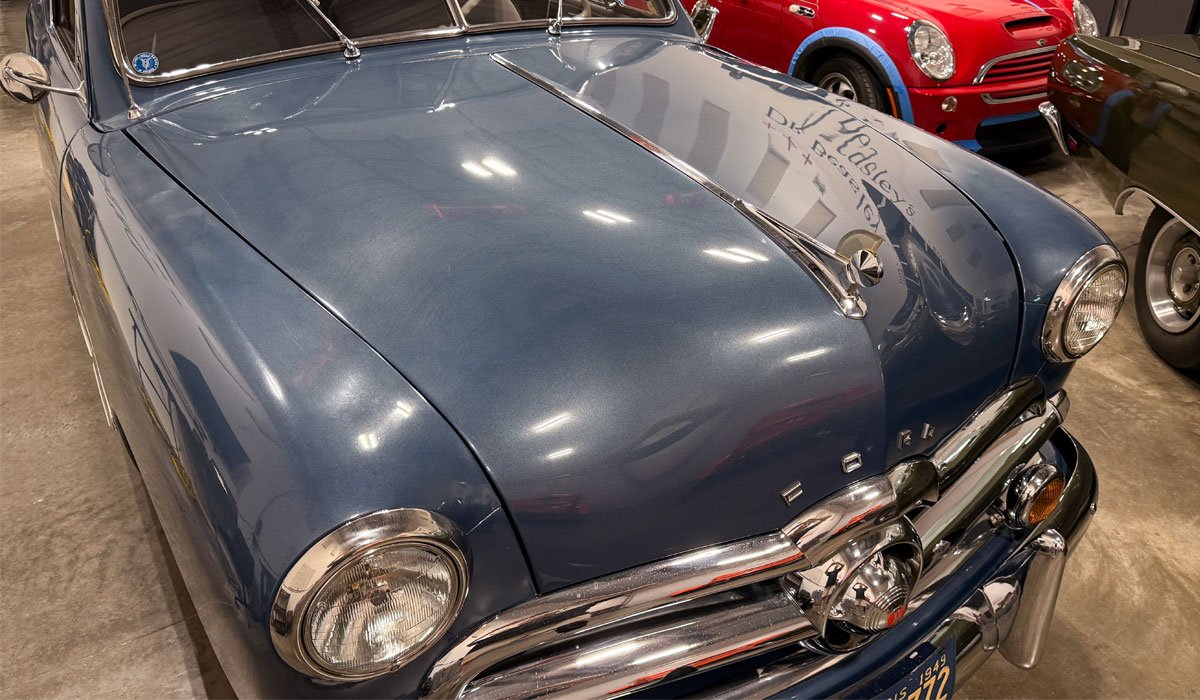
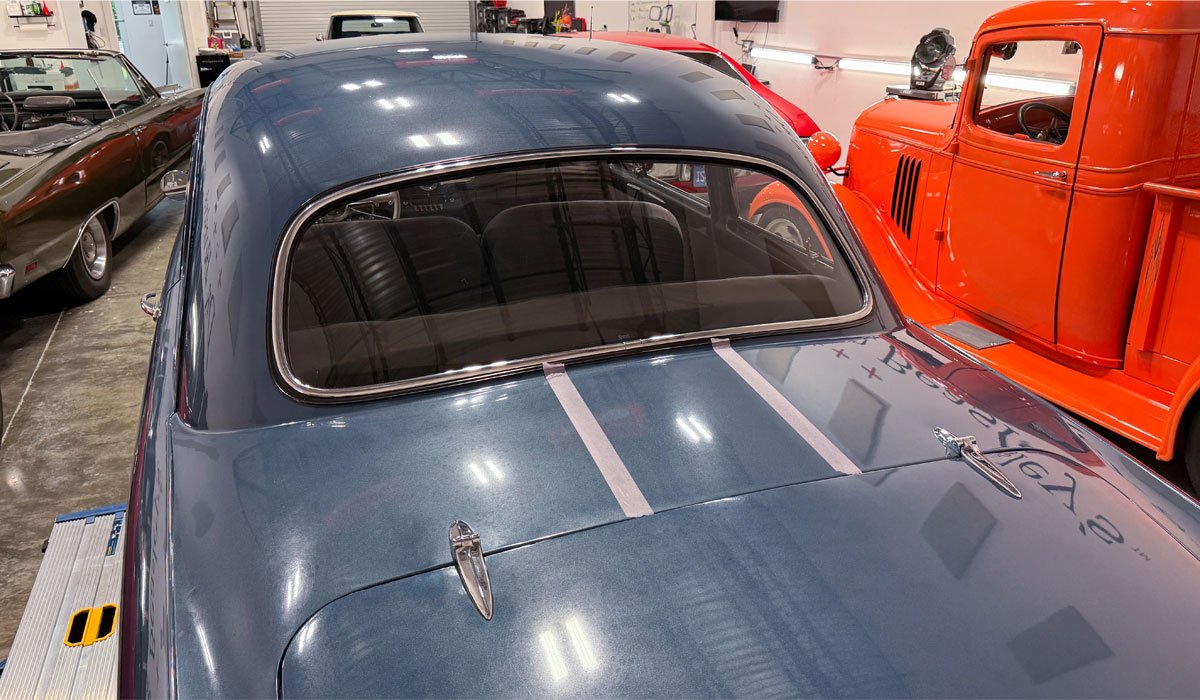
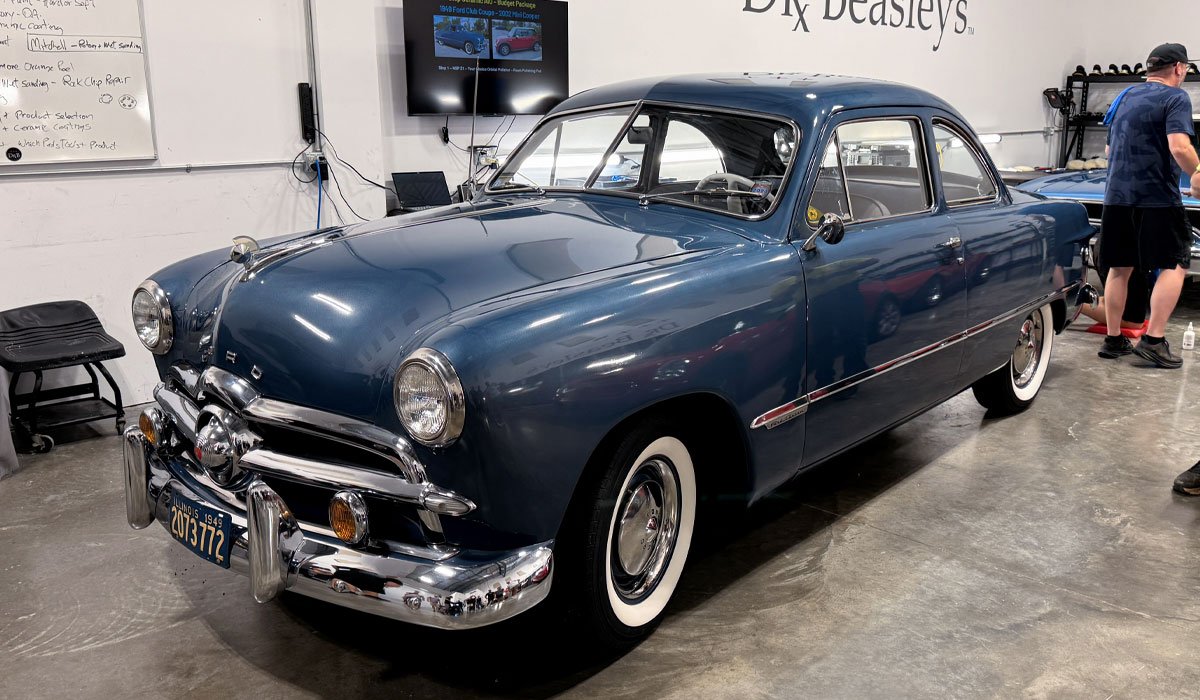
1949 Ford Club Coupe - BEFORE CONDITION
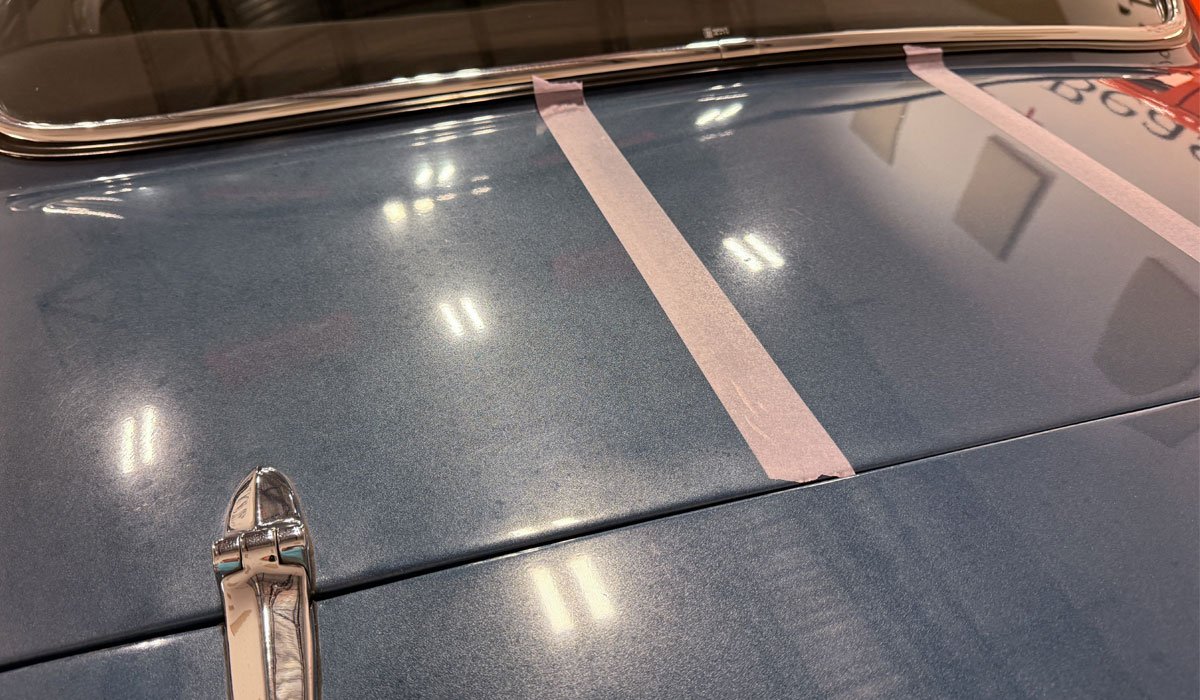
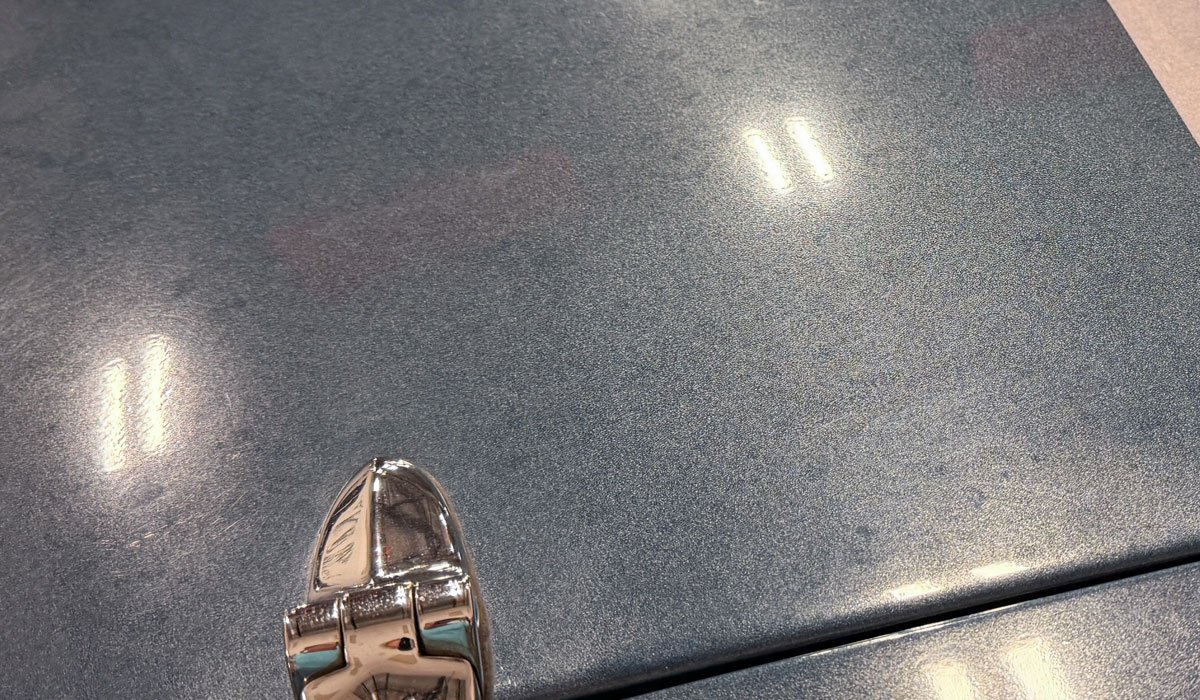
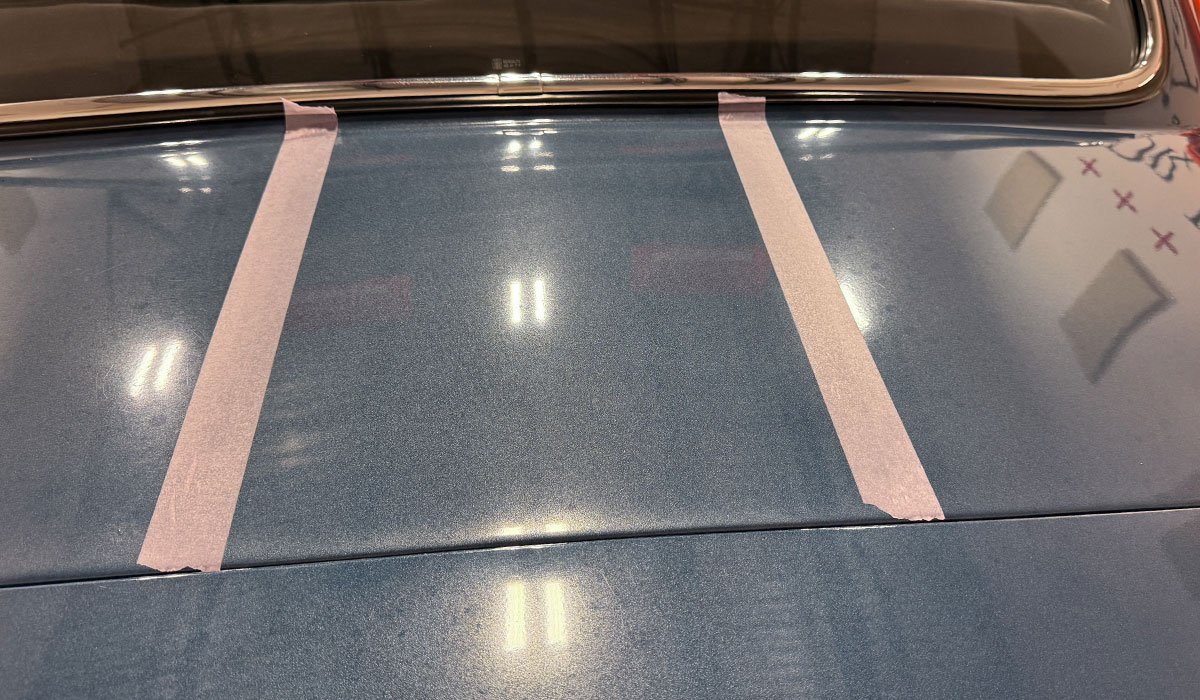
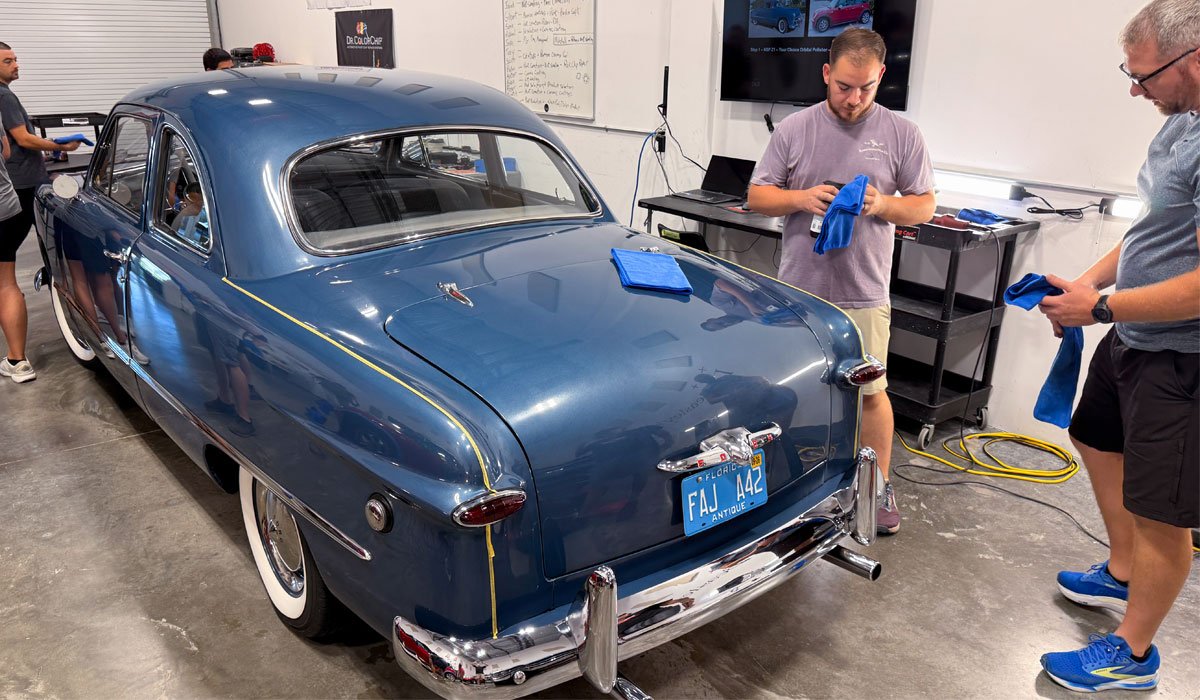
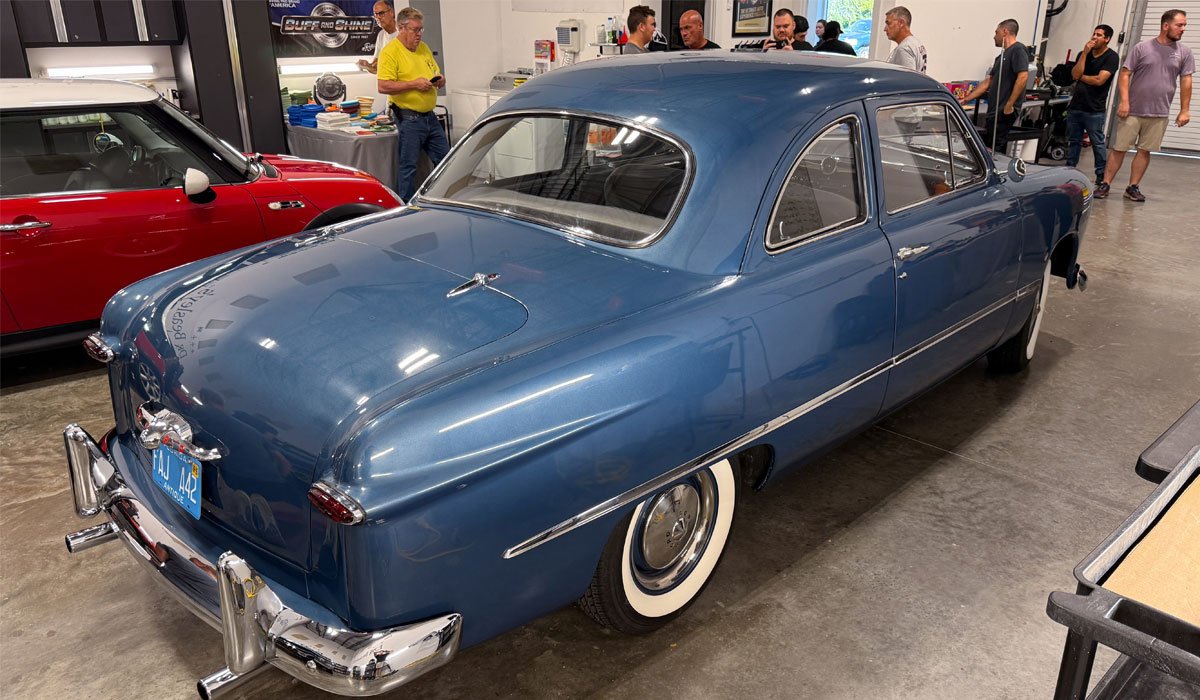
The paint on this car is single stage metallic blue. Over the year the paint has oxidized. The aluminum flake IN the paint has oxidized. There are water spots that have penetrated INTO the paint and what looks like a general stain or film over the entire car, possibly a wax build-up from over the years.

full


full


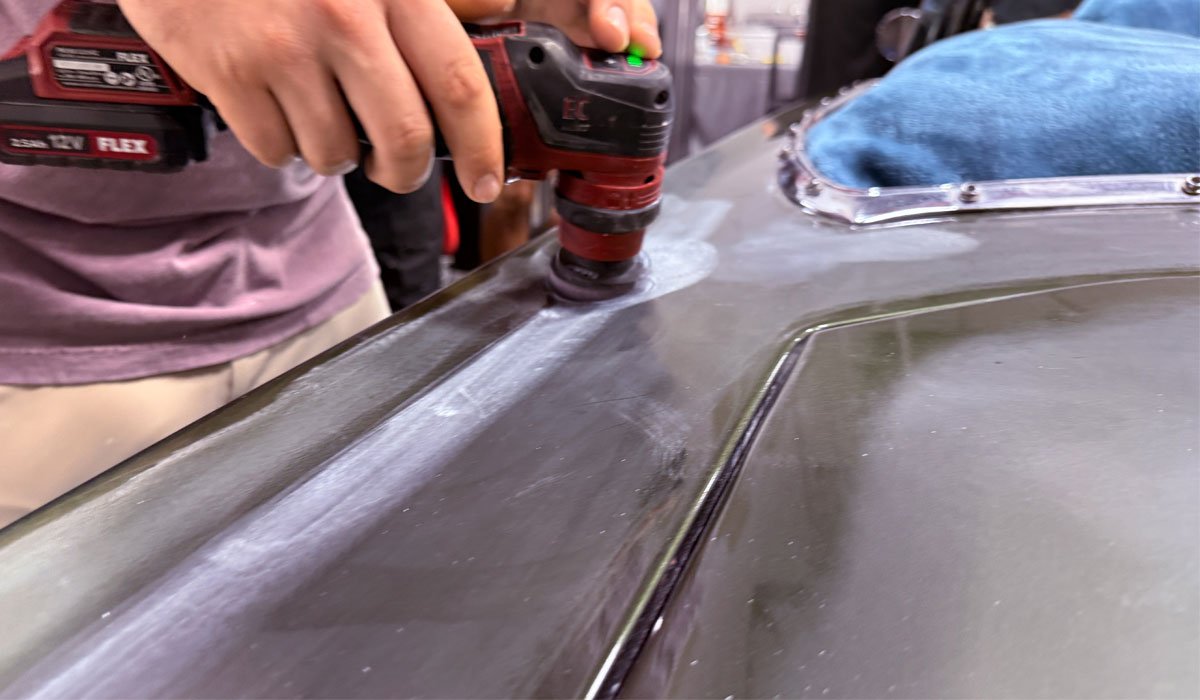
Test Spot - I did a Test Spot on the Dutchman Panel to show the before and after difference as well as to test and see if the paint could be saved using ONLY a 1-Step Ceramic AIO.

full


full


The below picture is a cropped out section from the picture above. See the darker colored spots?

full


Here's the results from the Test Spot

full


Welting - Lacquered Cloth Beaded Fender Welt
Back in the old days, car manufactures inserted lacquered cloth beaded fender welt in-between body panels to act as a sort of gasket. This created a more perfect attachment for body panels like fenders where they mount to the actual car body. Most welting is black, and you can see the grain of the cloth on the surface. If you buff on this, you will likely stain it, and you might even tear it up.

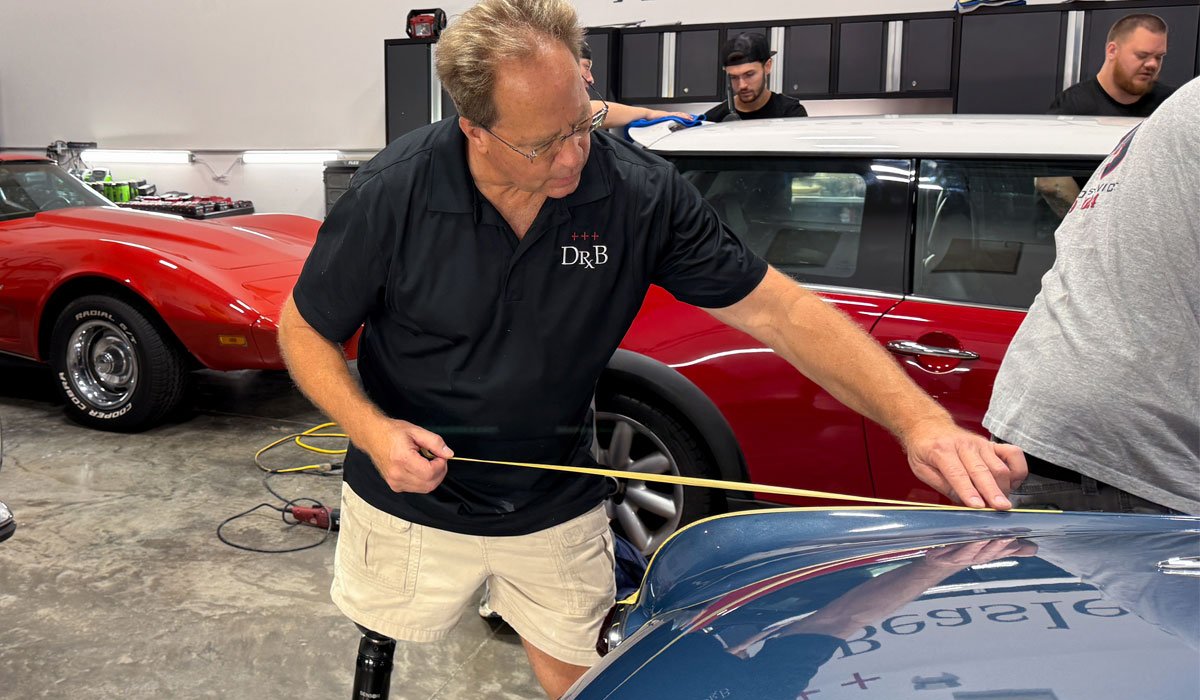
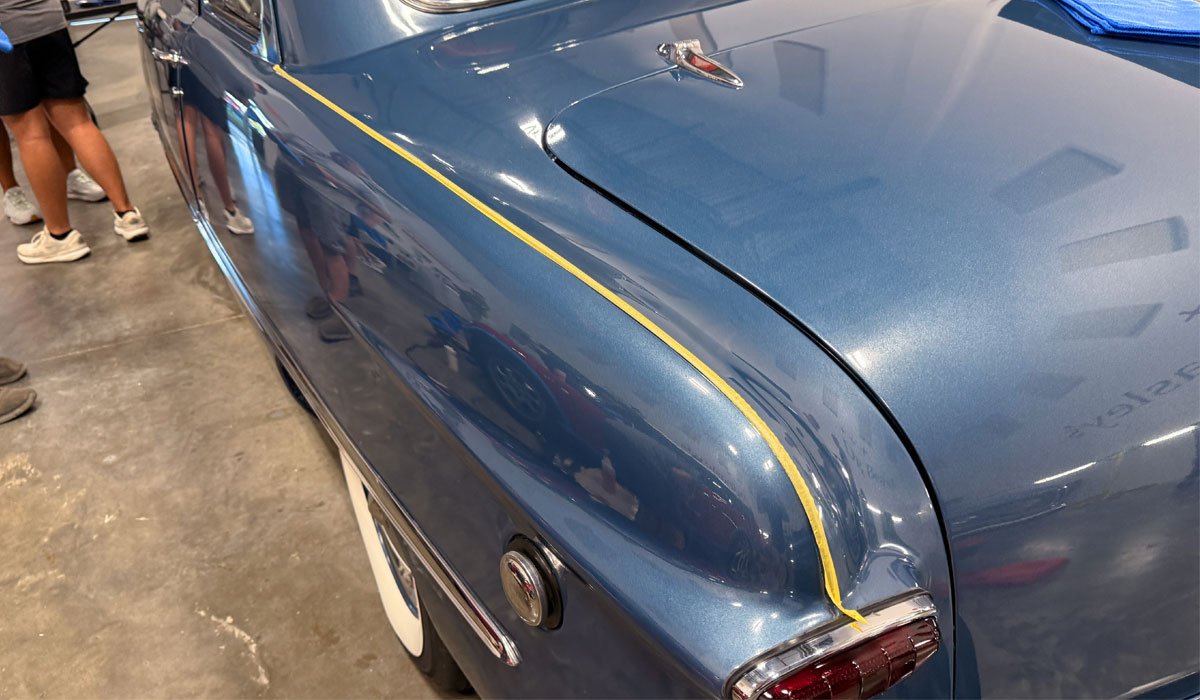
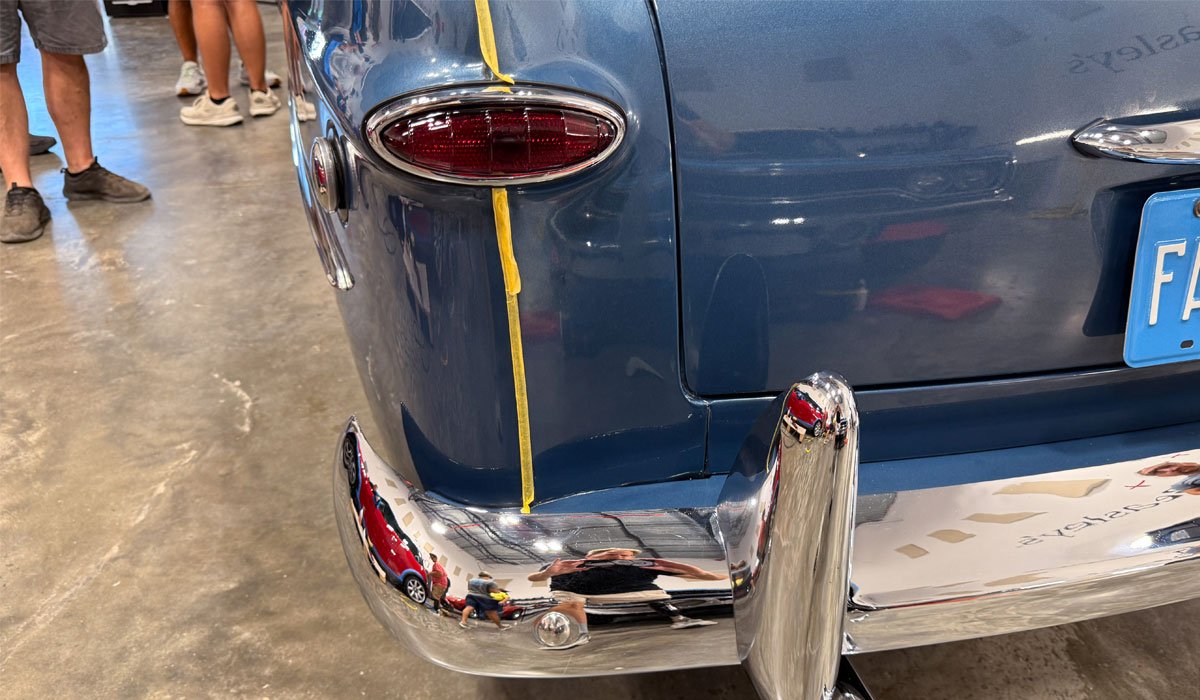
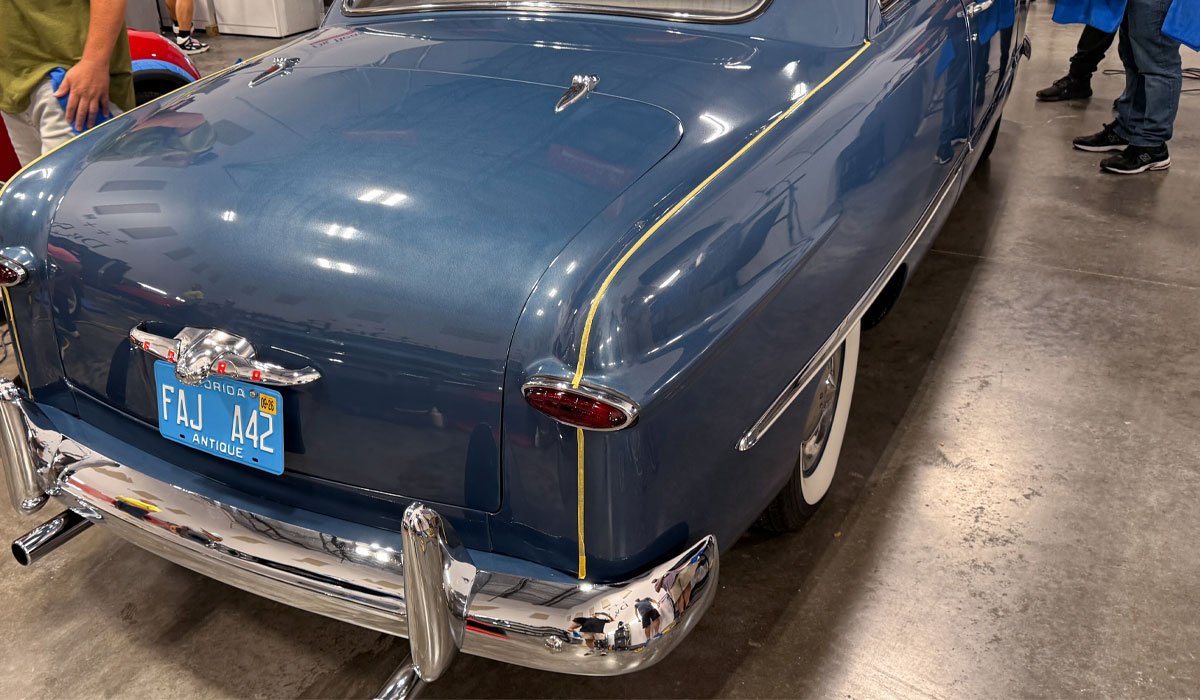
The welting on this car was painted using the same paint used on the body panels. The owner specifically asked me to be VERY CAREFUL so as not to ruin the painted welting. My big concern was accidently pulling the paint off the welting when we removed the tape. While I shared this with the classes, I took the responsibility to both apply the tape and remove the tape. That way, if anything went wrong, I would take the hit. Luckily, by pulling the tape off slow and at a low angle, there were not issues. :)

full


full


full


full


full


Mike
 
Last edited:
More...

It's GO TIME!

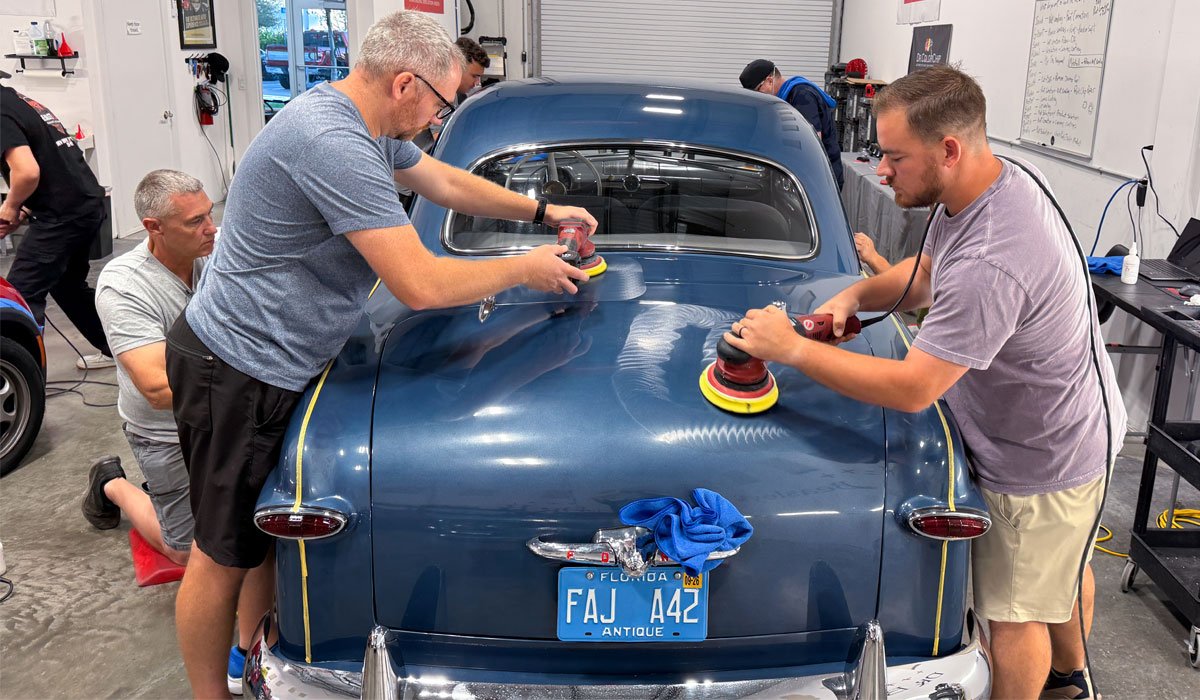
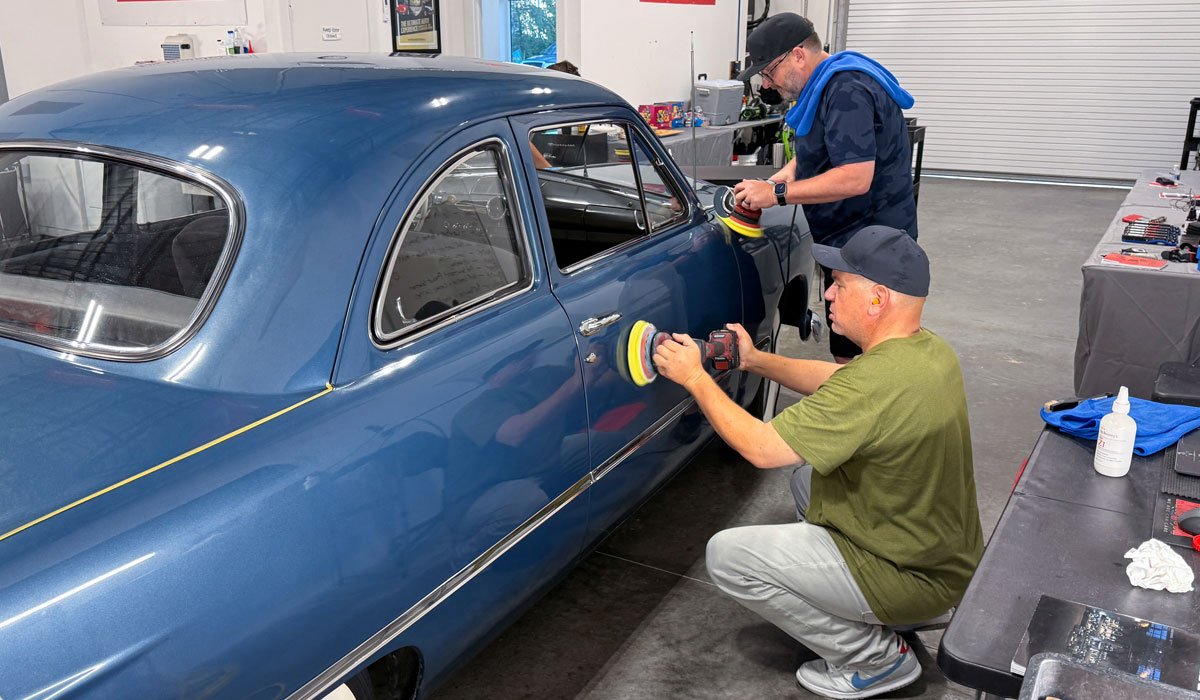
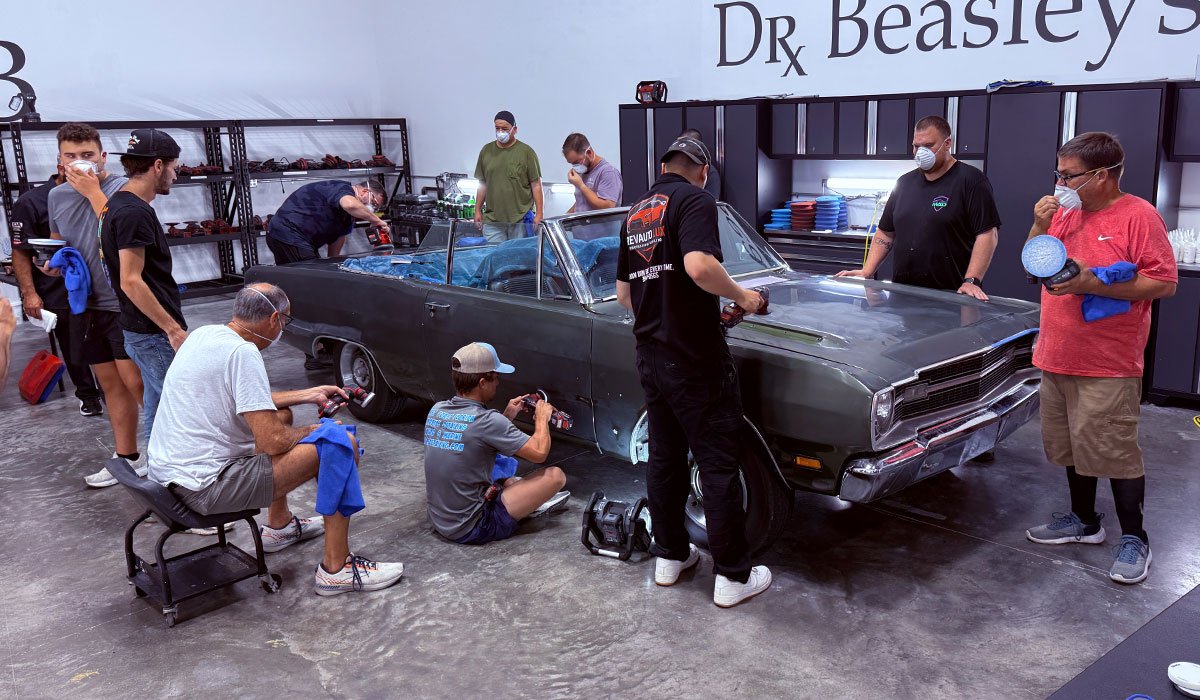
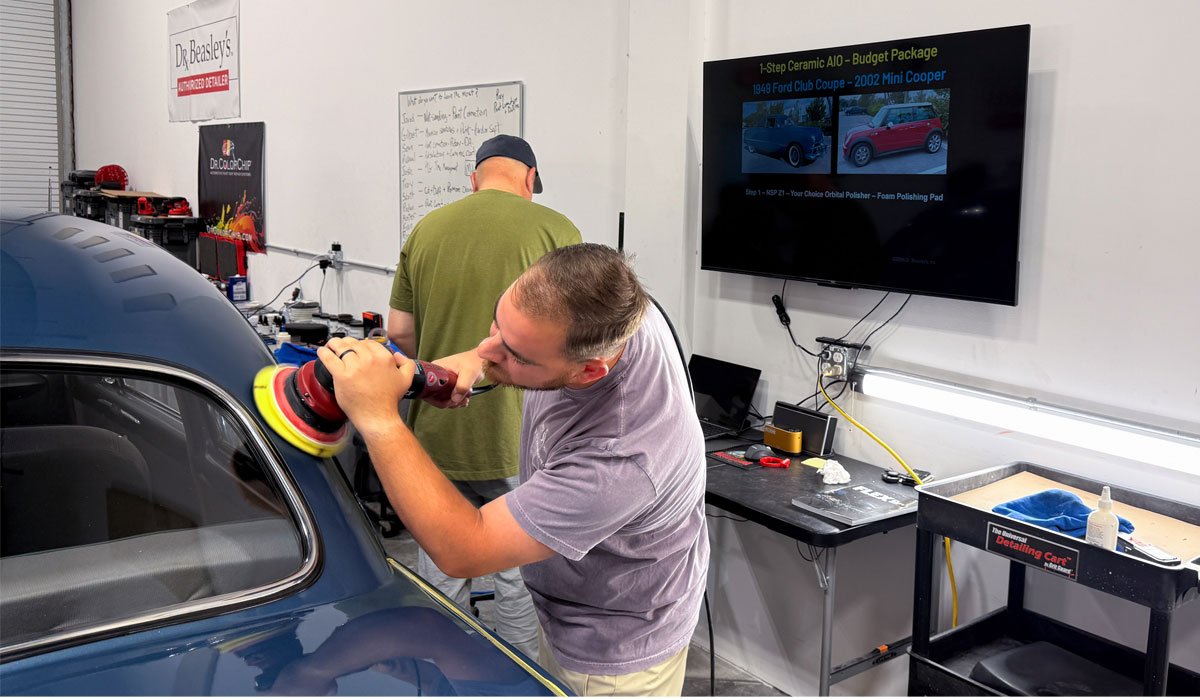
And just to note, while the level of oxidation on this 1949 Ford Club Coupe is not as bad as the oxidation that was on the 1979 Corvette - I did tell the class to LOOK carefully at the Ford BEFORE buffing it out because it's about to go through a COLOR CHANGE! By this I mean, by removing the oxidation and the film that covered the car, the original vibrancy and richness-of-color would be restore making it look like we repainted the car.

full


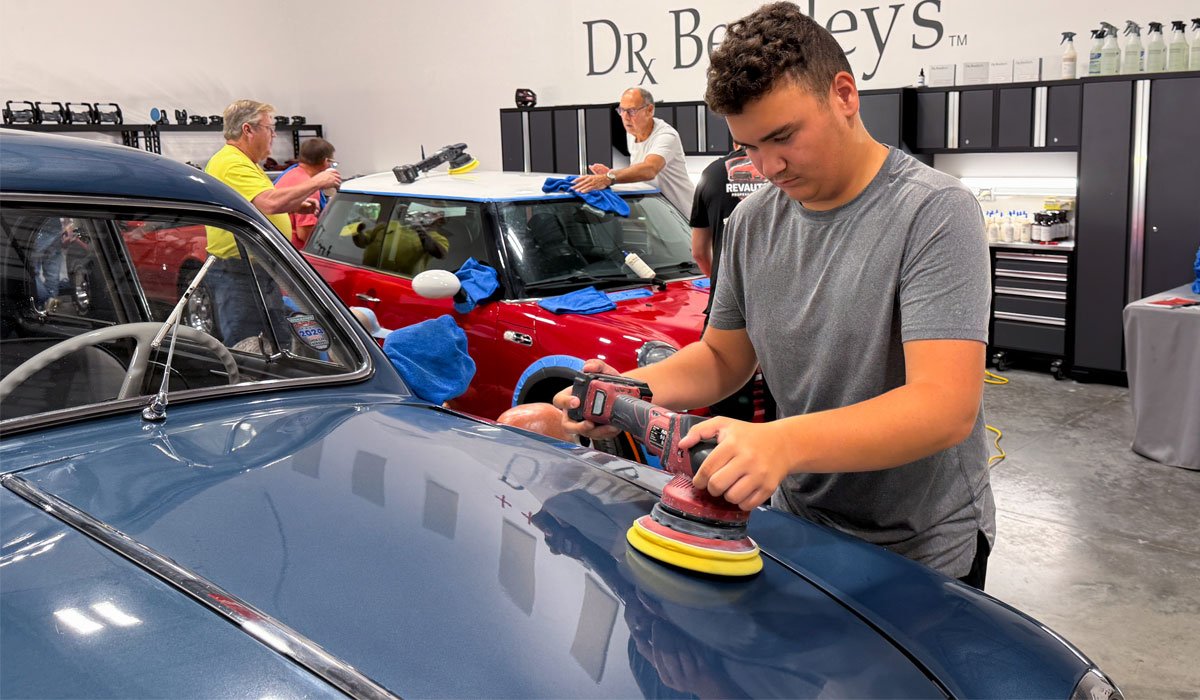
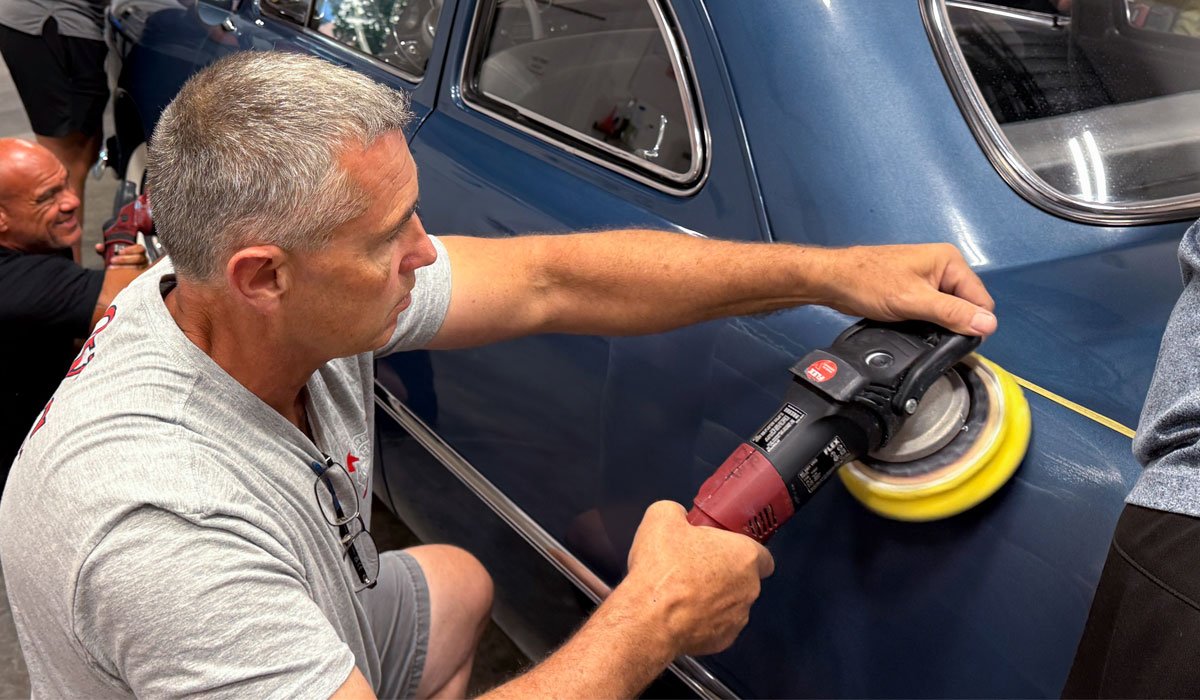
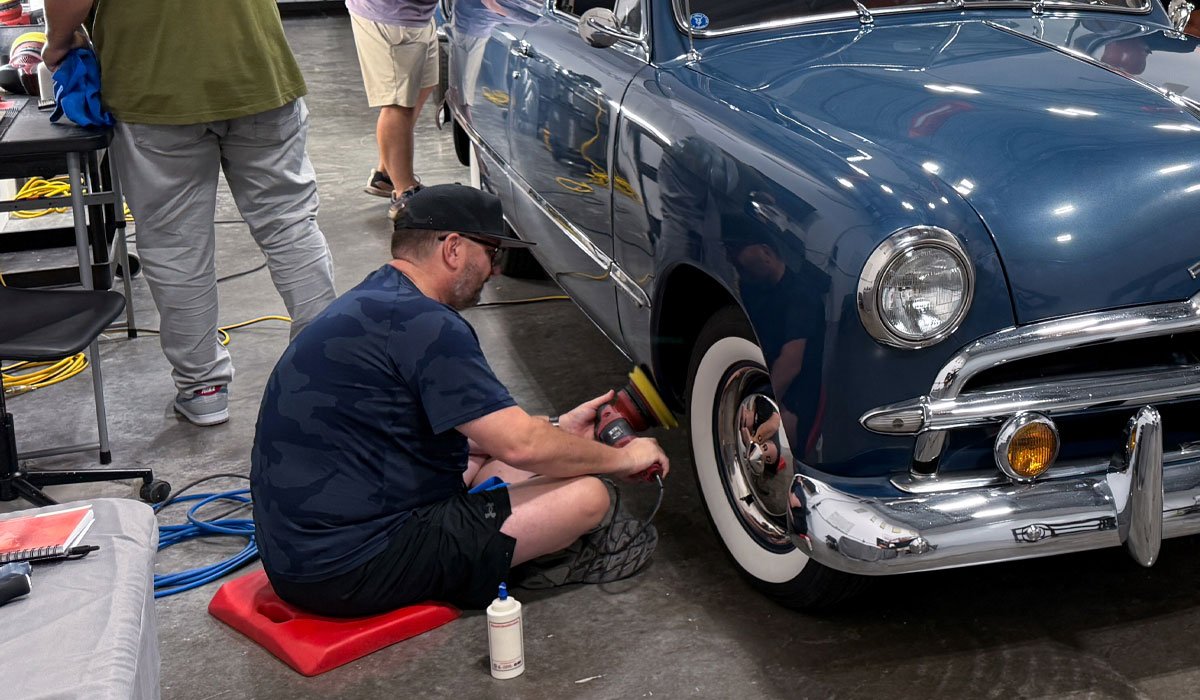
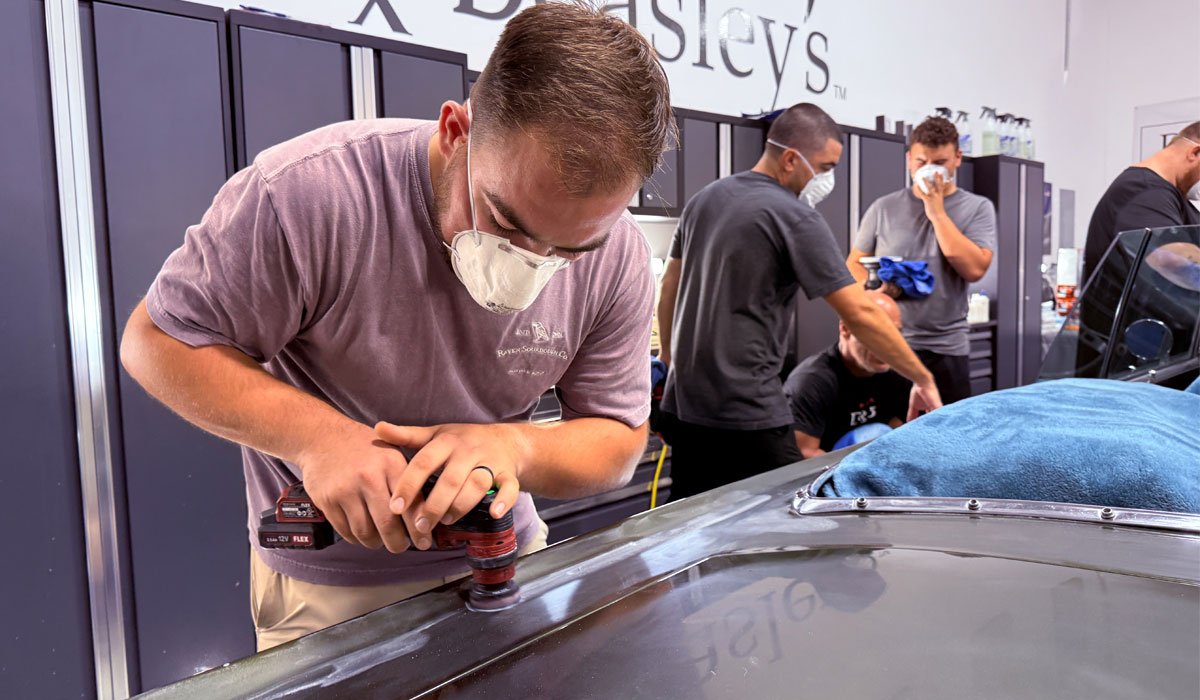
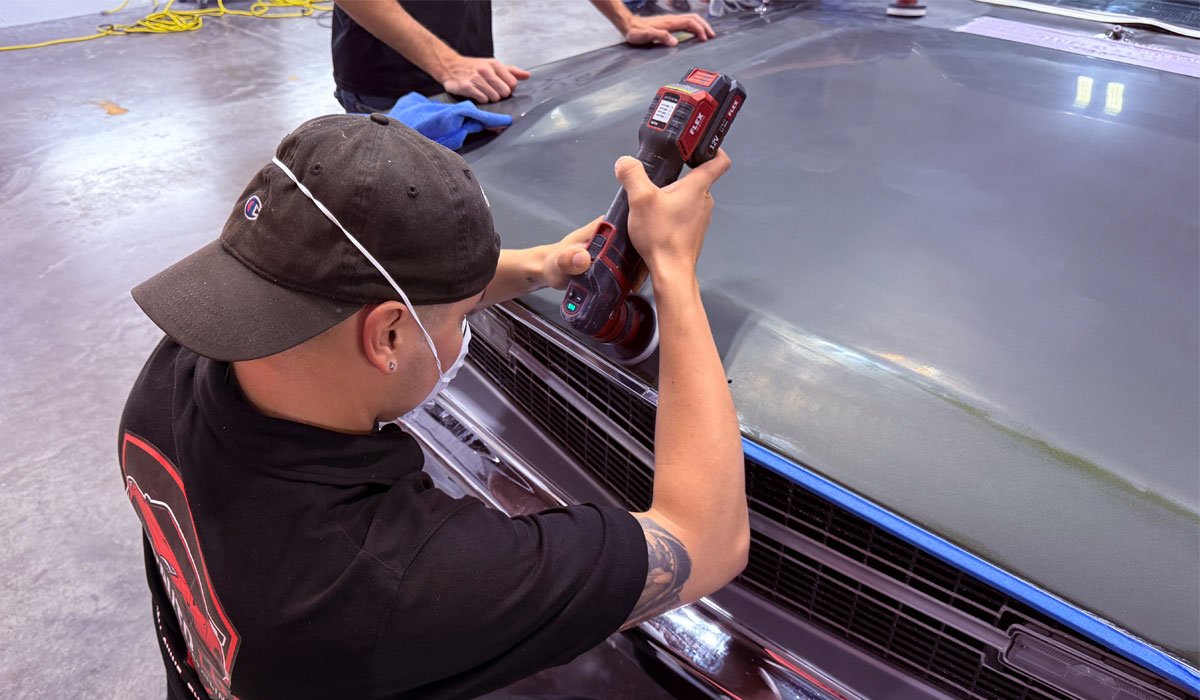
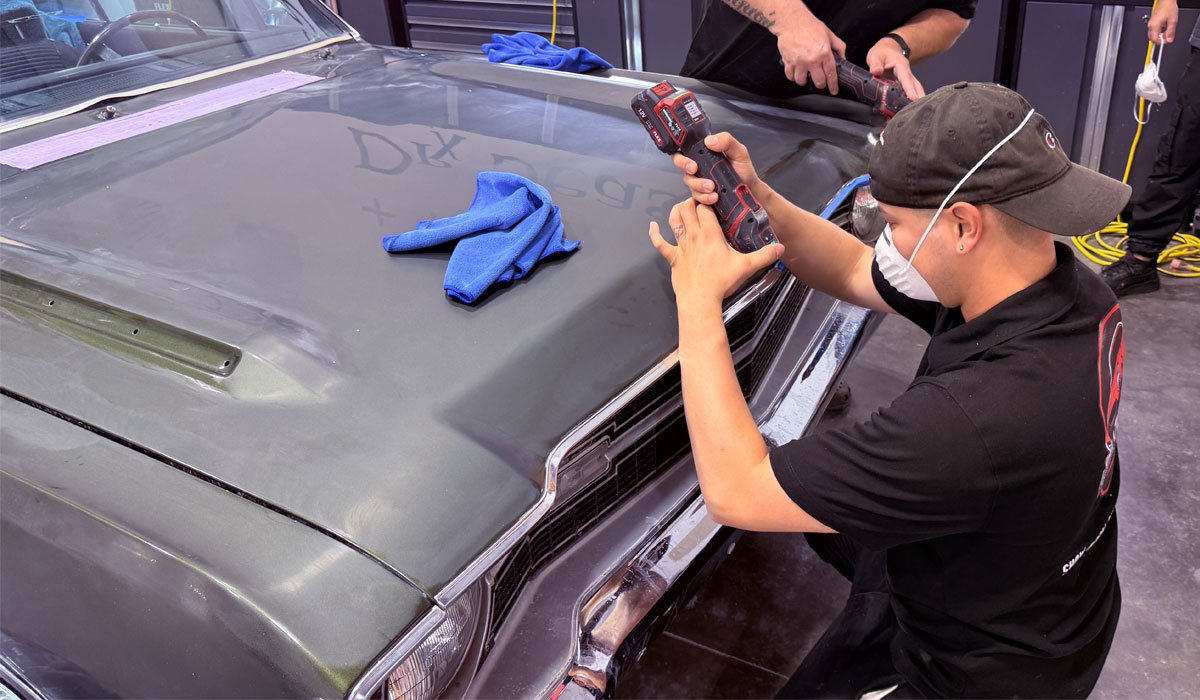
Here's Hunter testing out the FLEX CBEAST - a Cordless 8mm Gear-Driven Orbital Polisher

full


full


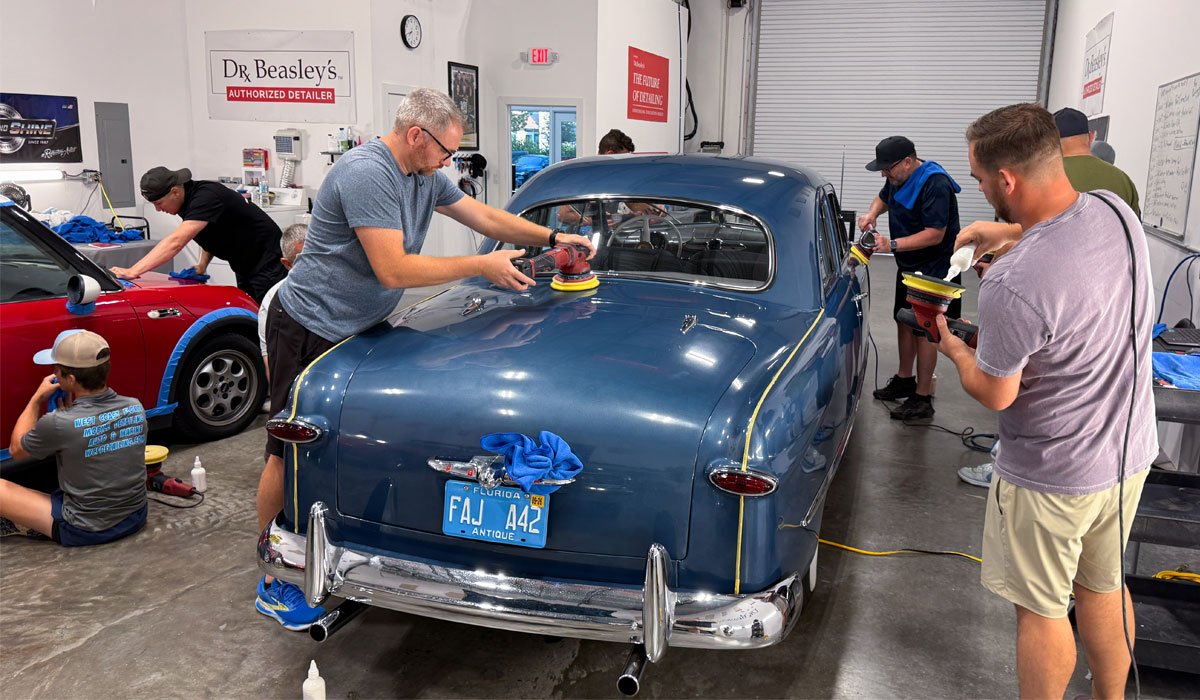
Out back, we have Brand using a CBEAST and Paden using a Sua BEAST.

full


Here's Sean using a CBEAST and behind him is Mike using a Supa BEAST

full


Here's Ray using the most powerful version of the FLEX 8mm gear-driven orbitals the XC 3401 VRG aka THE BEAST!

full


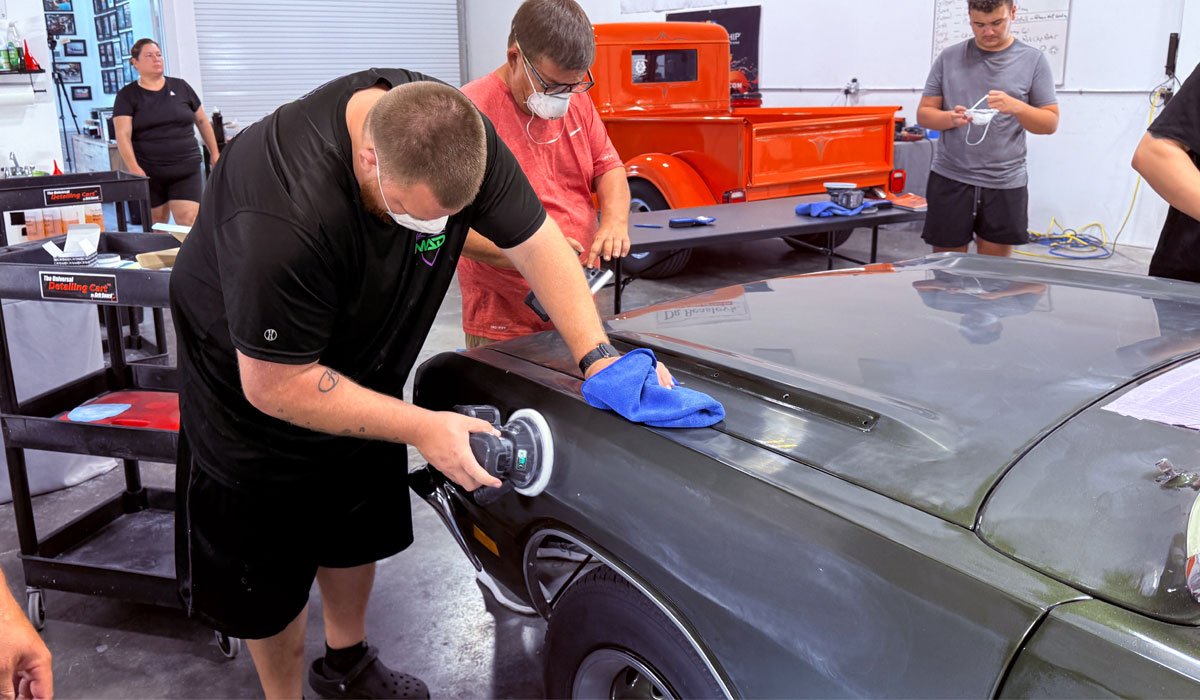
Our classes sound like a HORNET'S NEST once everyone gets their polishers fired up!

full


full


full


full


full


full


full


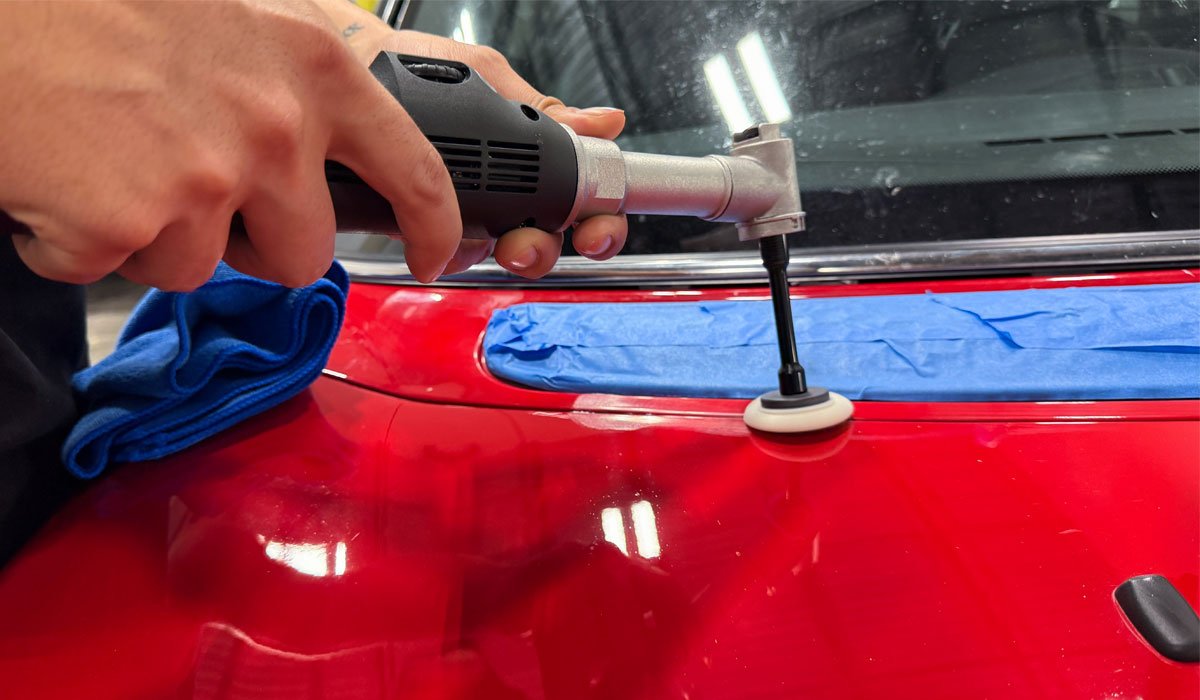
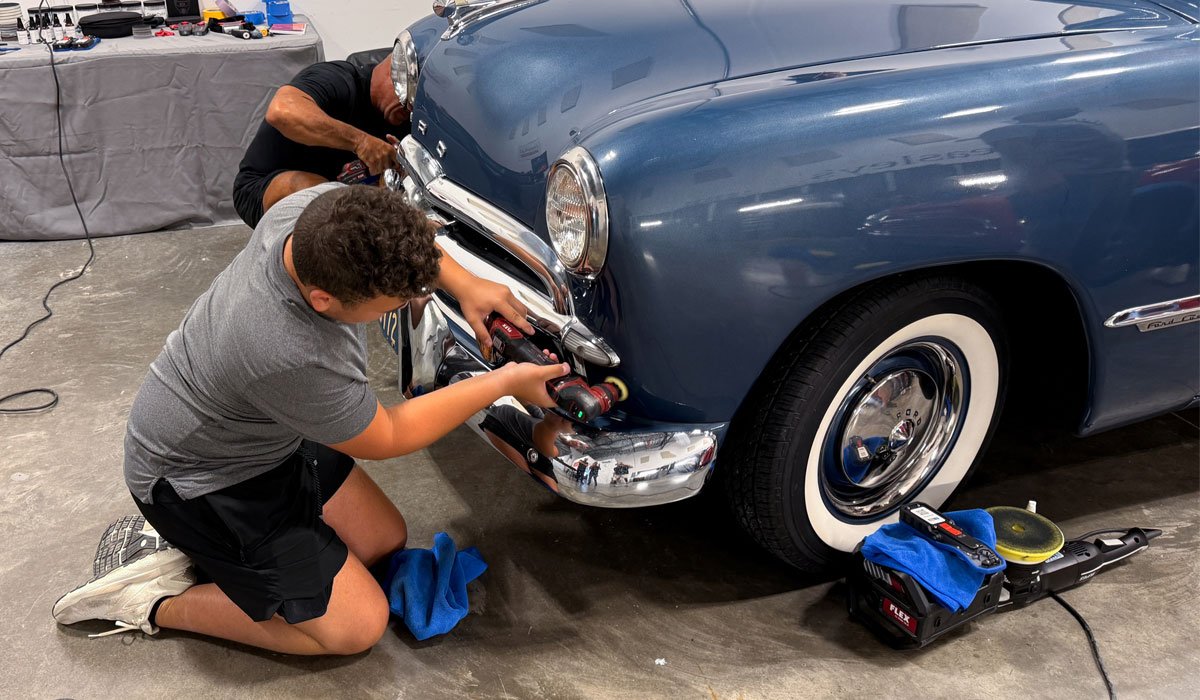
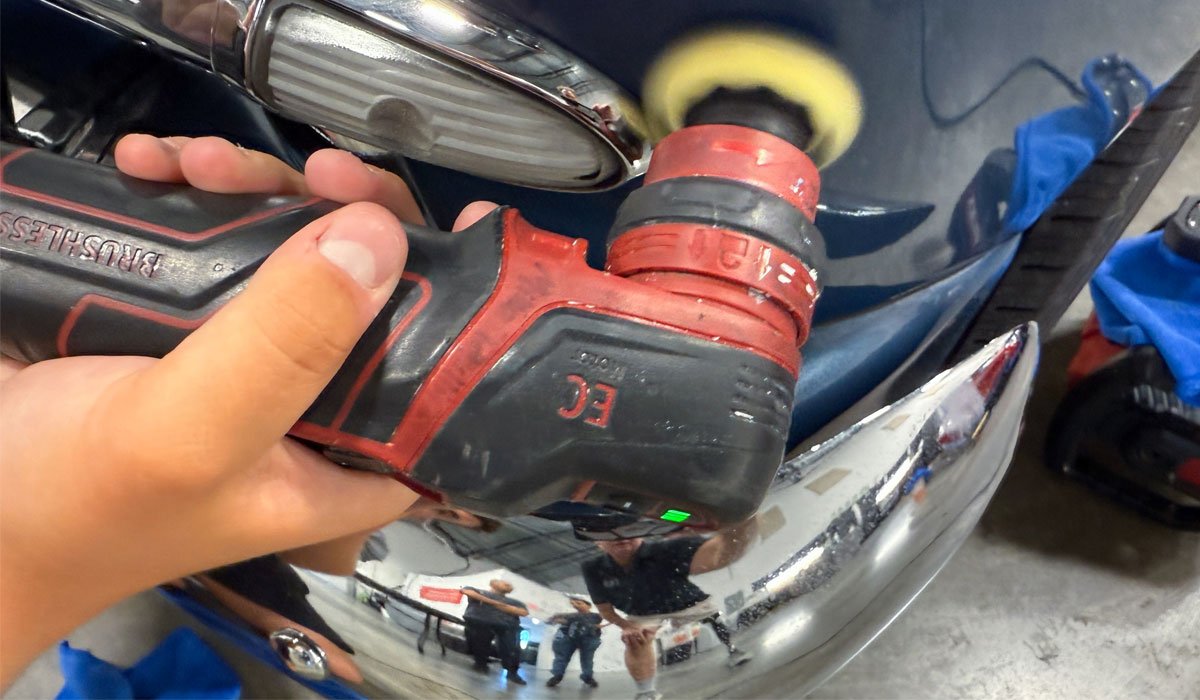
Here's Hunter using the FLEX PXE-80 to do some paint correction in some tight areas.

full


full


Chrome Polishing
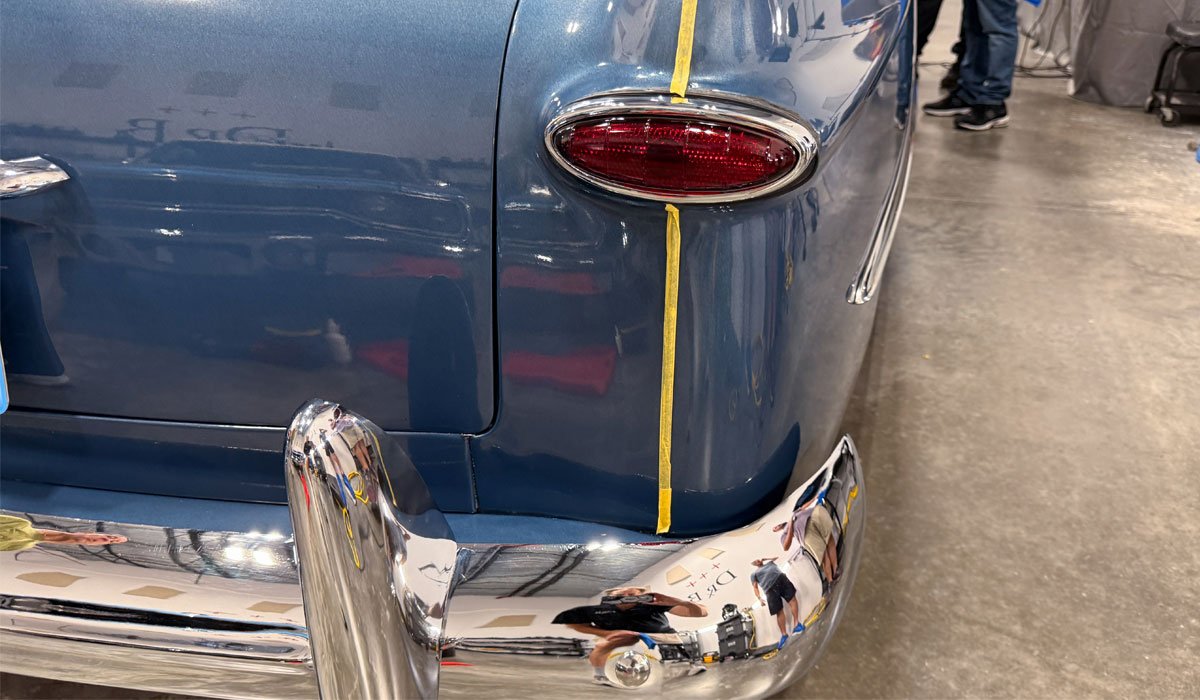
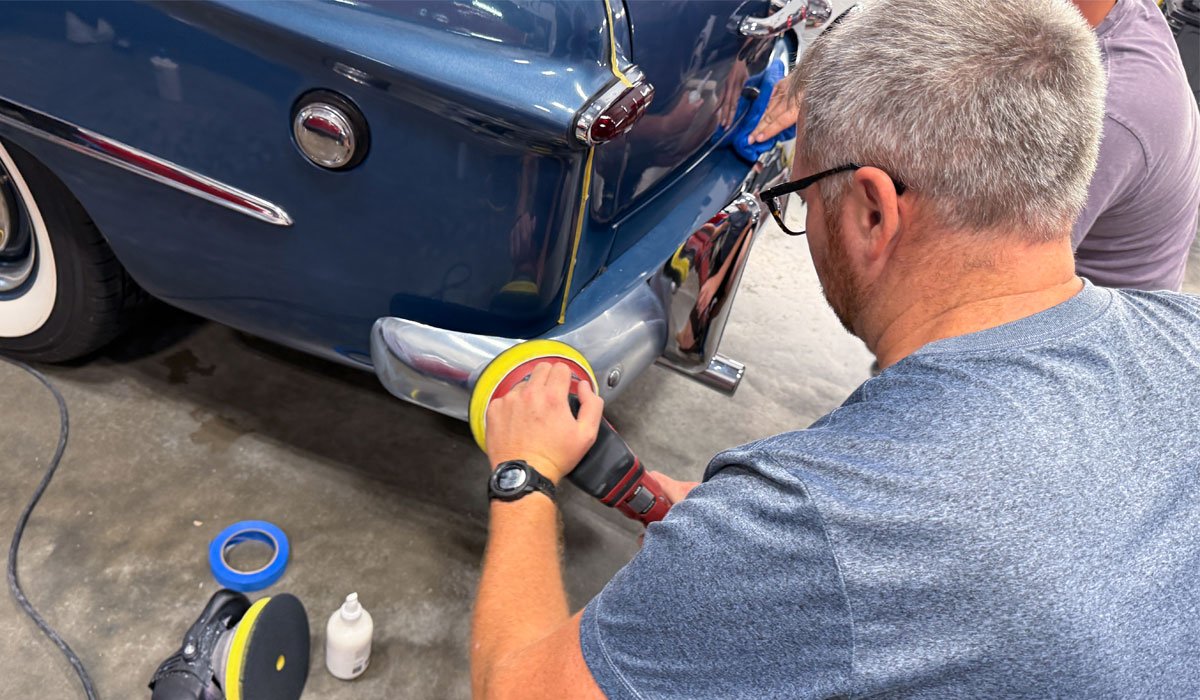
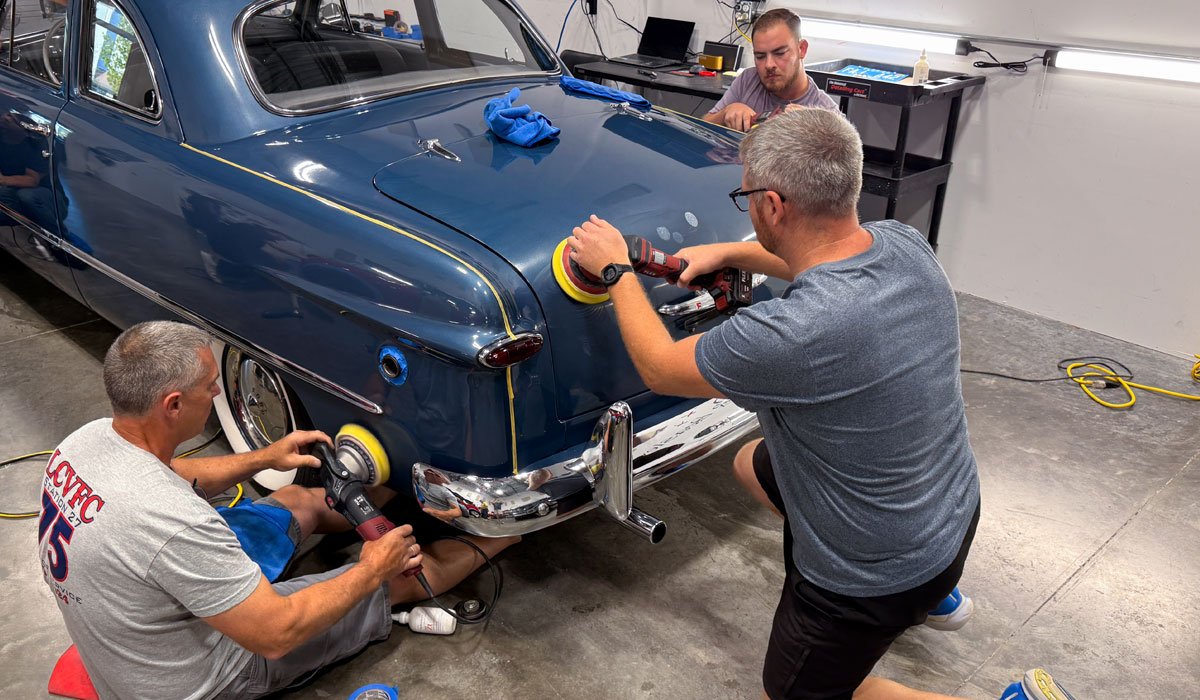
A number of the training cars had actual chrome-on-steel bumpers and trim and for this, they learned how to machine polish the chrome to restore a brilliant shine without causing any harm. Here's Brad polishing the rear bumper.

full


See it? See how much more vibrant and rich the blue color now looks?

full


Mike
 
Last edited:
More...

AFTER RESULTS
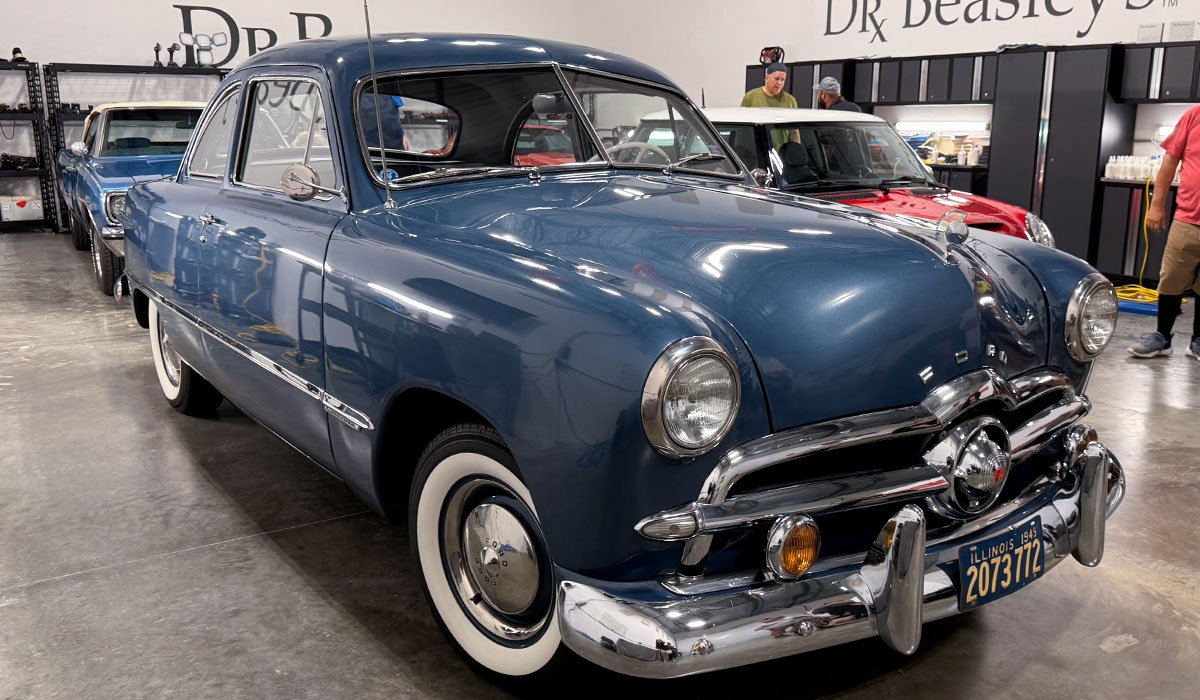
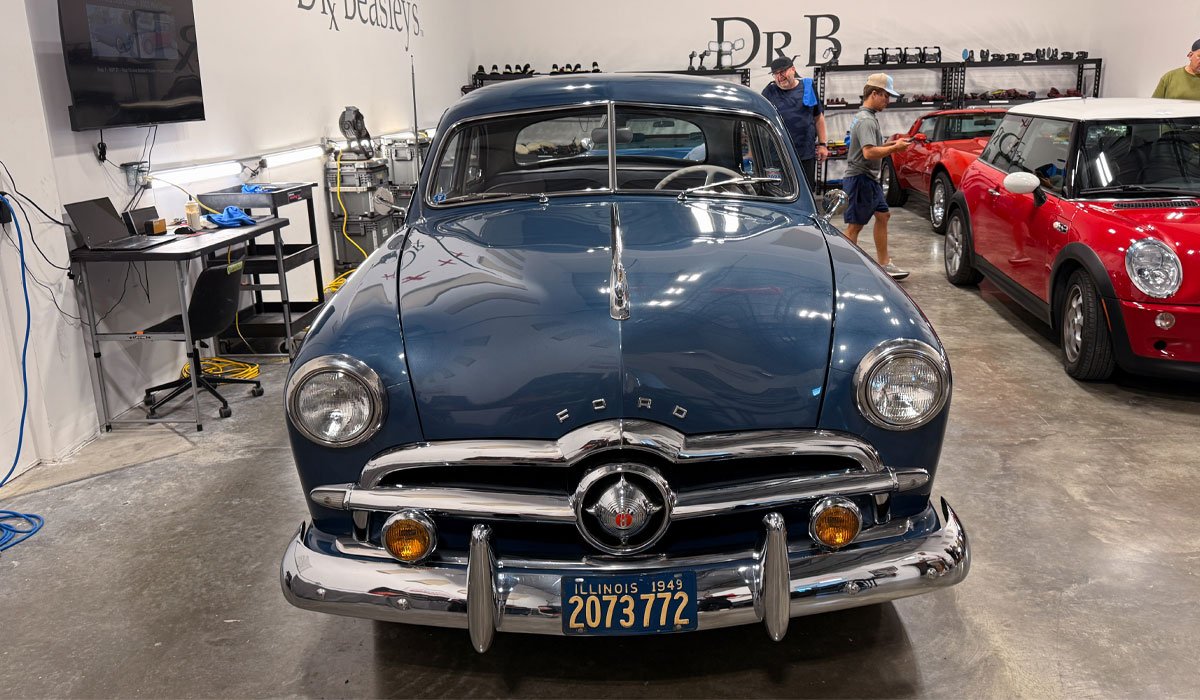
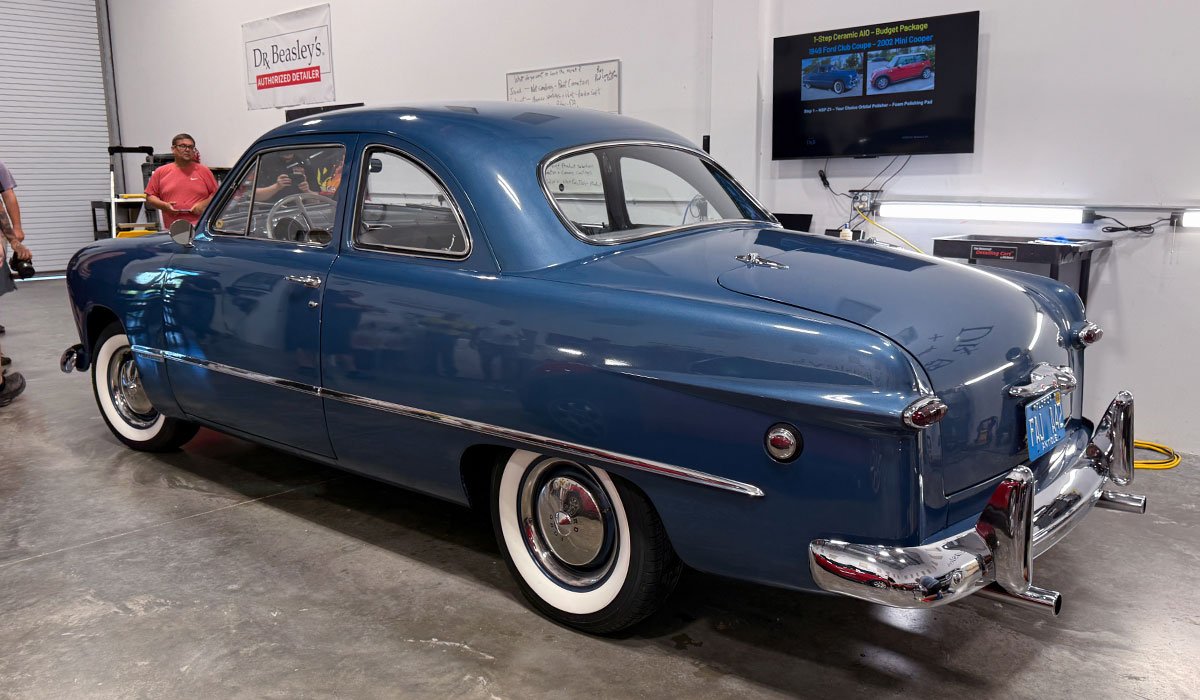
For what it's worth, I predicted the paint would go through a dramatic change with the blue color becoming darker and richer and I think the pictures prove the point.

full


full


full


full


full


Mike
 
More...

How To Remove Orange Peel via Sanding
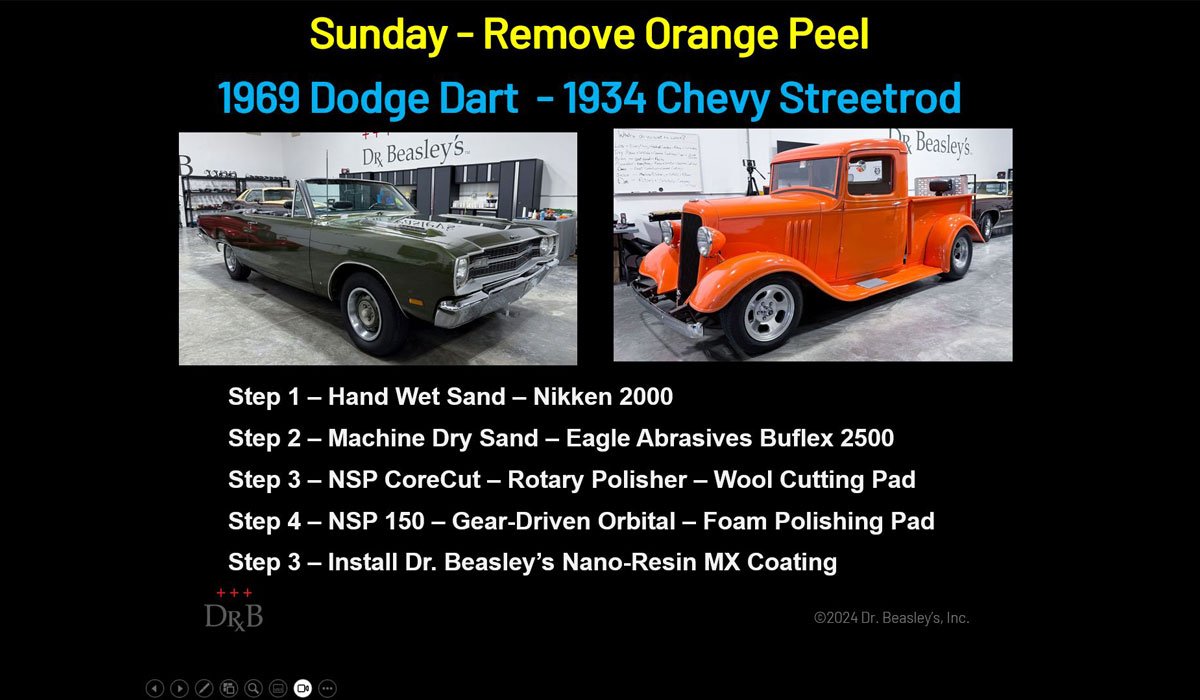
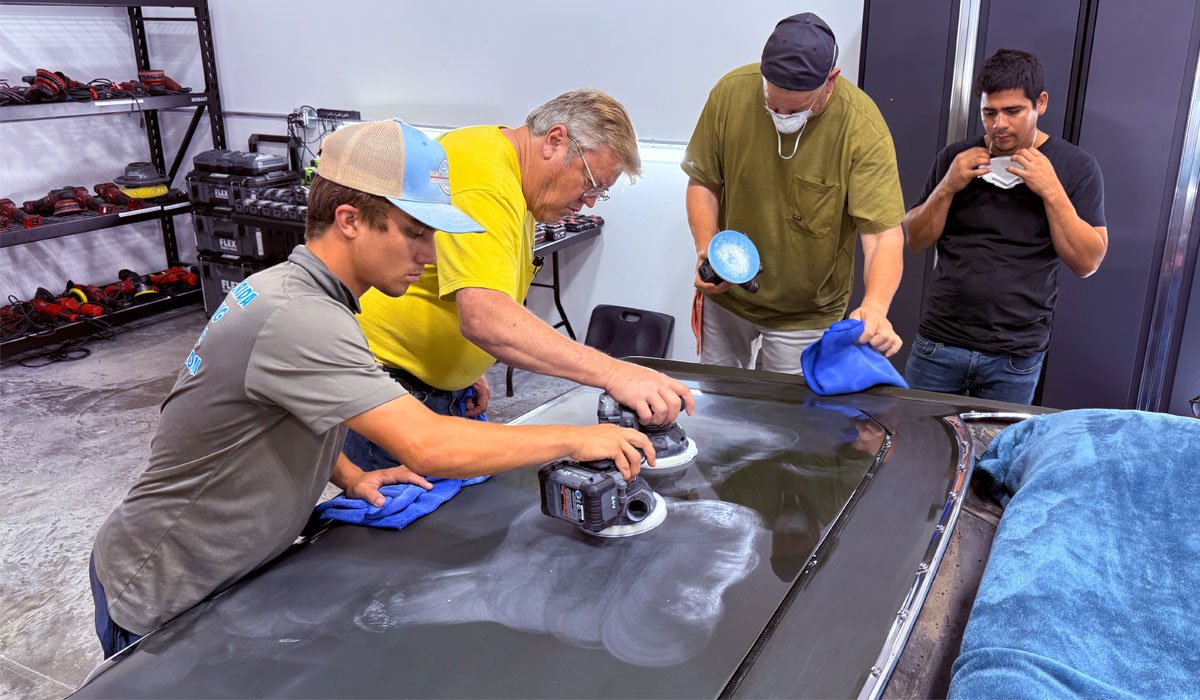
In our 2-day classes, the second day is where you get to learn the art of wet sanding to flatten the paint to remove orange peel. Besides learning how to wet sand by hand, you also will learn dry sand by machine. After the sanding steps, it's time to go back to the rotary polisher with huge 8" wool cutting pads to remove 100% of the sanding scratches. This is why the first tool you learn how to use on Saturday morning is the rotary polisher is because I need the class already comfortable with and confident as to using the rotary for this very complicated process. After removing all the sanding marks using a rotary polisher, then it's back to gear-driven orbital to remove any holograms while maximizing gloss, shine and clarity.


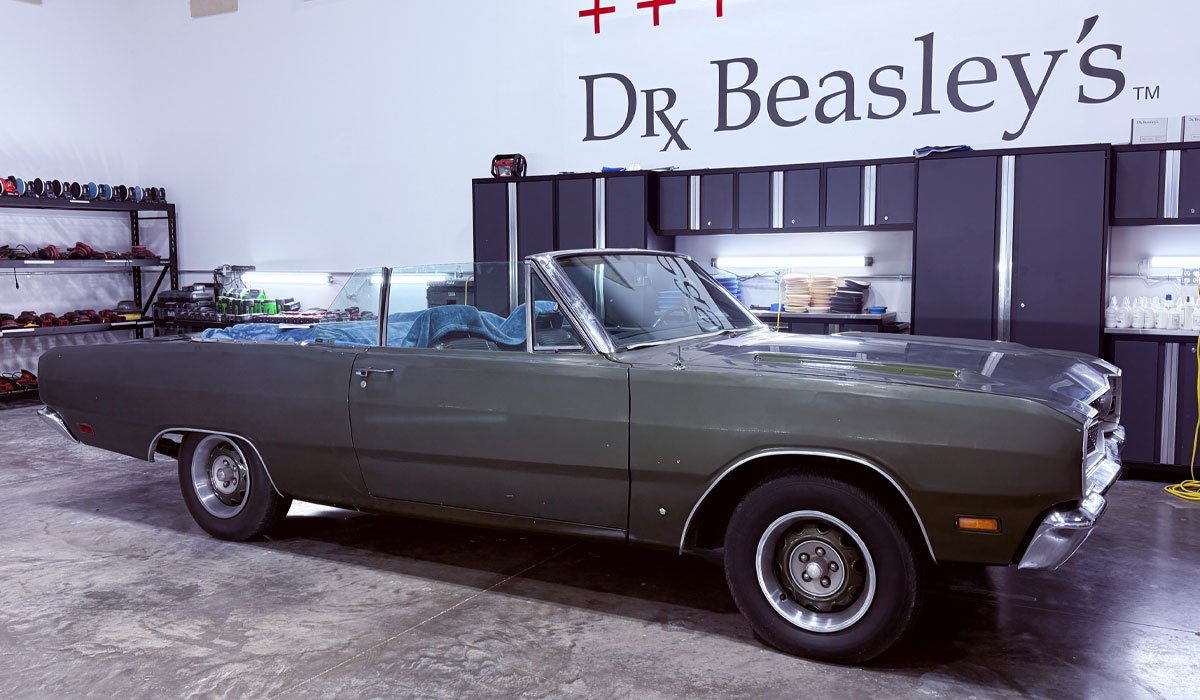
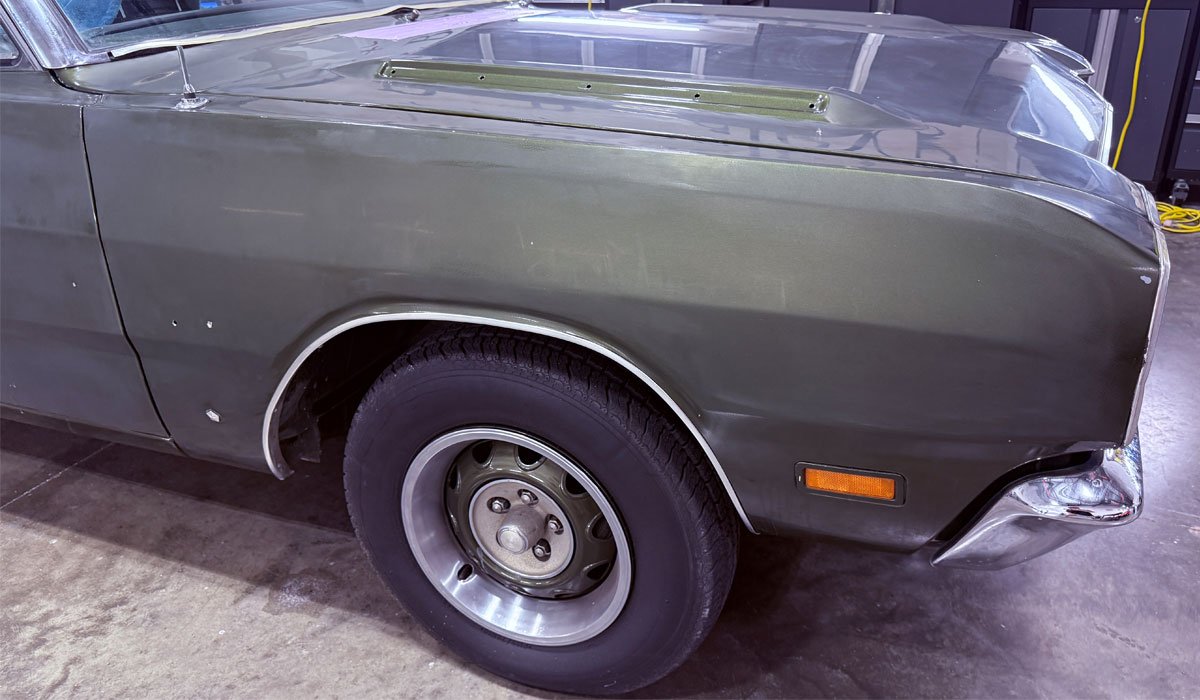
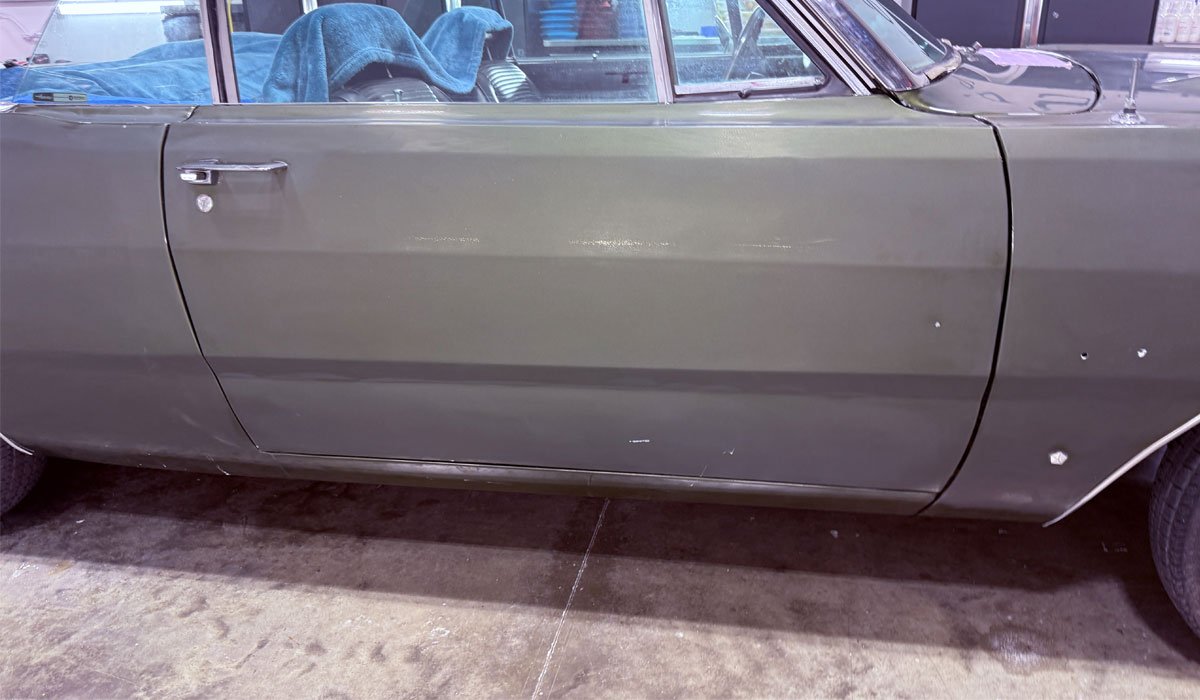
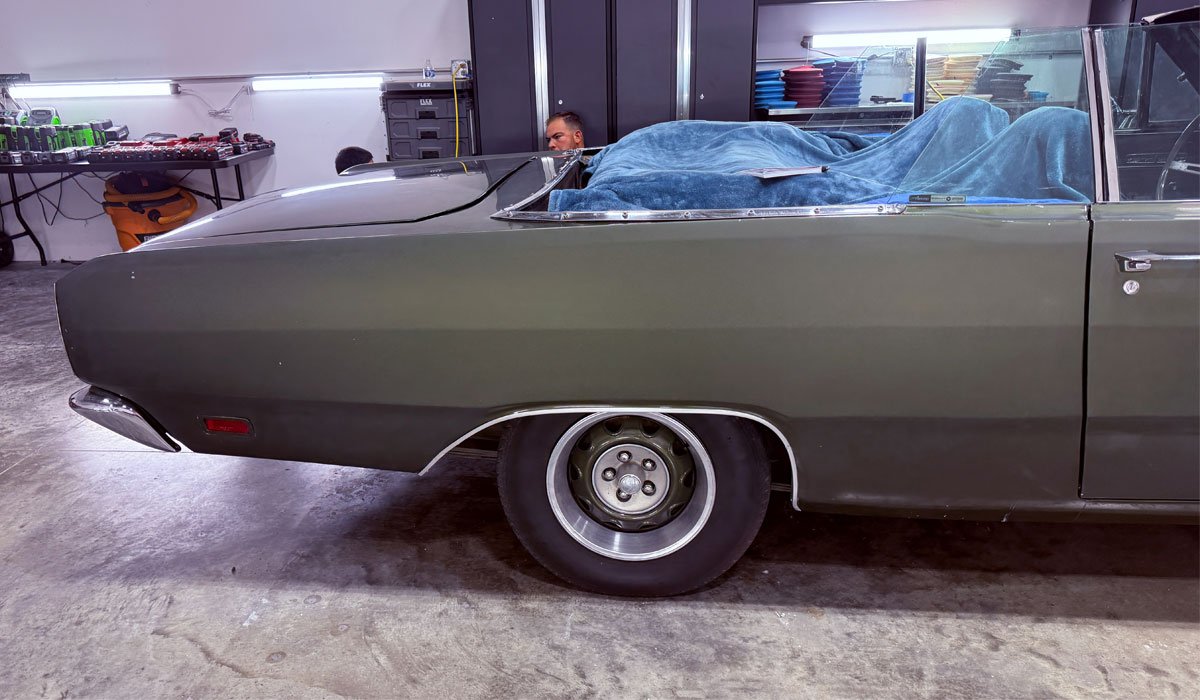
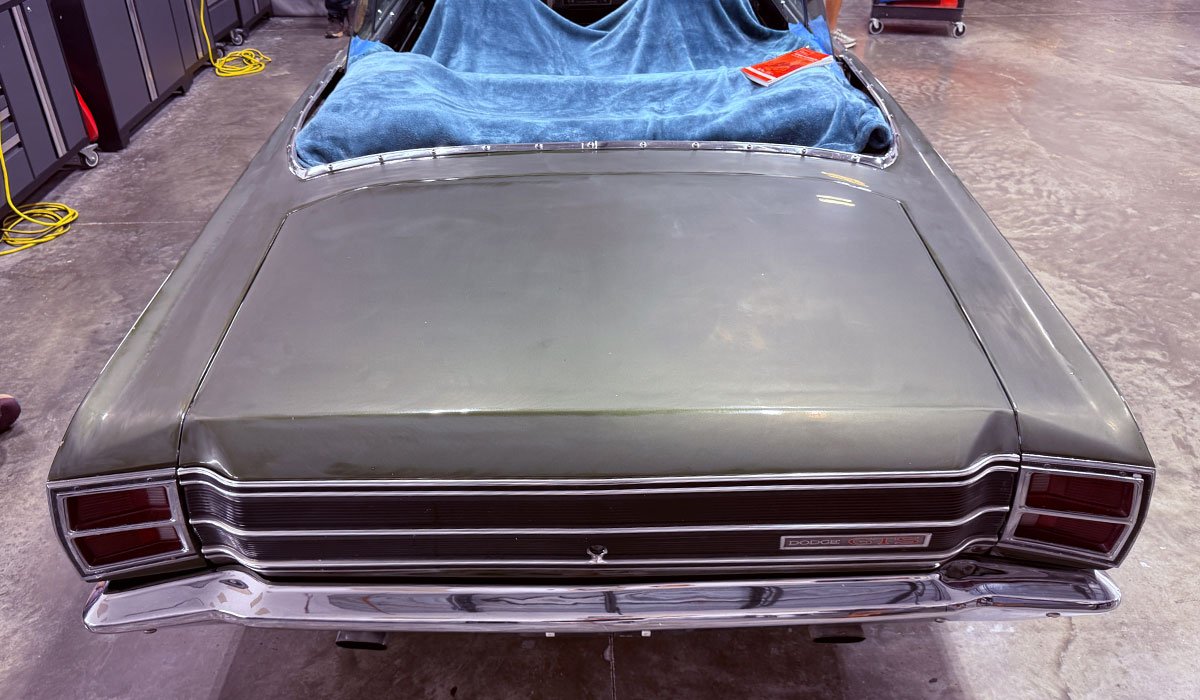
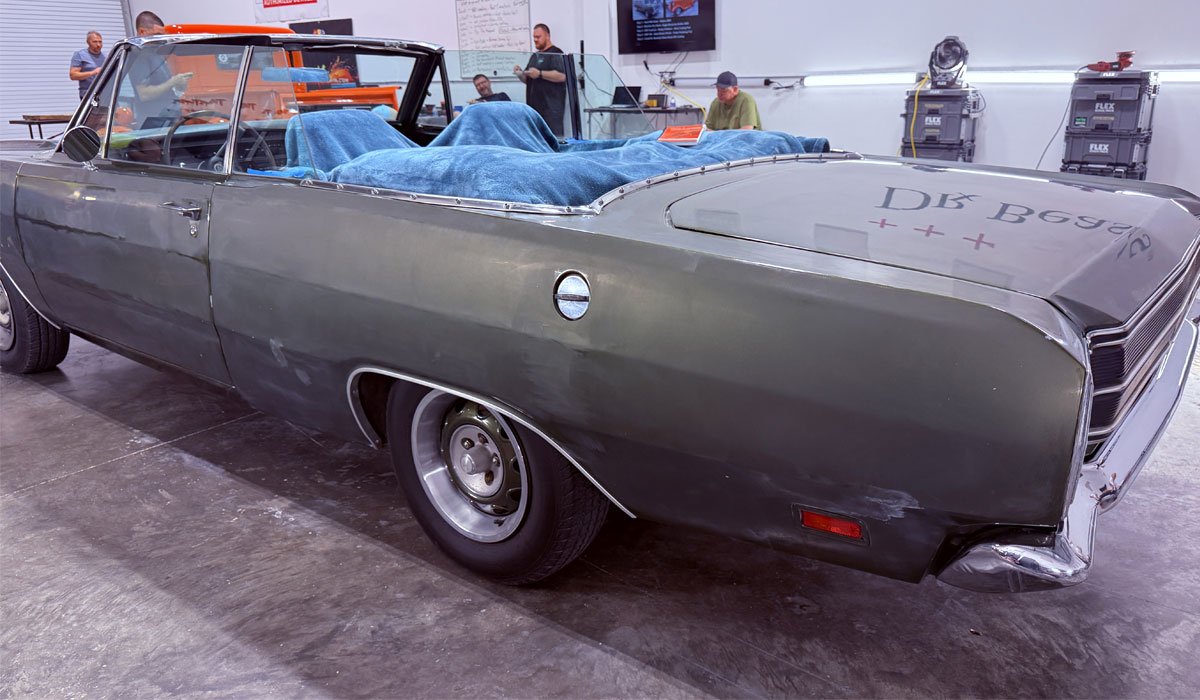
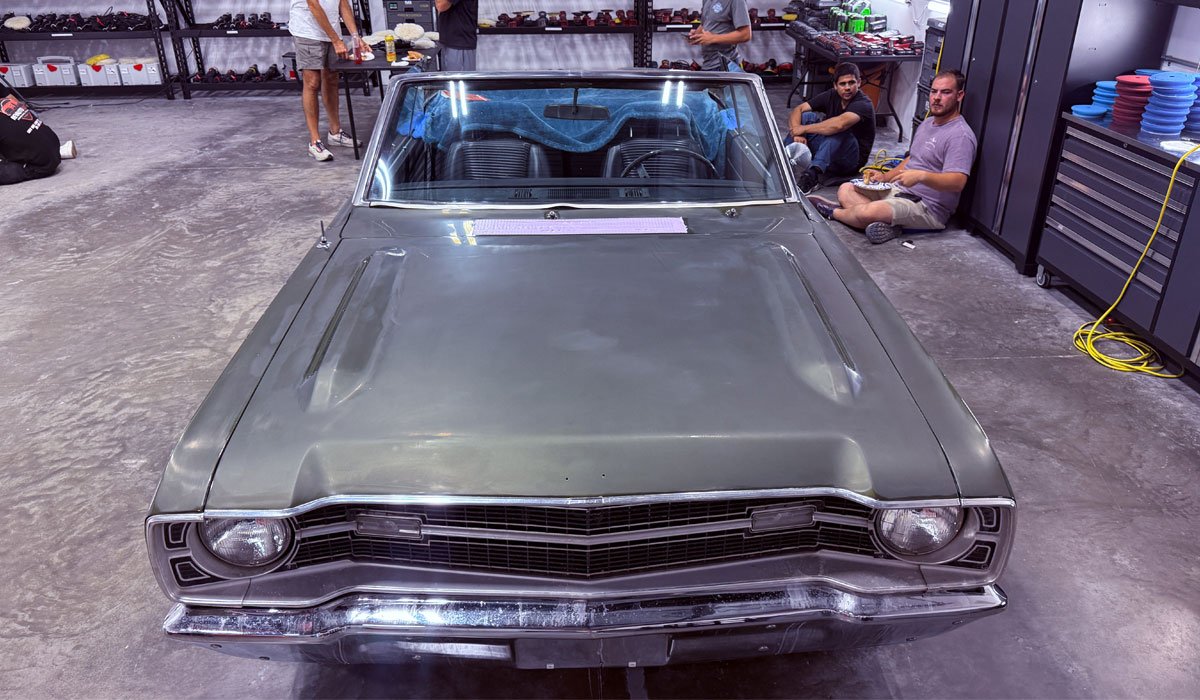
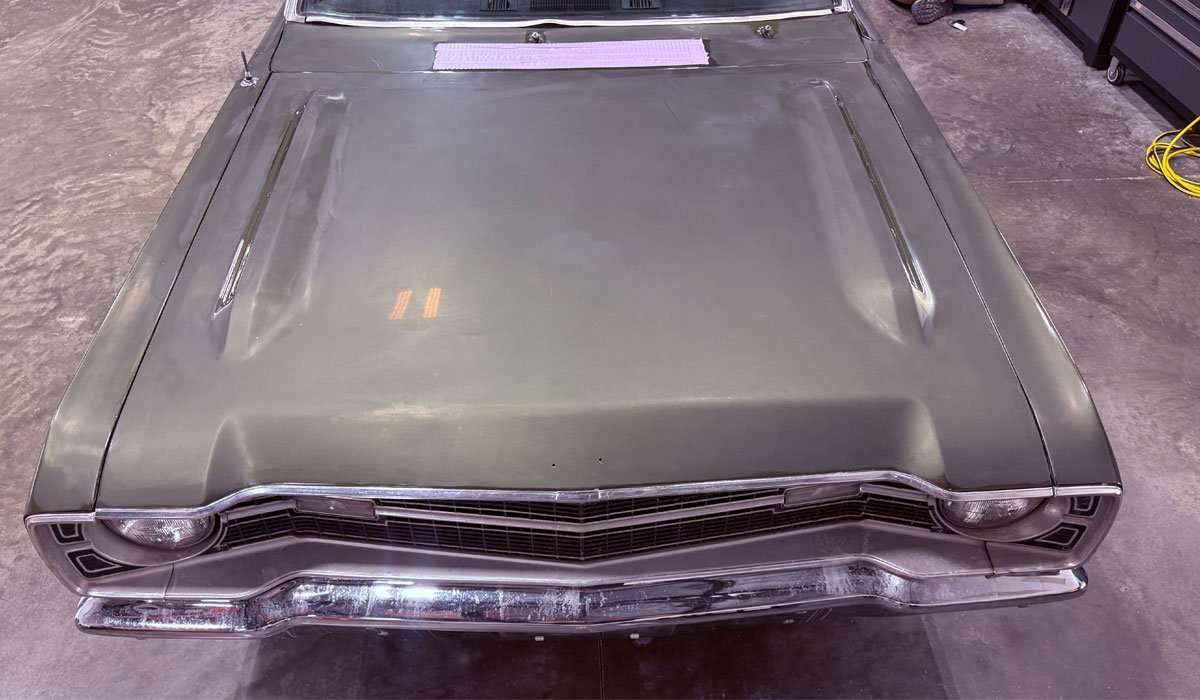
Training Cars - 1934 Chevy Pickup Streetrod & 1969 Dodge Dart GTS Convertible
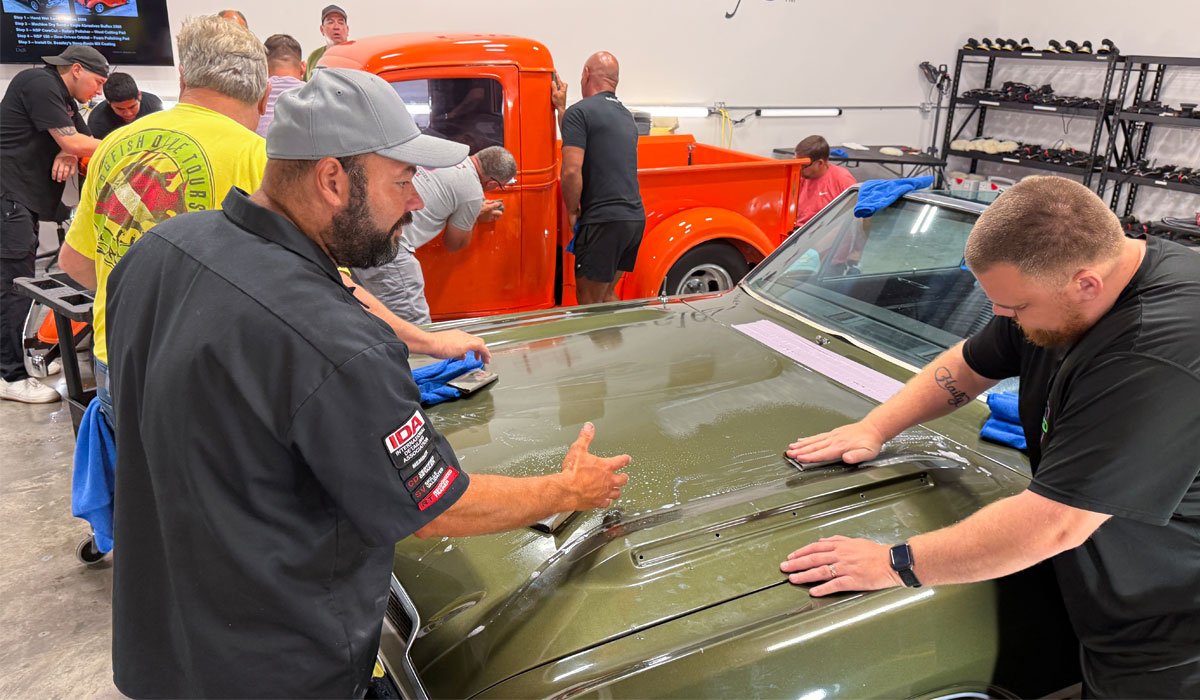
One half of the class will be working on the Chevy while the other half works on the Dodge.

full


Process
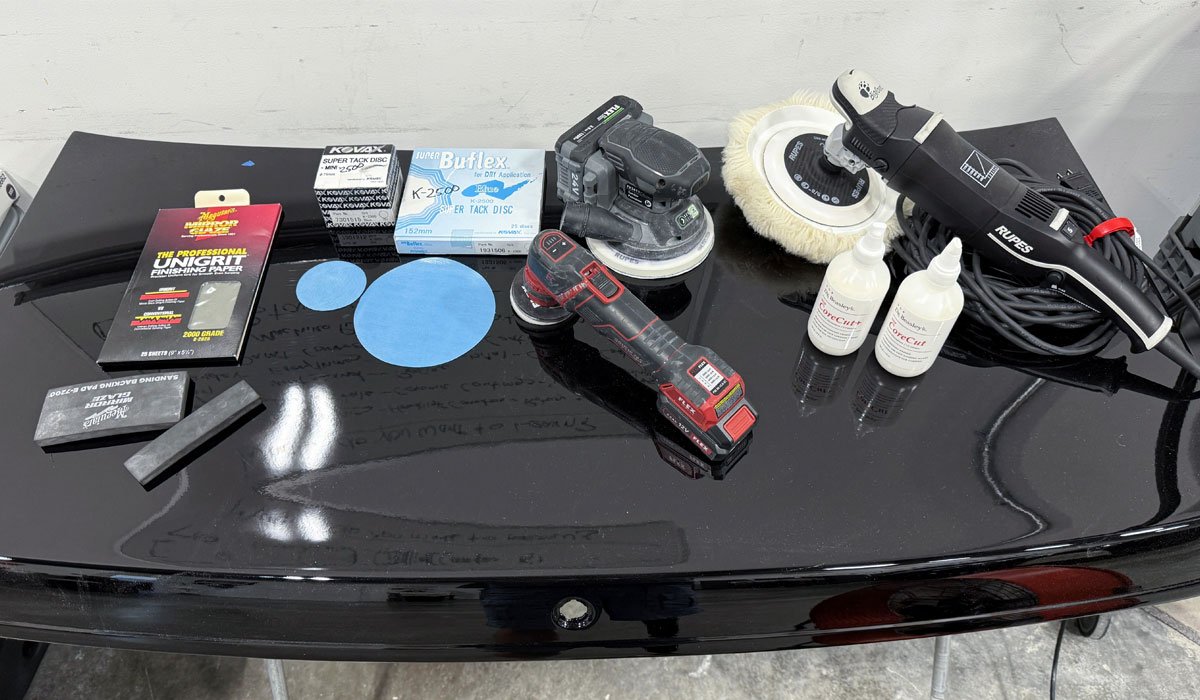
  1. Hand Wet Sand using Nikken 2000 Finishing Papers - E-7200 Backing Pads
  2. Machine Dry Sand using Eagle Abrasives by KOVAX Buflex K-2500 - FLEX FX3411 Cordless DA Sander and PXE-80 with 6mm drive unit
  3. Rotary Polishers with Buff and Shine 8" Wool Cutting Pads with Dr. Beasley's NSP CoreCut
  4. Gear-driven Orbital Polishers with Buff and Shine EdgeGuard Foam Pads with Dr. Beasley's NSP 150
  5. Ceramic Coat using Dr. Beasley's Nano-Resin 2.0

full


It's GO TIME!
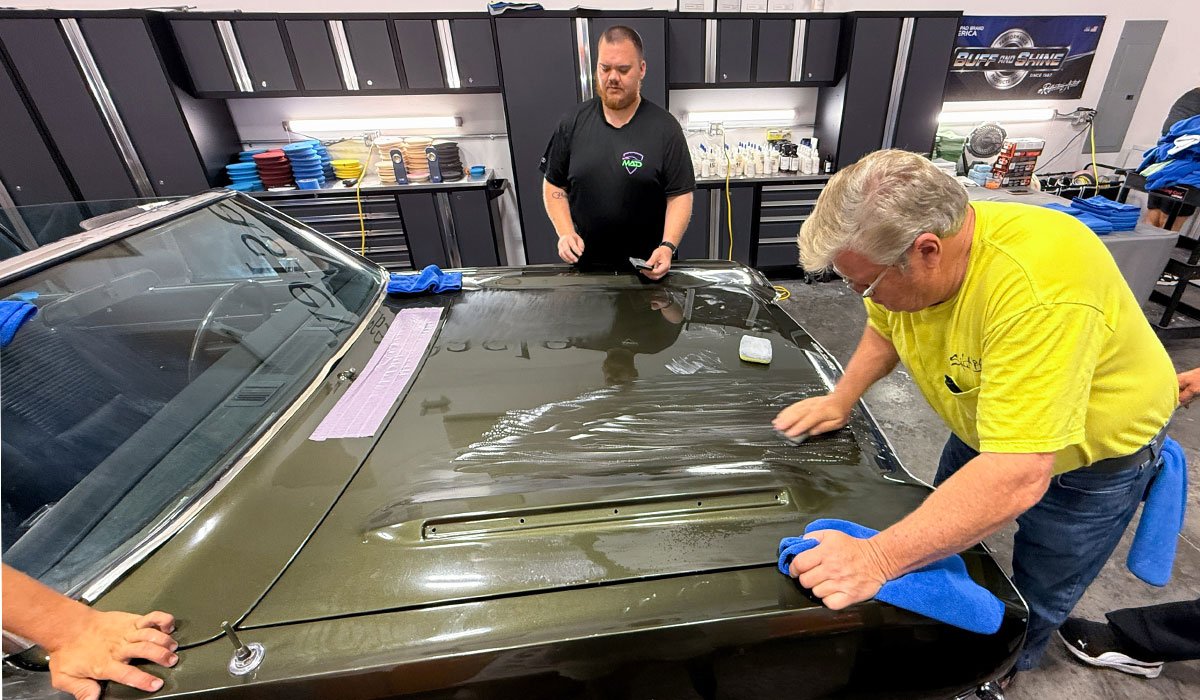
After going over the correct technique for hand wetsanding, I turn the class loose. As the class is sanding, my job is to walk around and watch each person and if they're doing it right, I let them know. If I see an area to tweak their technique, then I gently share this info with the person. The goal is to get the finish flat, but the more important goal is for each person to leave this class knowing exactly what to do and how to do it when it comes to removing orange peel via hand wetsanding.

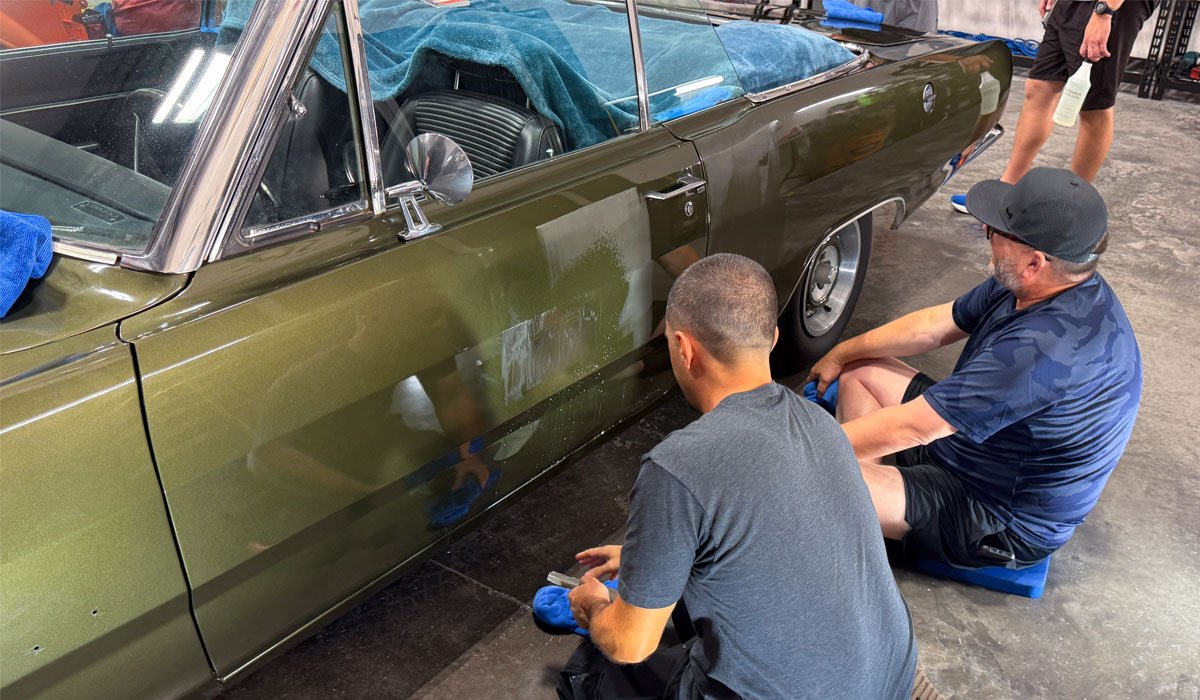
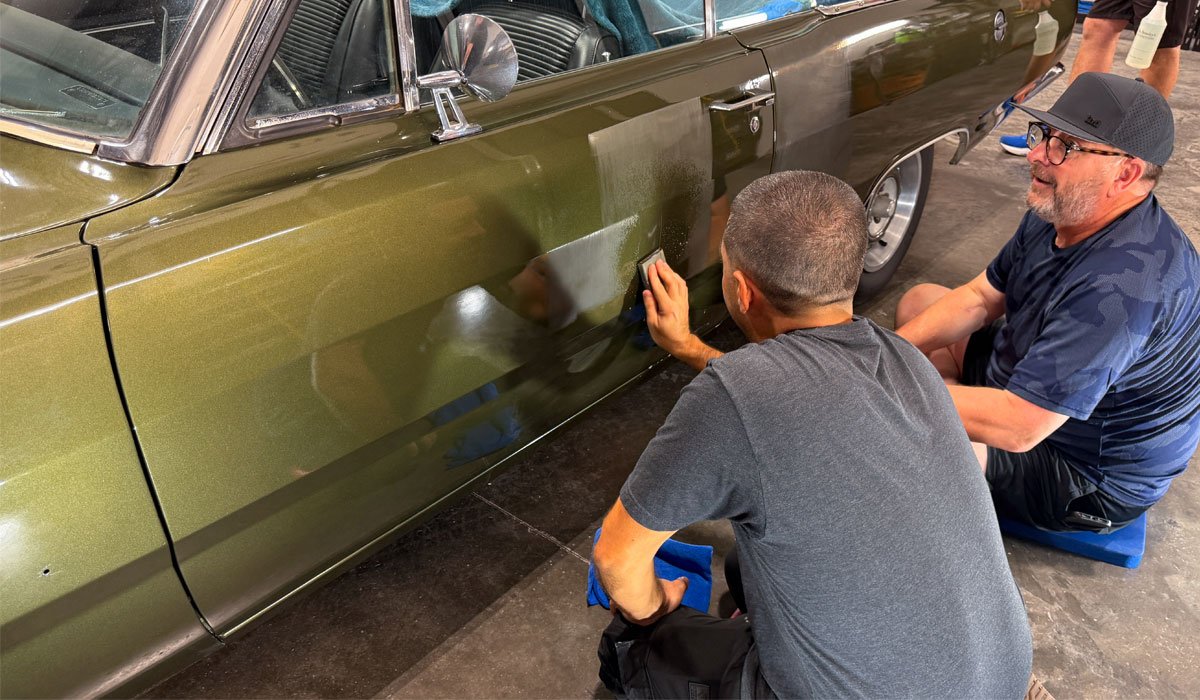
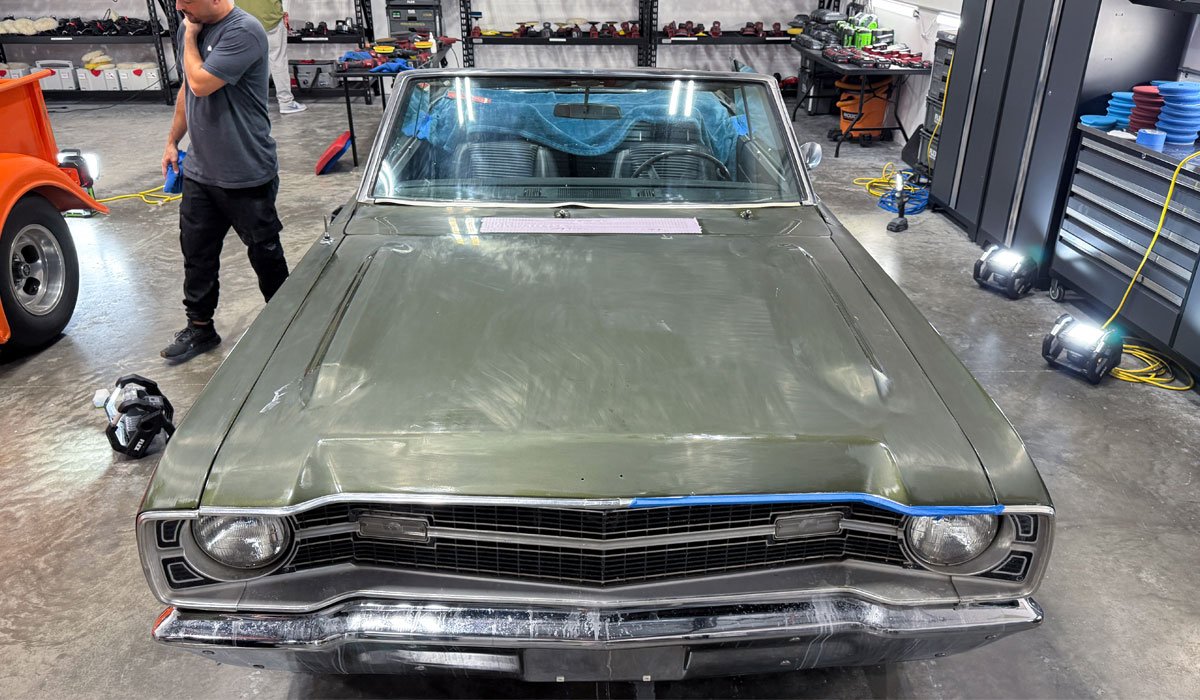
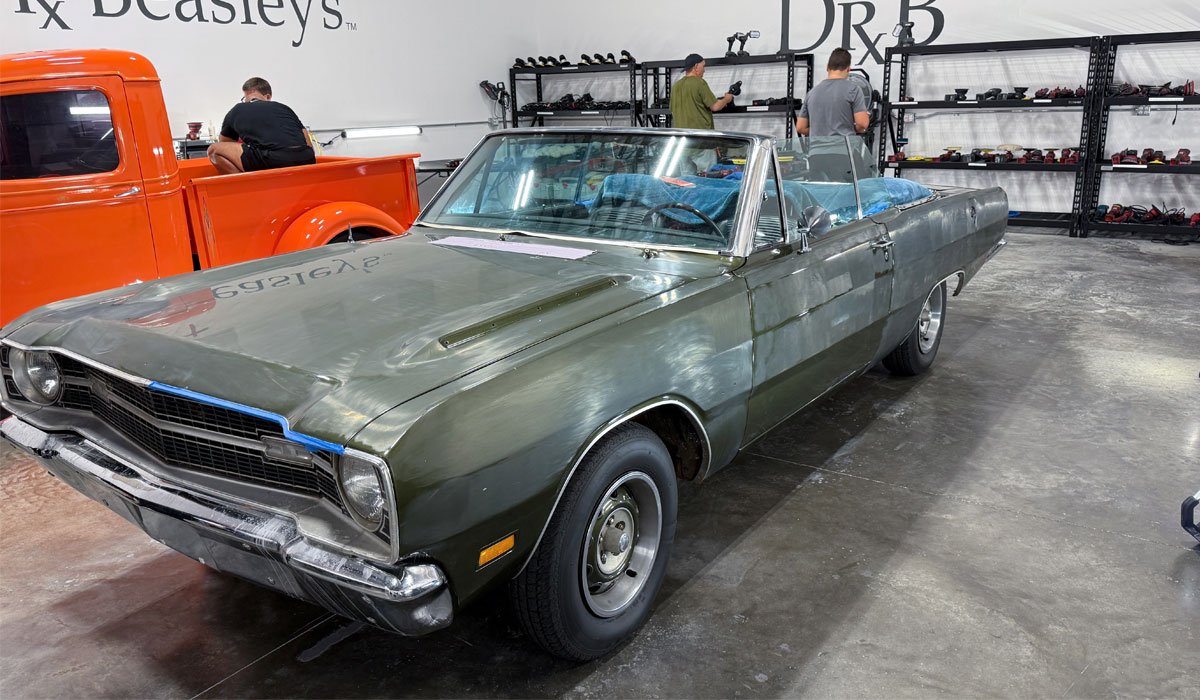
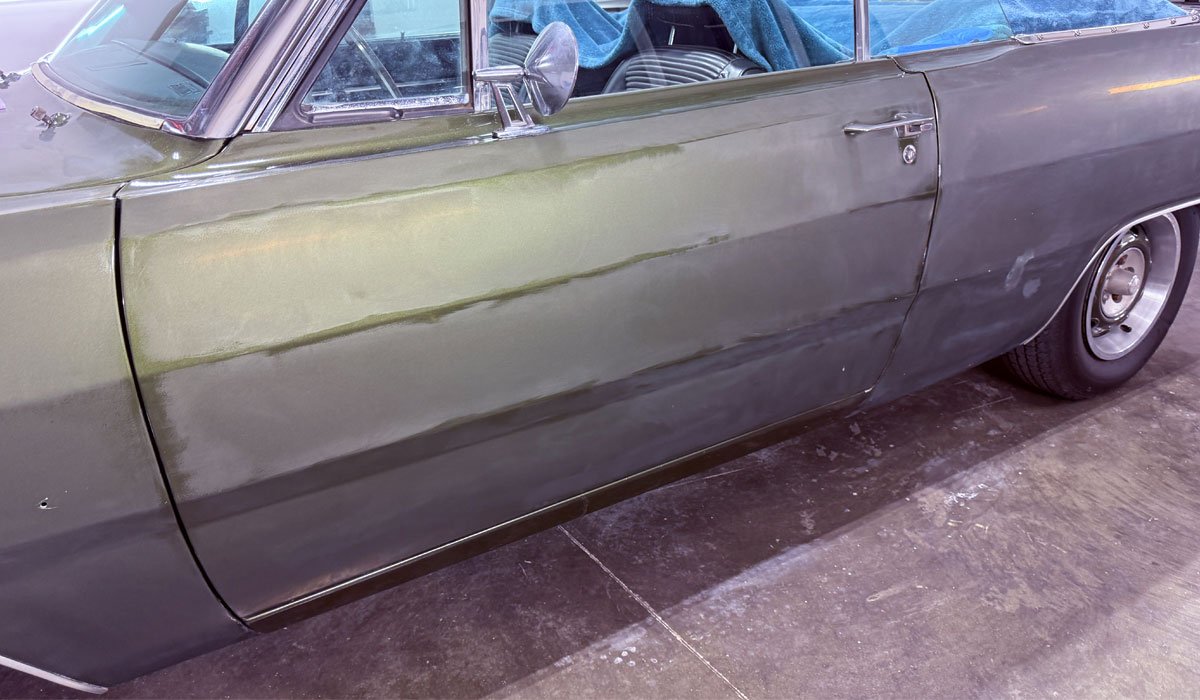
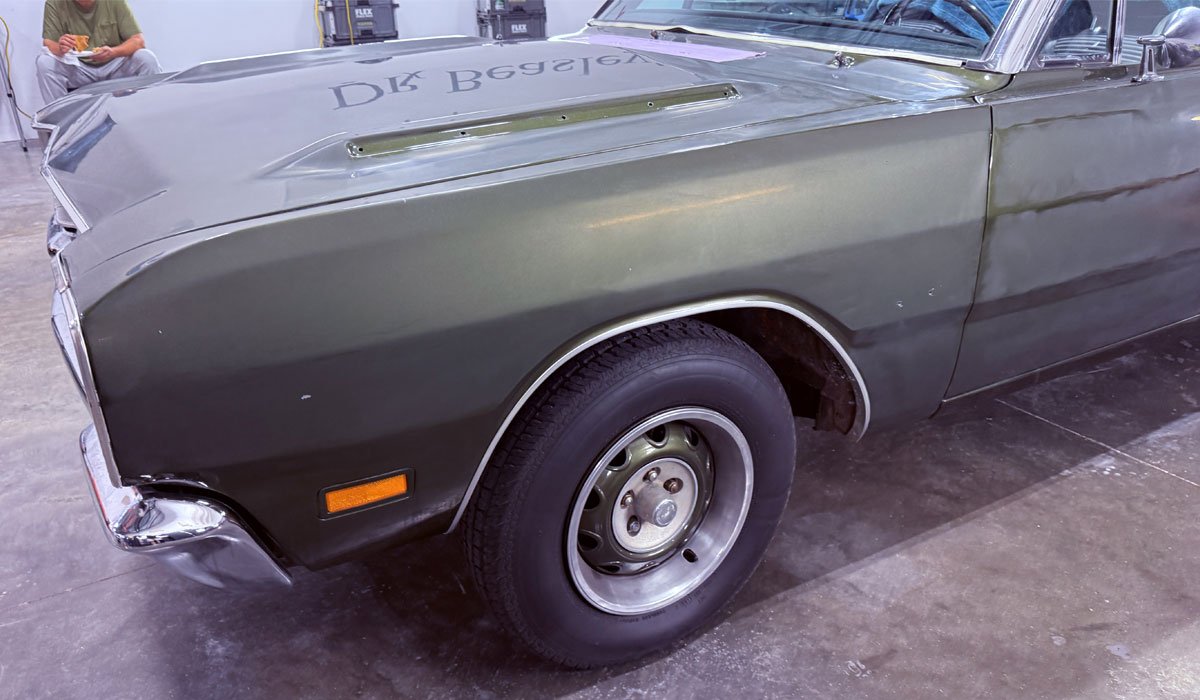
Hand Wetsanding the 1969 Dodge Dart GTS Convertible

full


full


full


full


full


full


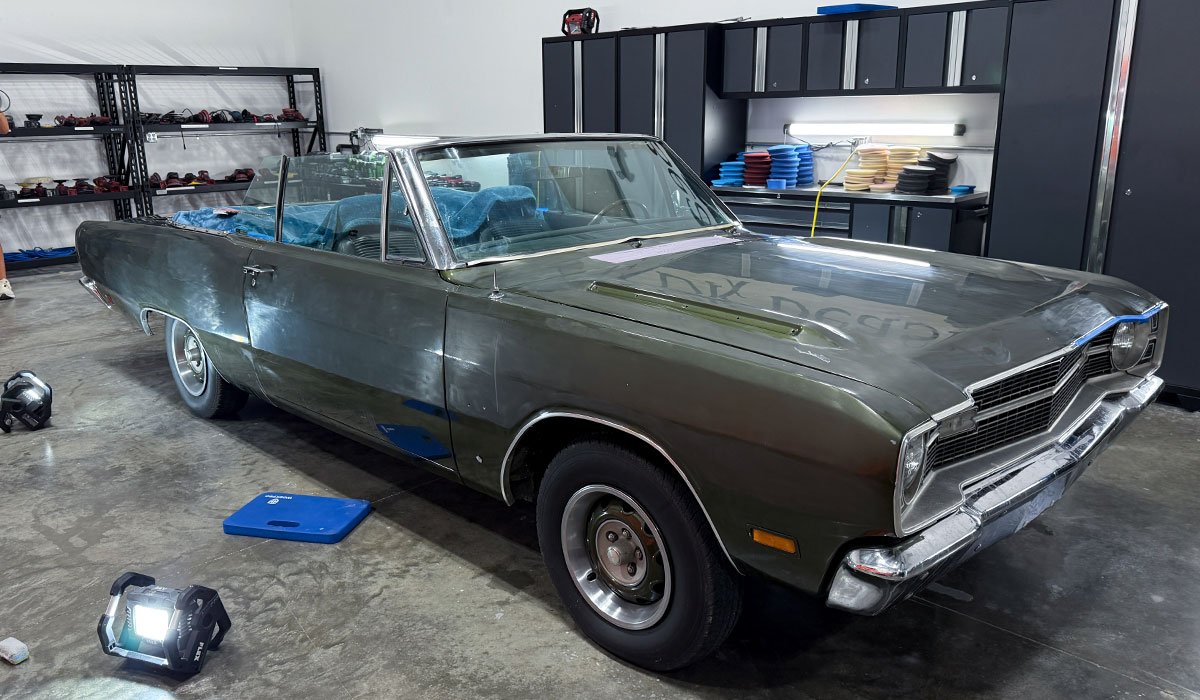
Here she is after hand wet sanding using Nikken 2000 grit Finishing Papers

full


full


full


Mike
 
More...

Machine Dry Sanding - Refining Hand Sanding Marks
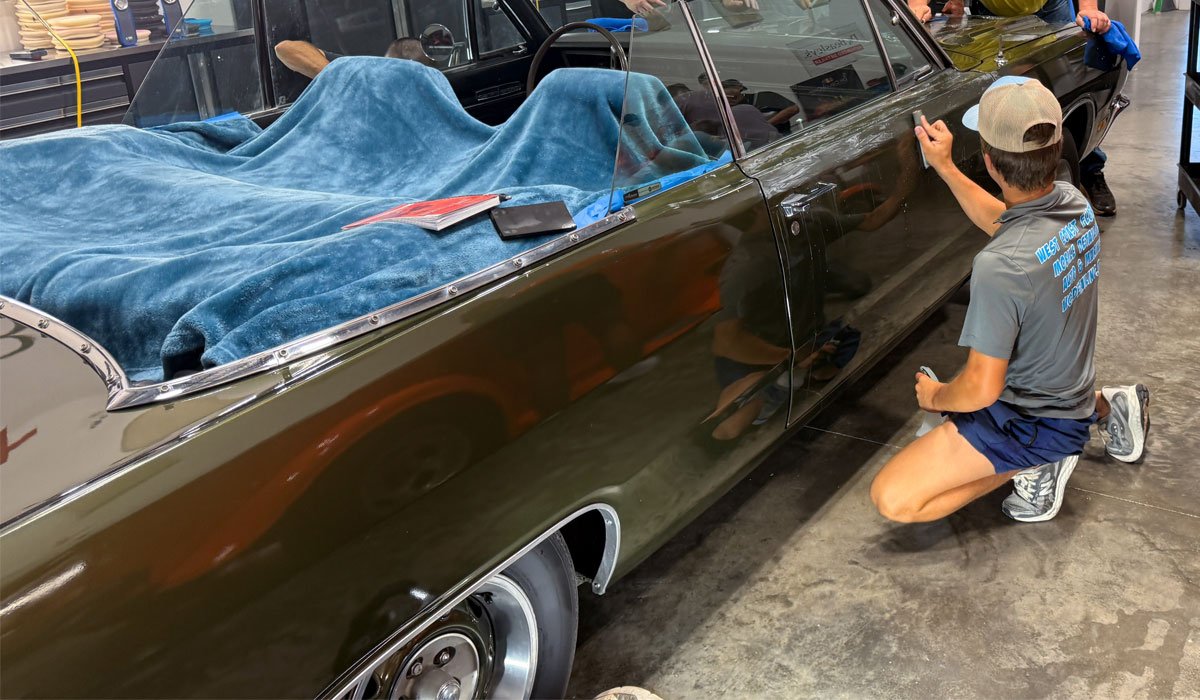
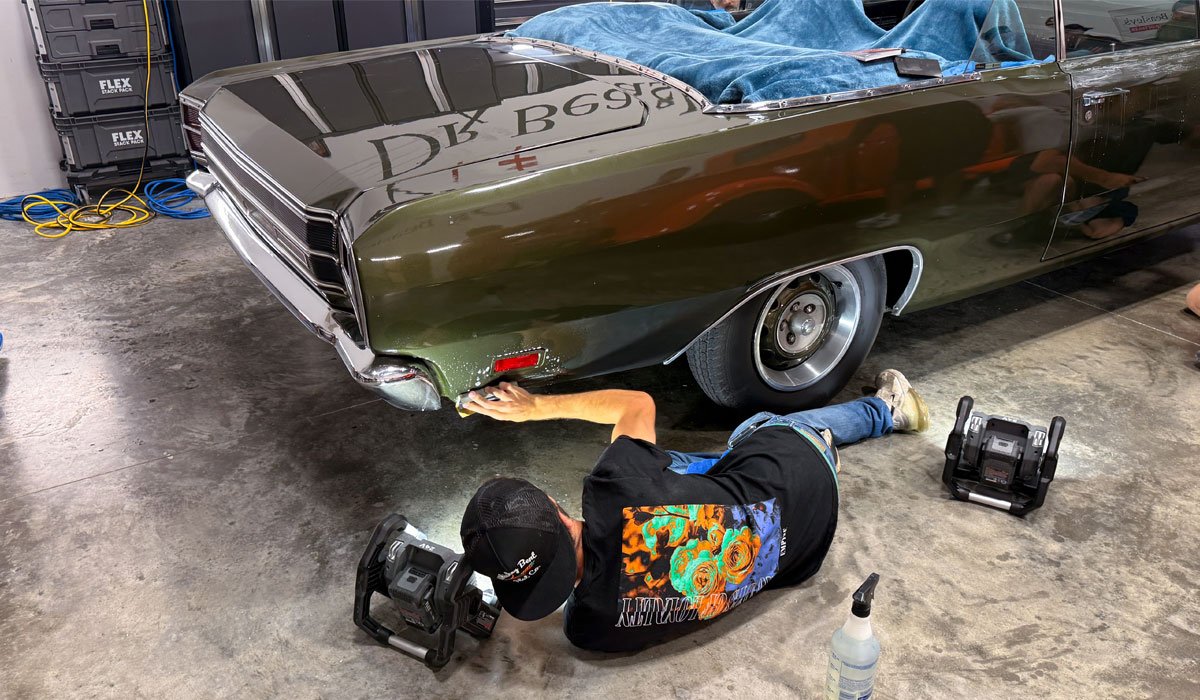
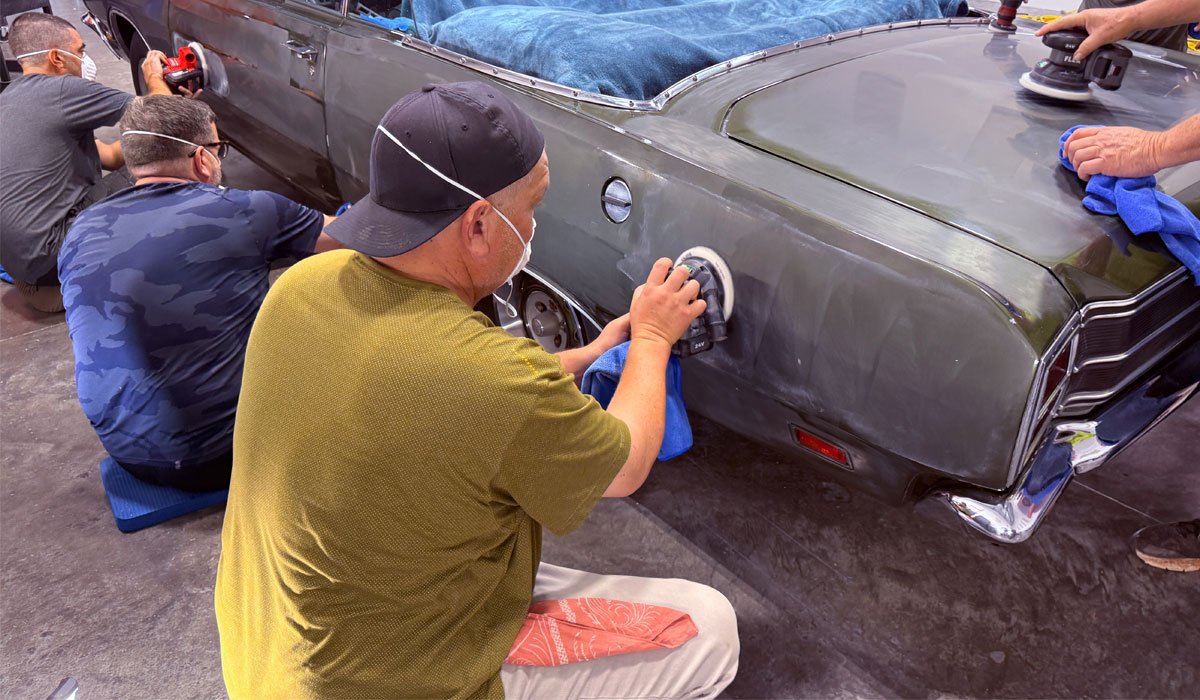
After hand wet sanding, next the class will learn how to refine the 2000 grit sanding scratch pattern to a more uniform and shallower 2500 grit sanding mark pattern using FLEX Cordless DA Sanders and Eagle Abrasives by KOVAX Buflex 2500 Film Sanding Discs in 6" and 3".

full


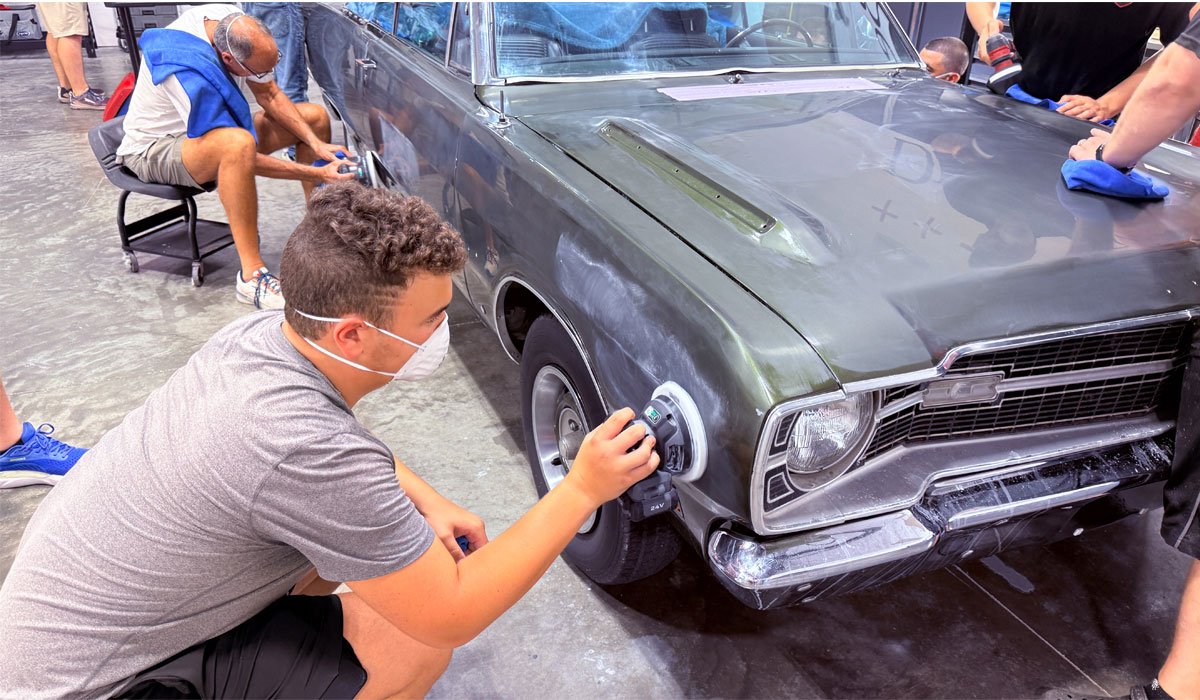
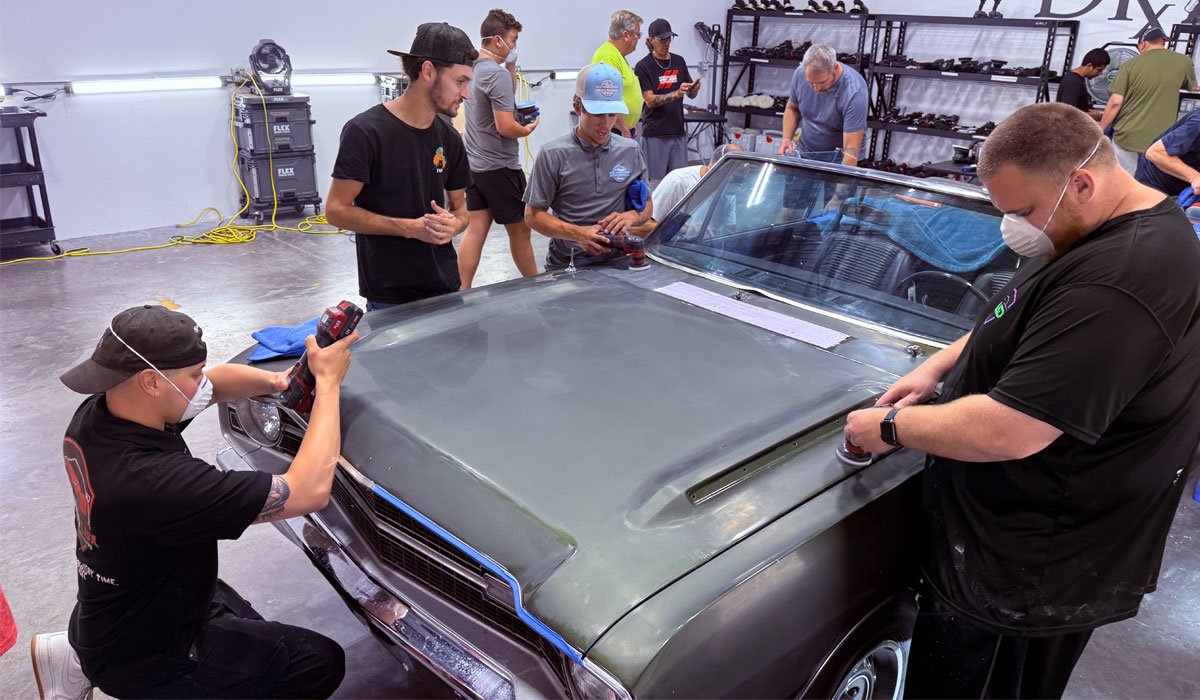
Here's Quintin and Jonathan sanding on the front clip

full


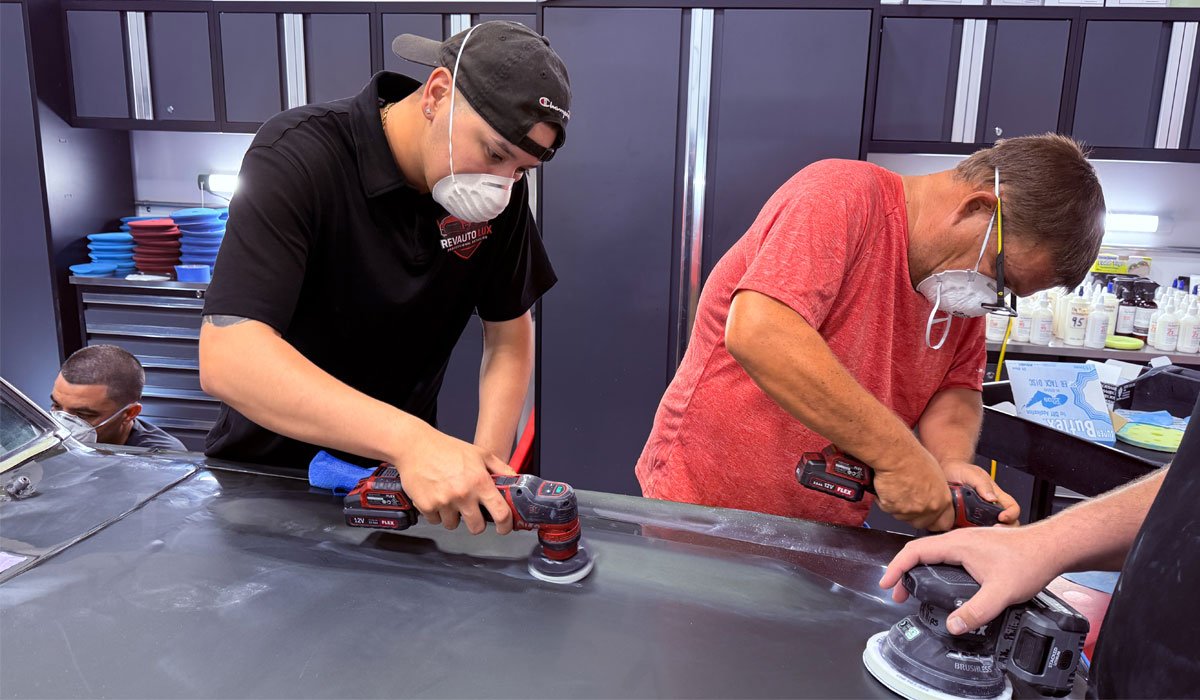
Out back we have Josh, Scott, Sean and Gilberto machine dry sanding.

full


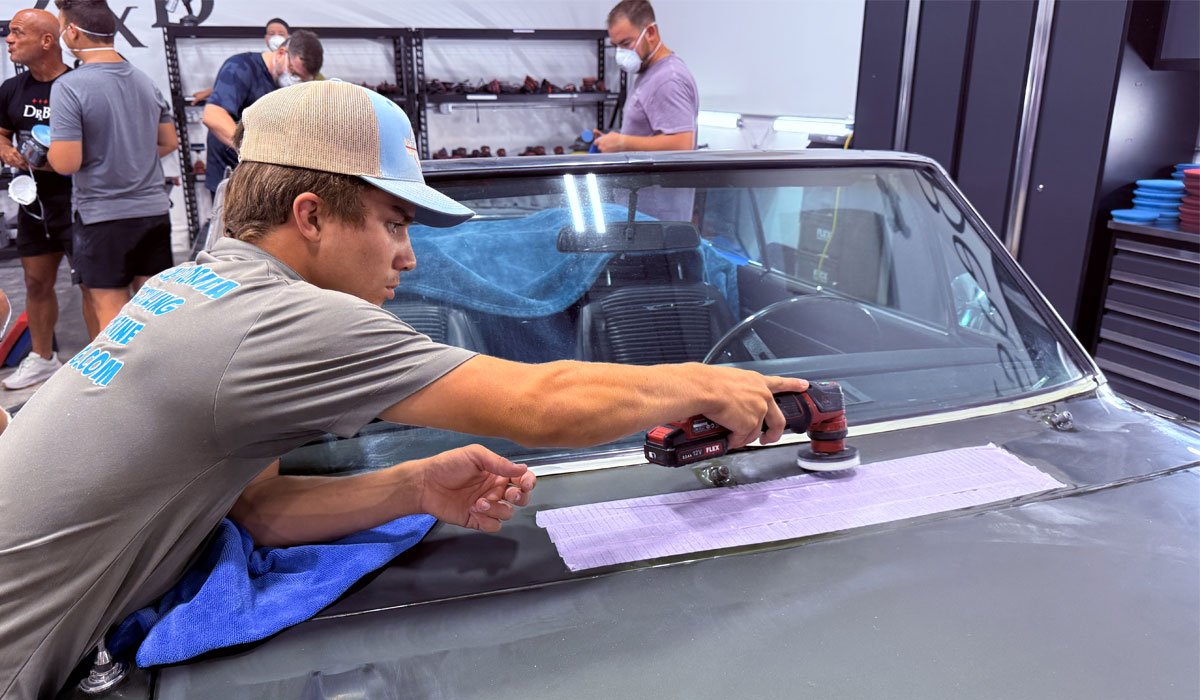
Here's Sean using the FLEX FX3411 DA Sander on the driver's side rear fender. The FLEX FX3411 is a FINISHING sander with an orbit stroke of 1.6mm

full


Here's Mitchell machine dry sanding the driver's side front fender.

full


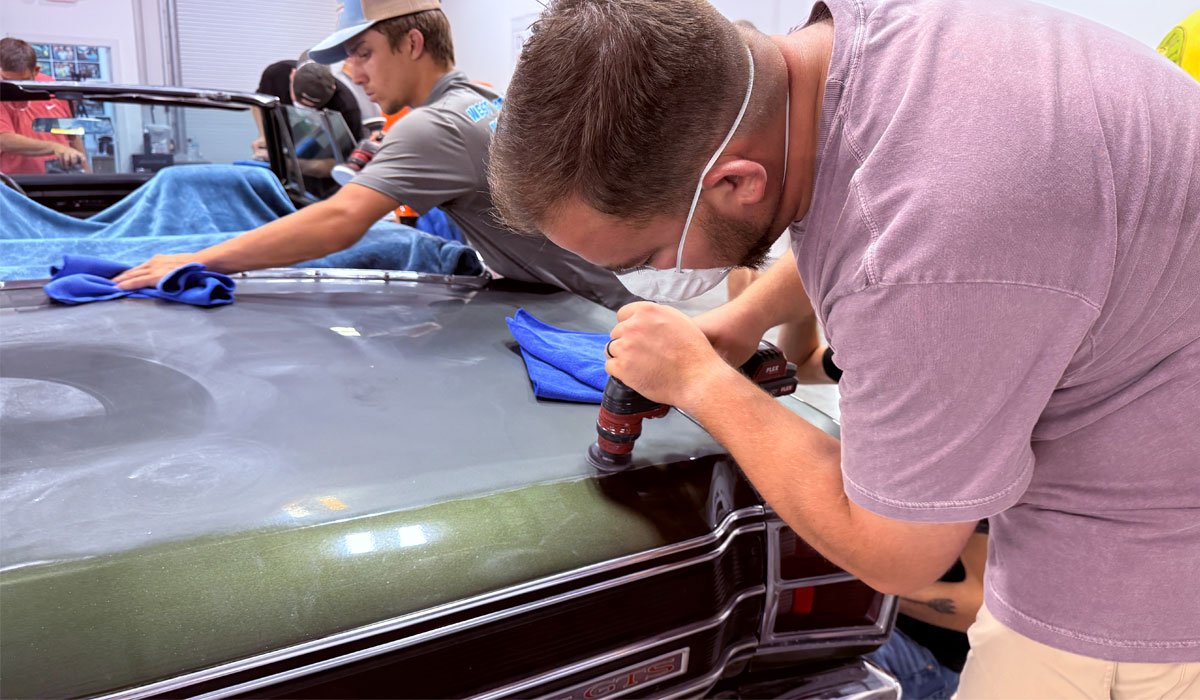
Here's Paden using the FLEX PXE-80 with a custom cut 2" sanding disc to carefully sand next to a raised body line.

full


No chairs
Our classes are 100% hands-on. These classes are best for people that learn by doing, not sitting in a chair looking at a PowerPoint while someone talks and talks and talks.

full


Paden machine dry sanding a small, concave curve with the PXE-80 outfitted with the OPTIONAL 6mm drive unit.

full


full


Looking good!

full


Quintin using a unique technique to sand next to the trim while being able to see exactly where the sanding disc is rotating and oscillating.

full


full


Here's Josh doing a little careful sanding next to the fresh air intake grill.

full


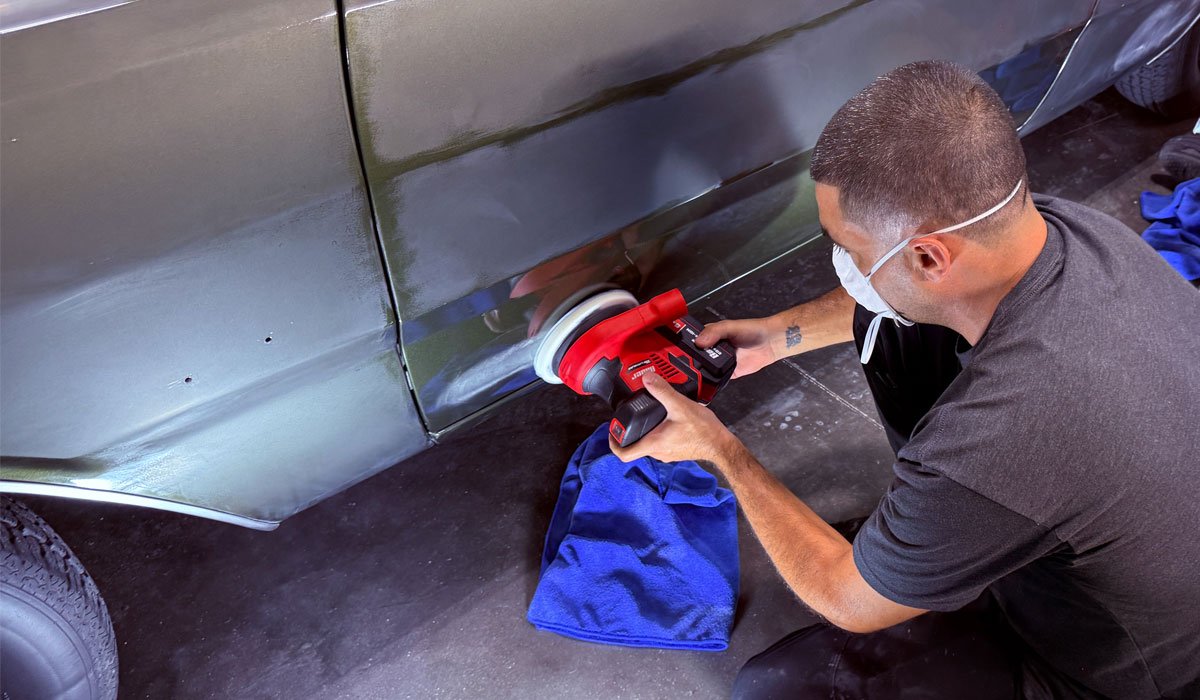
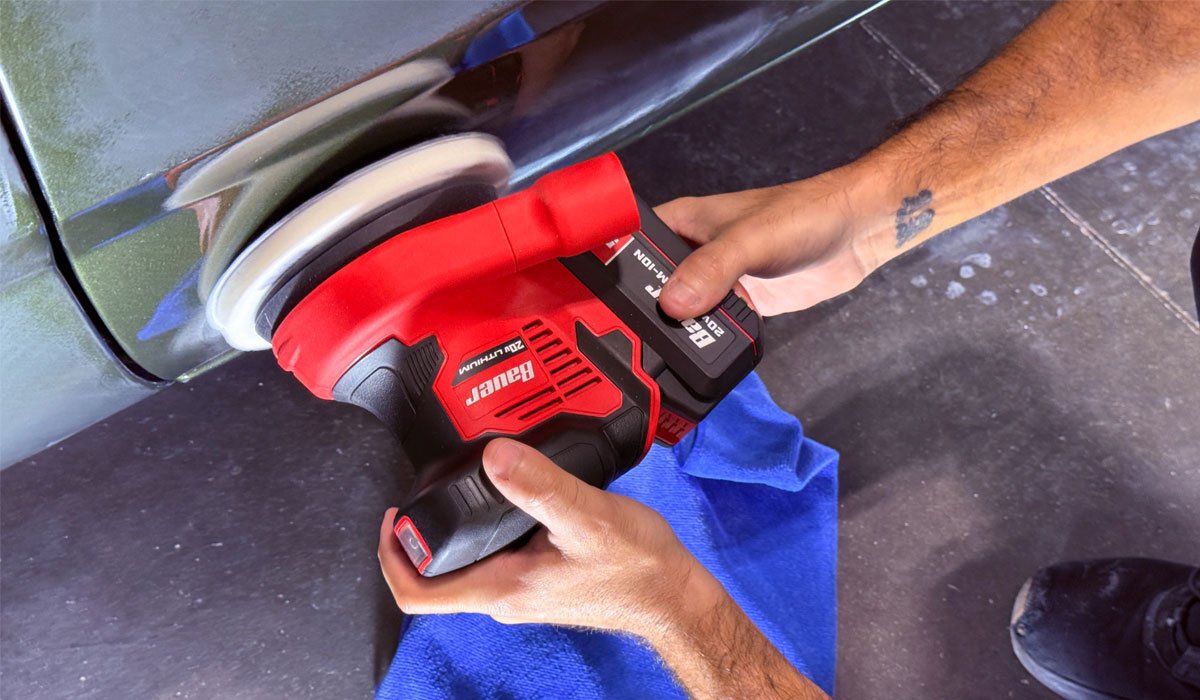
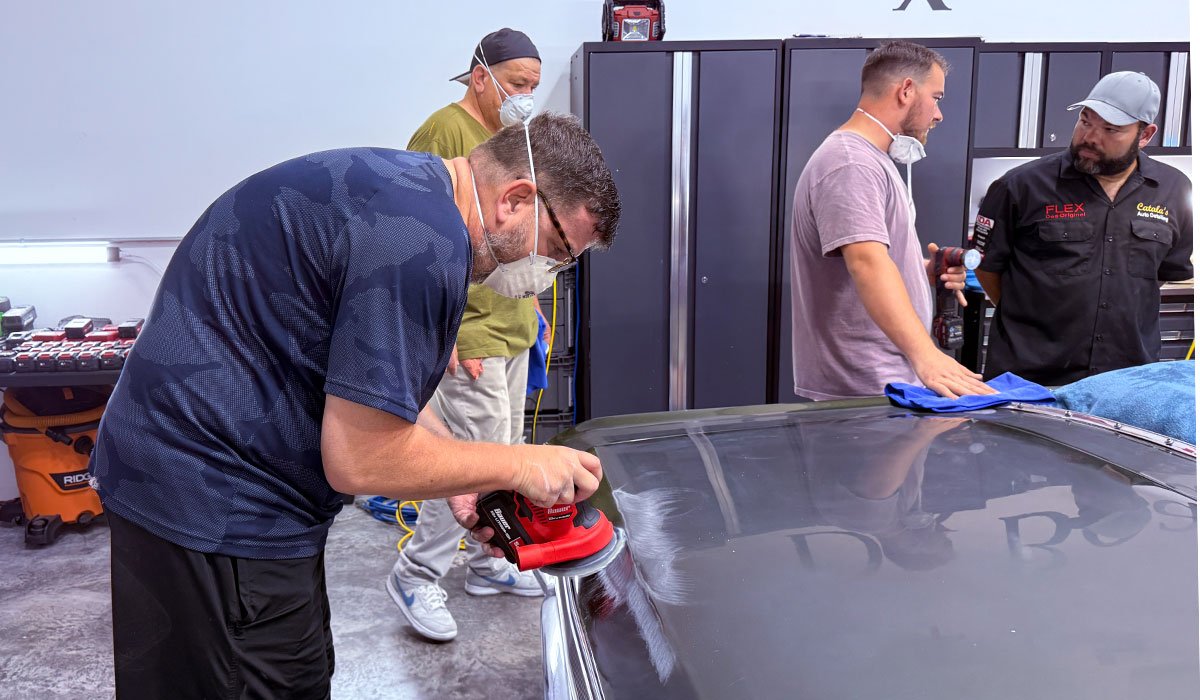
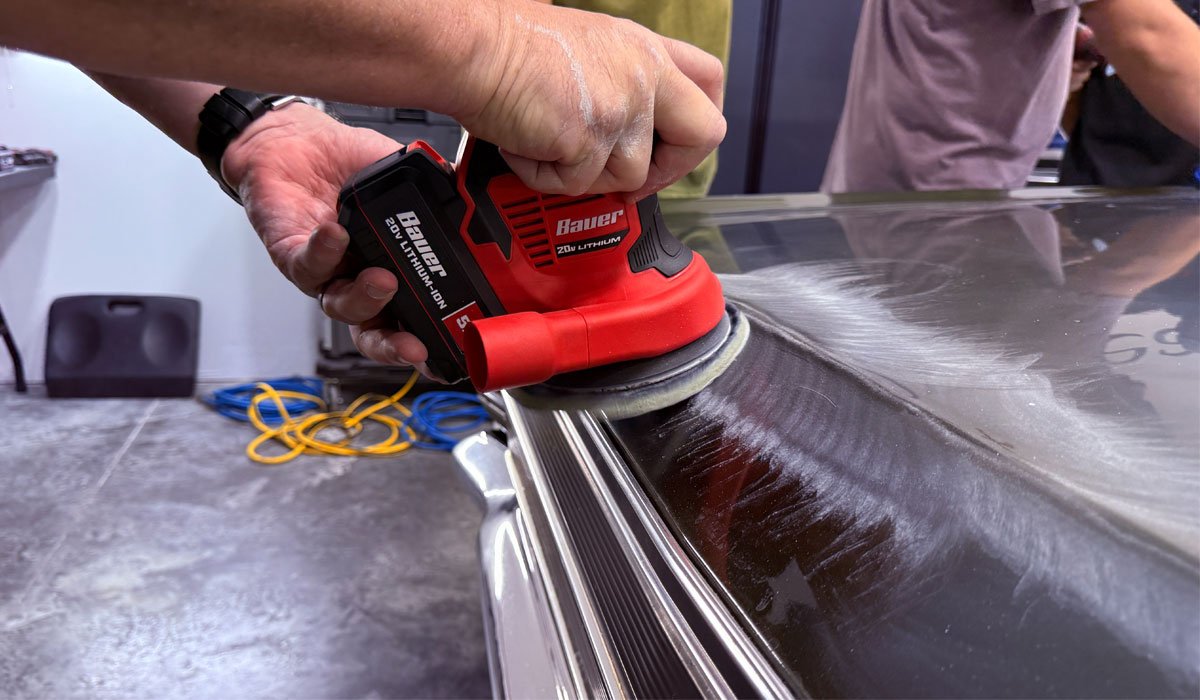
TESTING - BAUER 20V Cordless, 5 in. Random Orbit Sander with Dust Bag
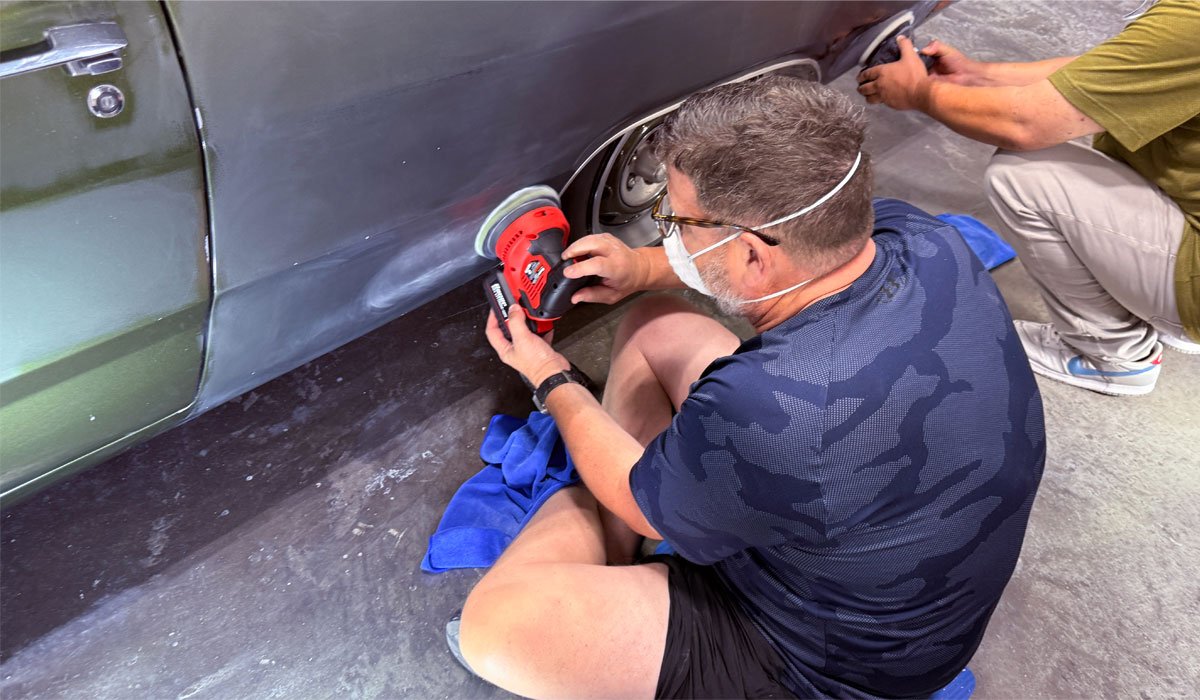
This was a large class with 16 people attending. I only had 11 FLEX FX3411 Cordless D.A. Sanders in my inventory plus 7 FLEX PXE-80s, which is more than enough for everyone to have their own cordless sander, but I also purchased to locally sourced cordless D.A. Sanders from Harbor Freight for the students to test out and compare to the FLEX units.

full


full


full


full


full


Review: BAUER 20V Cordless, 5 in. Random Orbit Sander with Dust Bag
Did the Harbor Freight 5" Cordless DA Sander work? The answer is "yes", but unlike the FLEX FX3411 there is no variable speed option with this tool, it's either on or off. So, does it work? Yes, but for a few extra bucks I would opt for the FLEX FX3411 instead as it's simply a better designed tool for this type of work.


Here's the Dodge after Machine Dry Sanding

full


full


full


full


full


full


full


full


full


full


Mike
 
Last edited:
Back
Top