Something like this falls somewhere between block sanding and precision lapping. The challenging part stems from a tool needed to do either method. I'm sure there is an old school secret which is nothing more than doing PDR for days on end and then polishing; but there are more modern ways to accomplish it.
You really need a separate tool for each wide contour surface of the part. Watch the videos if lapping is completley foreign as they are great at showing the two different extremes and uses.
Get a machine shop to turn down the desired reverse contours required. Then cut the grooves with a Dremel or die grinder as it will save significant amounts of cost to do it rather than a machine shop. Since there is less than 1/8 inch of material Id suggest then taking the completed lap and cutting it in fours or thirds so you aren't fighting an uphill battle with material removal. The biggest issue I see is that the lap ideally needs to be softer than the thing you are trying to polish in order for the abrasive particles to charge into the lap and not the part. This leaves copper ($$$) and or the techniques used in optical mirror production. To save on cost make sure there is a flange on the backside or you will find out real quick the cost of 5-axis CNC work.
In optics you use pitch as the material to hold the particles when polishing. So in this case you cover the custom form tools that you made in pitch (would need to have it designed for whatever thickness you will apply) or use the existing aluminum cover as a mold and pull a bunch of epoxy inverse pieces from it. Use the epoxy as your lapping tool with corresponding grooves cut into it for media evacuation. While the epoxy with pick up all the low spots you will only be using whatever high spots are as the abrading surface, takes longer but still viable. This is how you make a set of two identical surface plates; by lapping them against one another. You could probably get some 3D printed parts made that may or may not work. It seems like they would but I have never made a lap out of plastic.
Optical pitch:
https://universalphotonics.com/Product/OpticalBlockingPolishing/PolishingPitch
I have personally used a bunch of the Gugolz Pitch for laser optic stuff. Good stuff and cheap.
The abrasives used is a series of diamond particle sizes suspended in a slurry working down in diameter similar to conventional polishing. Going from say, 25/30 micron diamond, down to sub 10 will leave very little polishing by machine and level most if not all of the waviness in the aluminum covers.
TLDR: make some very expensive sanding blocks.
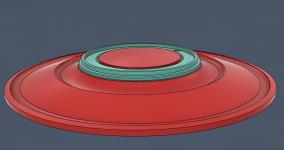
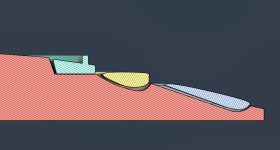
The red part would be the cover needing to be polished and the other colors would be the representation of the laps needed for each surface.