
313 Pictures - July 12th 2025 1-Day Paint Correction and Ceramic Coating Class

Mike Phillips

Administrator
Staff member
Joined
May 21, 2021
Messages
2,531
Reaction score
1,500
Points
113
Location
Stuart, Florida
Website
themikephillipsforum.com
313 Pictures - July 12th 2025 1-Day Paint Correction and Ceramic Coating Class


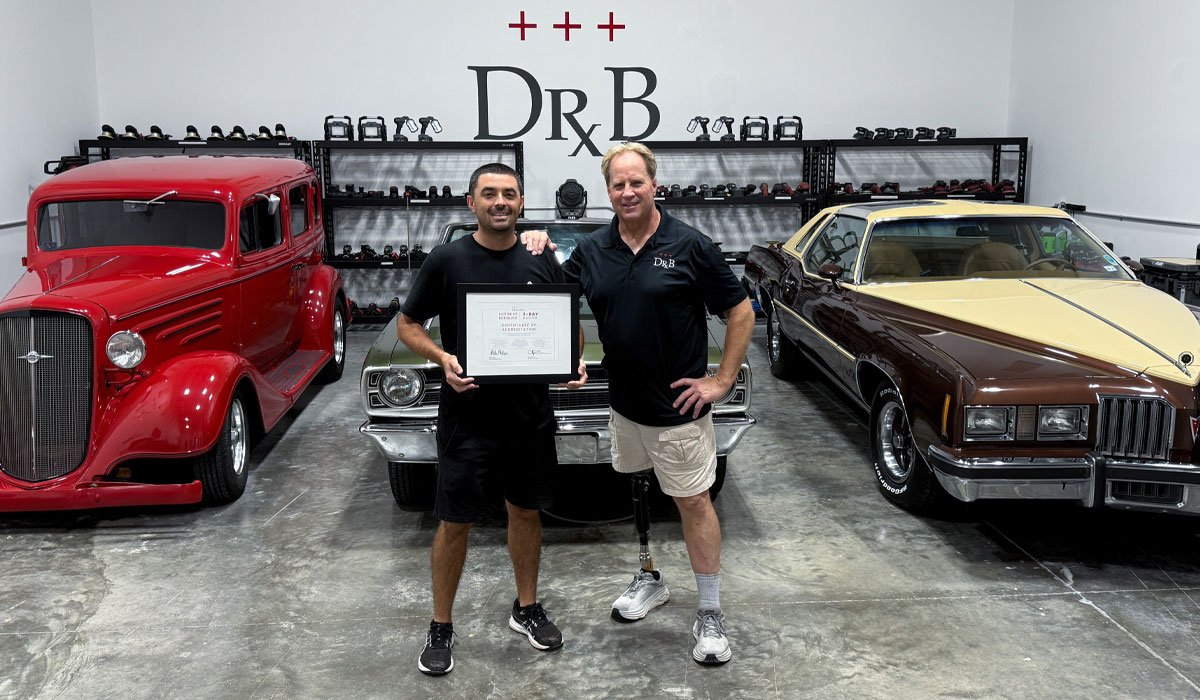
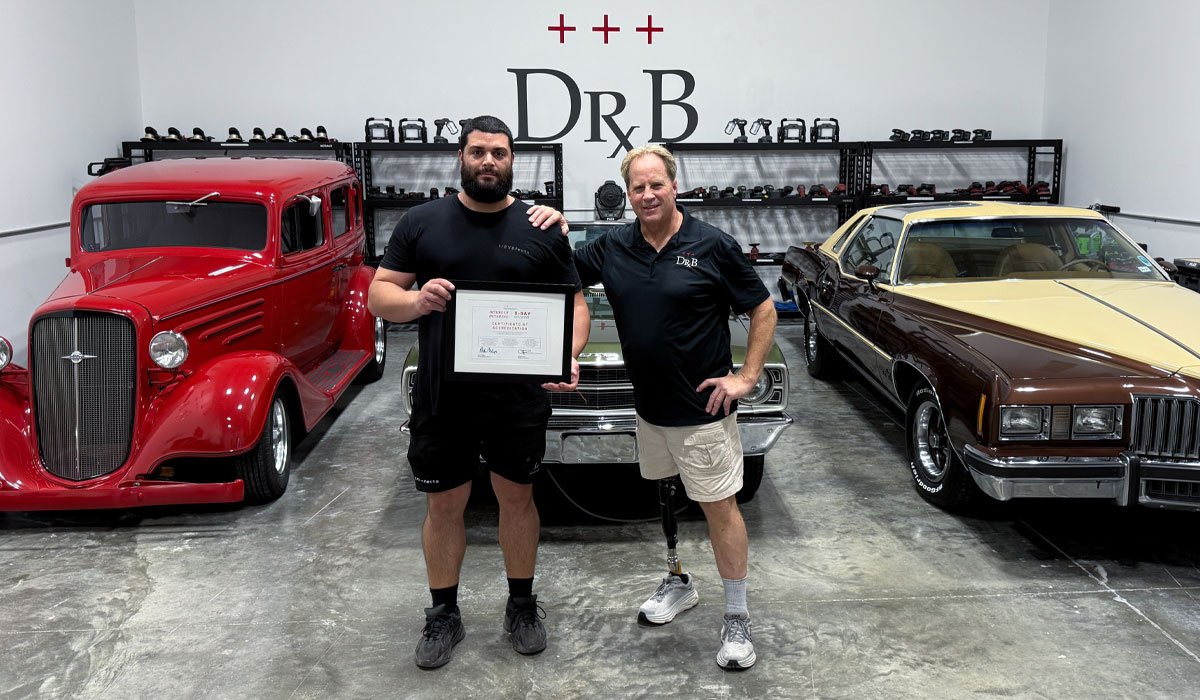
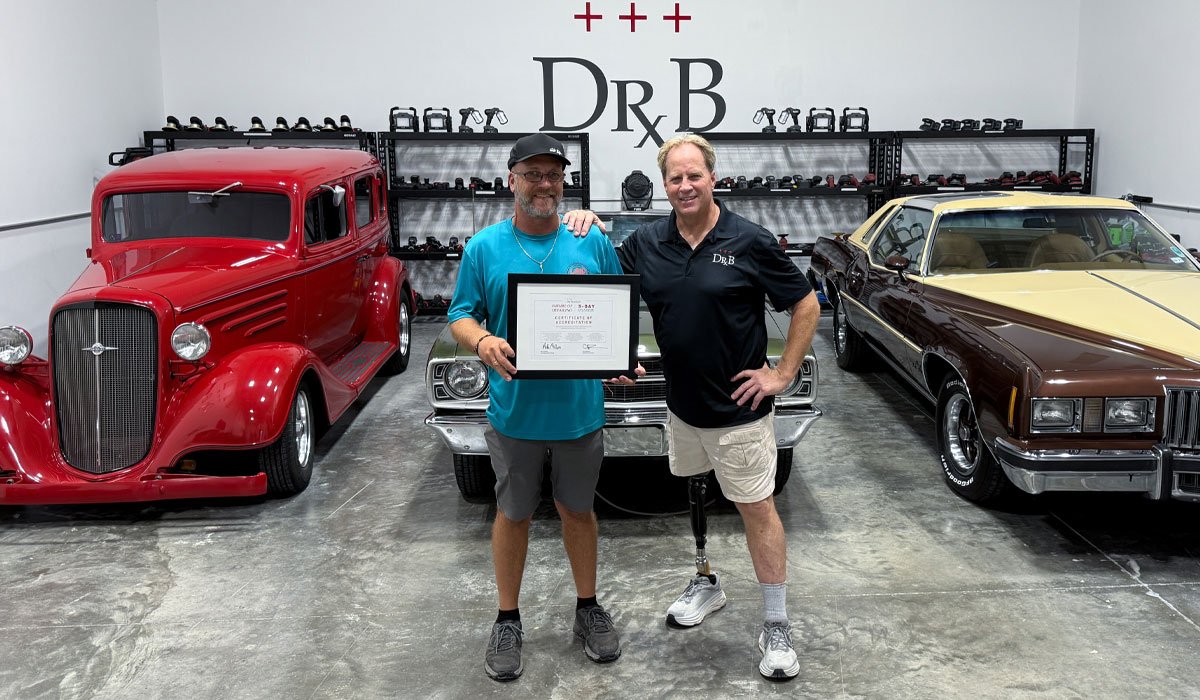
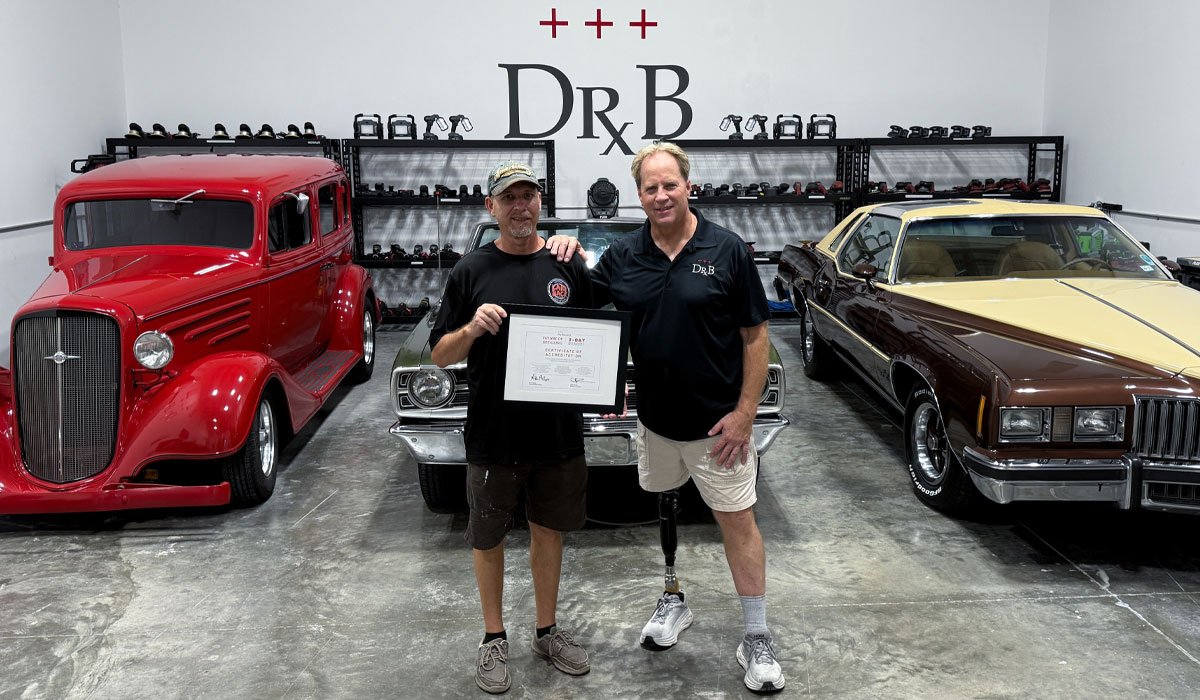
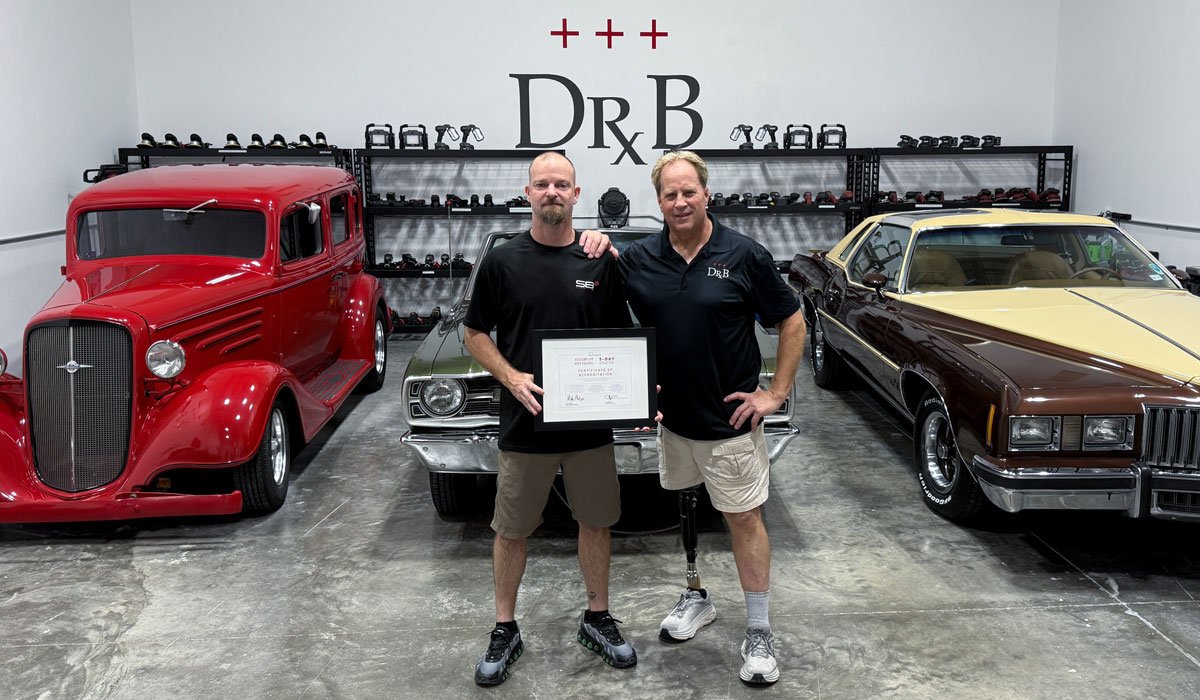
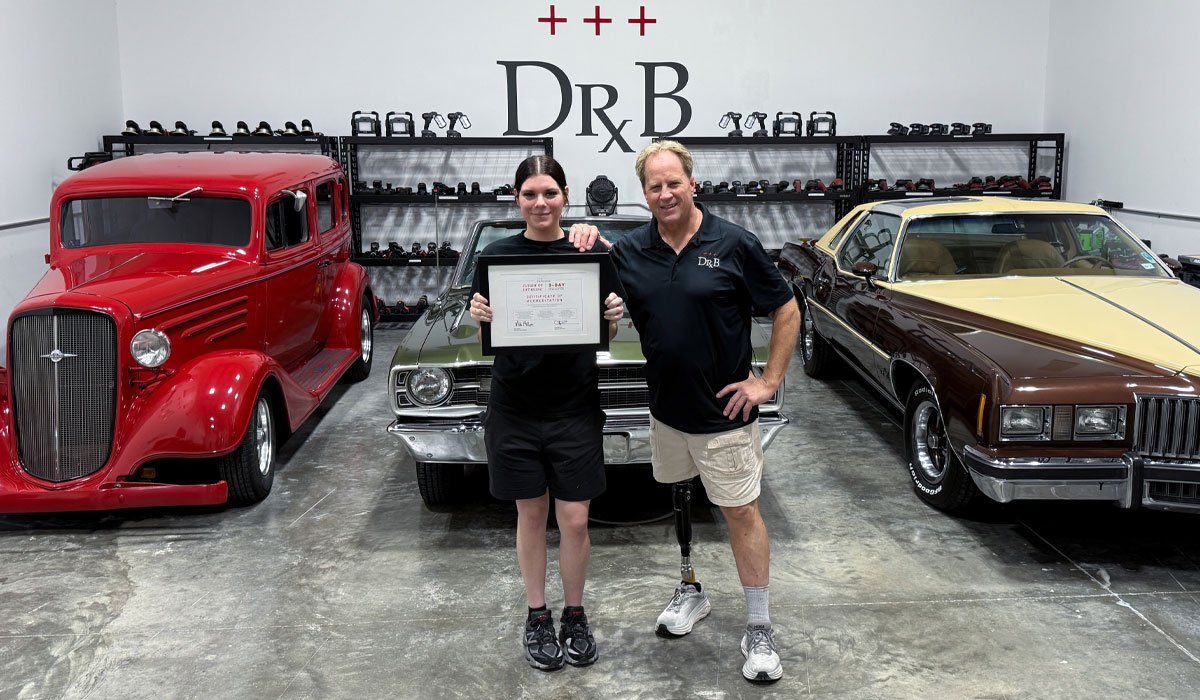
Happy to say all 3 training cars came out amazing and through the course of the class, these new friends learned a TON of new topics, techniques and tools.


Luis from Miami
full


Troy from West Palm Beach

full


Alex from Fort Pierce

full


Dave from Leesburg, Florida

full


Danny from Leesburg, Florida

full


Brian from Baytown, Texas

full


Jaqui from Baytown, Texas

full


Always an honor to have a Daughter/Father team take the class!
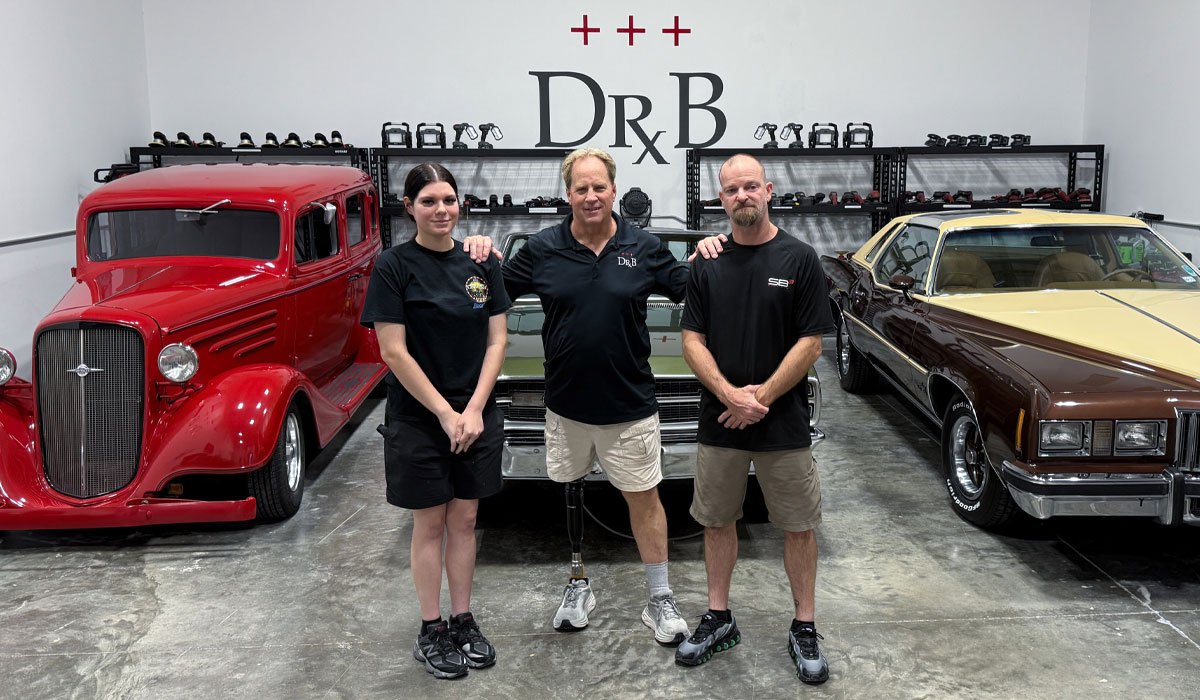
full


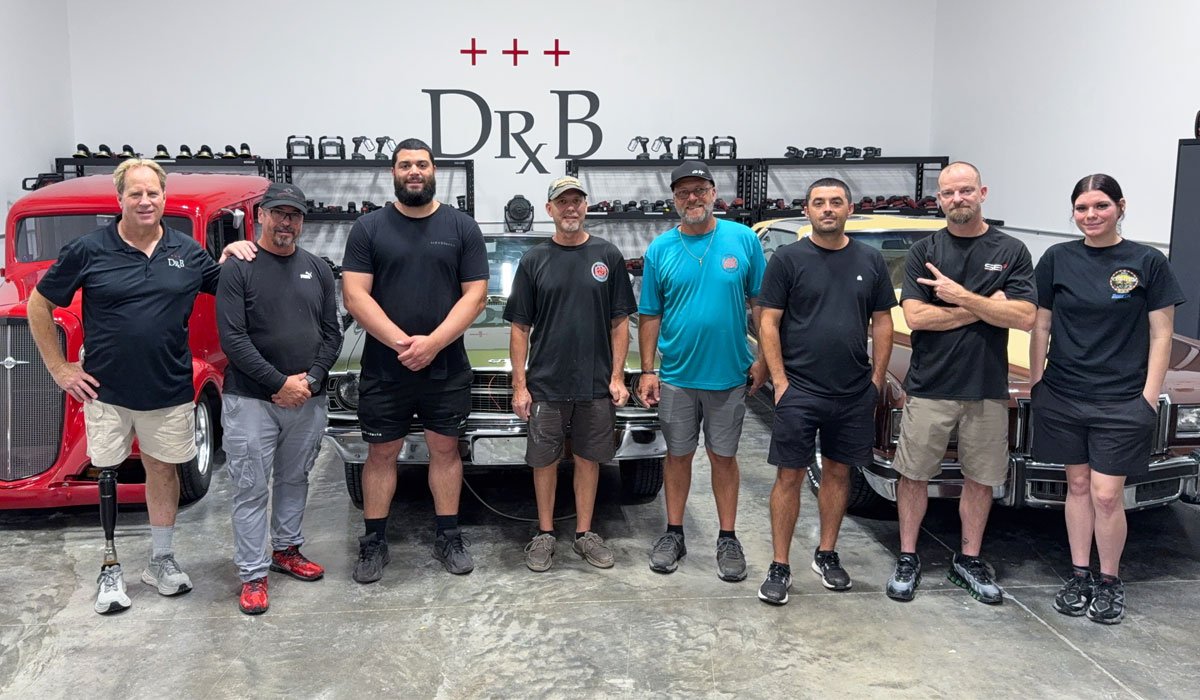
Group Shot

full


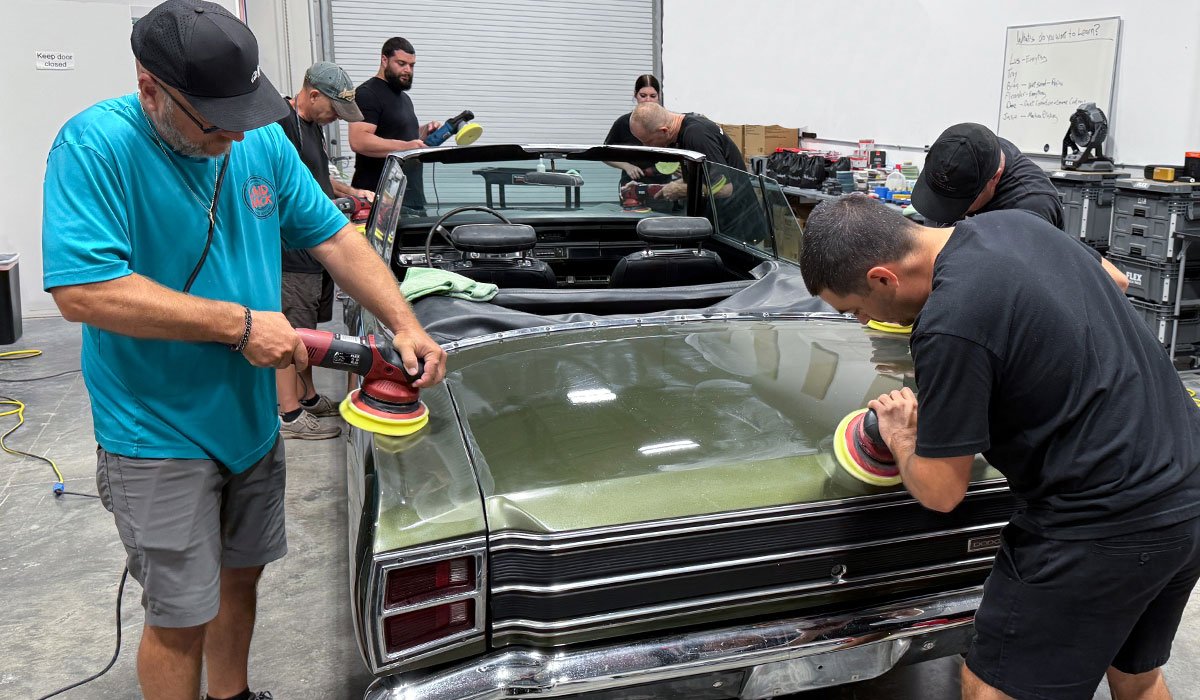
3 cars - 3 Primary Topics - 1 Very Intense and 100% Hands-on Day
Here's the three cars this class detailed in a single day not including the extreme headlight correction on the Ford Escape.

full


full


From left to right,

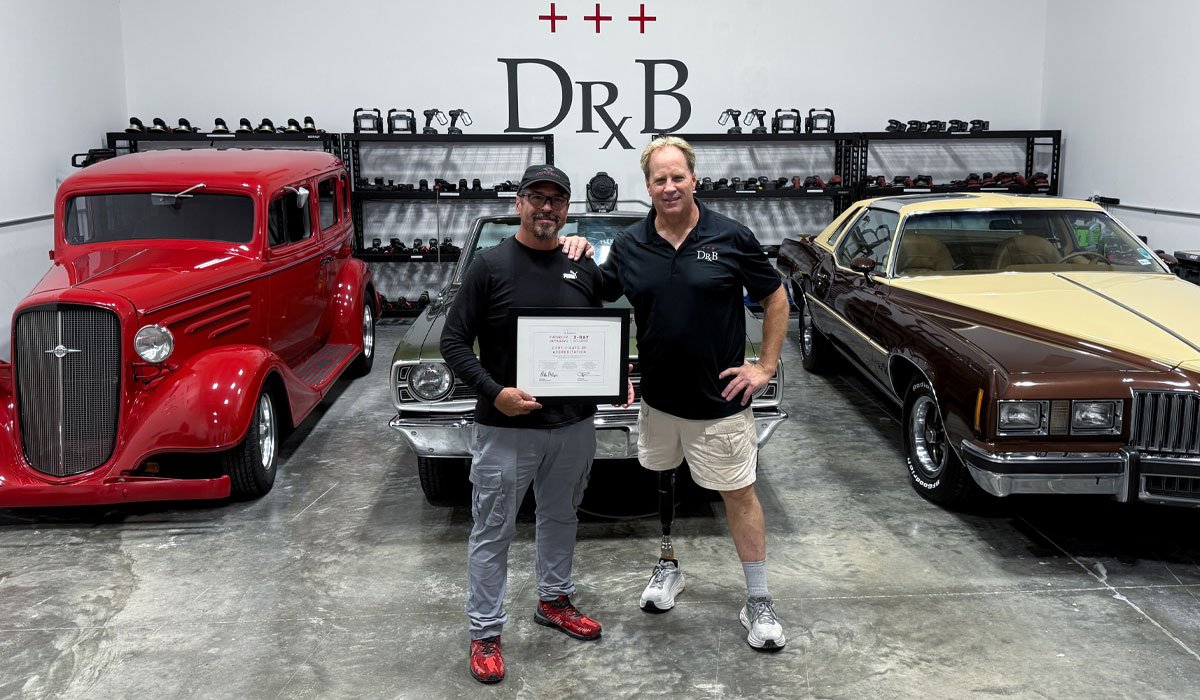
1934 Chevy Sedan Streetrod - 1969 Dodge Dart GTS Convertible - 1977 Pontiac Grand Prix JS
(The 1977 Pontiac provided by The American Muscle Car Museum in Melbourne, Florida - thank you for your trust as well as delivering the car to our facilities in Stuart, Florida)


full


Next up, before, action and after shots.

Next class is a 2-day class on Saturday, September 20th and Sunday, September 21st - this is also the LAST 2-day class for 2025 if you want to learn how to remove orange peel via sanding.


Click here to get signed-up for the 2-Day September Class


Mike
 
Last edited:
Continued...

Time for the ACTION pictures!


Before Pictures
First, I like to photo-document the condition of the car BEFORE The class. I wrote an article years ago titled,

The power in the after shots is created in the before shots

And it's just as true today as it is the day I wrote it. So, here's how this barn find Dodge Dart looked after being unloaded from the car hauler to Dr. Beasley's in Stuart, Florida.


full


full


full


full


full


full


full


full


full


full


full


full


full


full


full


full


full


full


full


full


full


full


full


full


full


full


full


Mike
 
Last edited:
  • Like
Reactions: Mak
Continued...

Dr. Beasley's NSP Primers
Throughout the course of this class, we'll be using the Dr. Beasley's NSP Primers.

full


The jars below contain the specific and different types of microsphere abrasives we use in all our primers.

full


Nanogel Technology - Unique to Dr. Beasley's
Besides the microsphere abrasive technology, unique to only Dr. Beasley's products, is the carrying agent called Nanogel. Most, if not all compounds, polishes and even products called primers, use some form of organic carrying agent, usually some form of petroleum distillate. Nanogel is 100% INORGANIC. It's a water-based, organic carrying agent that the microspheres are embodied in to form usable product. One main benefit to using our Nanogel Primers is because the Nanogel is inorganic, after wipe off, you can go straight to installing a ceramic coating. There's no need to use a panel wipe to chemically strip the paint.

full


NSP Primers and Nanogel Explained
For a full explanation of what makes our compounds and polishes different and better than conventional compounds and polishes, I've inserted a video with an interview with Jim Lafeber, the owner and head chemist here at Dr. Beasley's.

VIDEO GOES HERE - will be added in the next few weeks. Video is finished, jut not public.


First Tool - First Day - First Thing in the Morning - The Rotary Polisher!

full


How to correctly use a rotary polisher
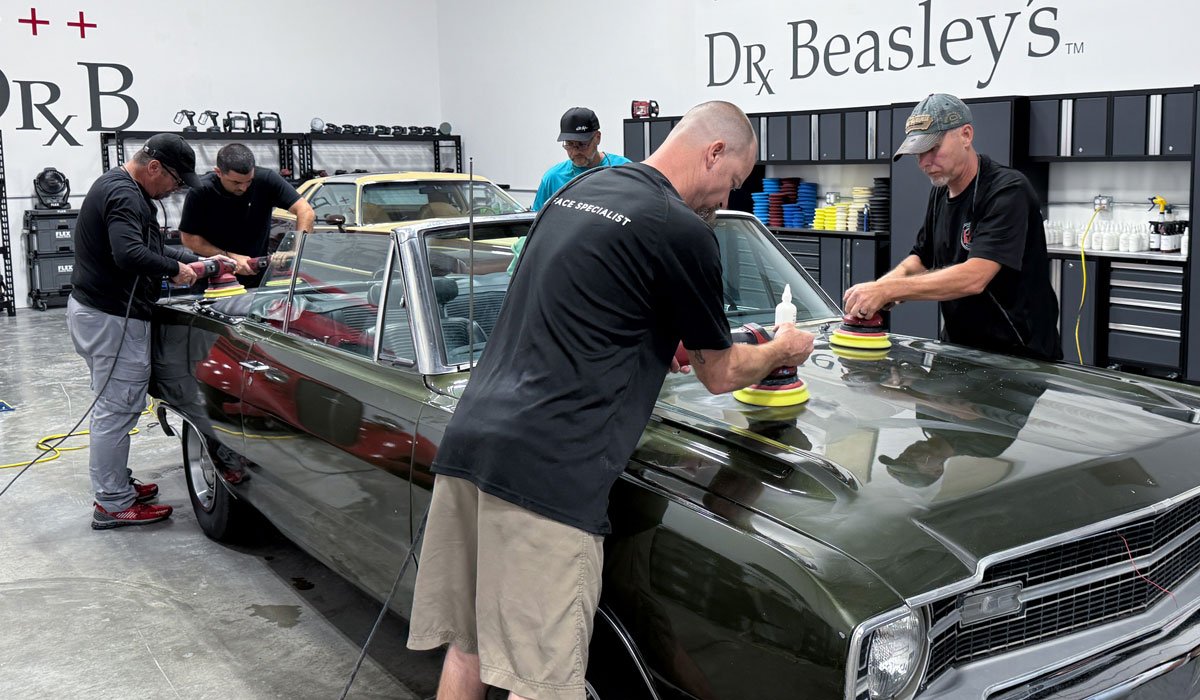
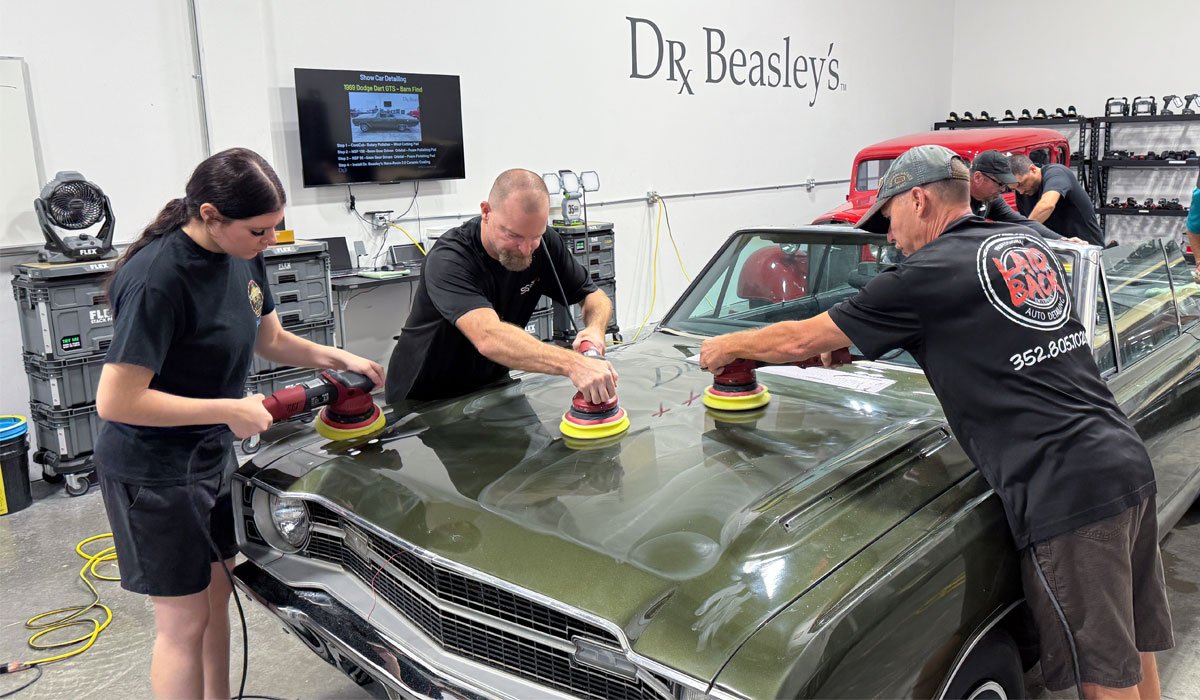
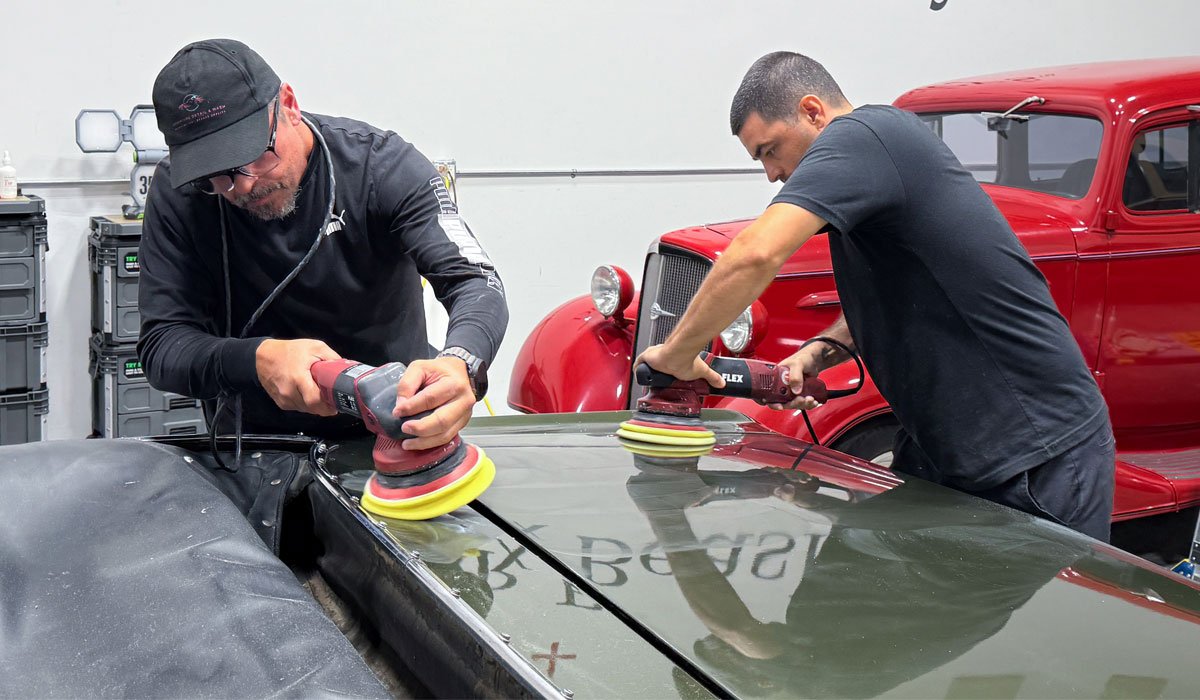
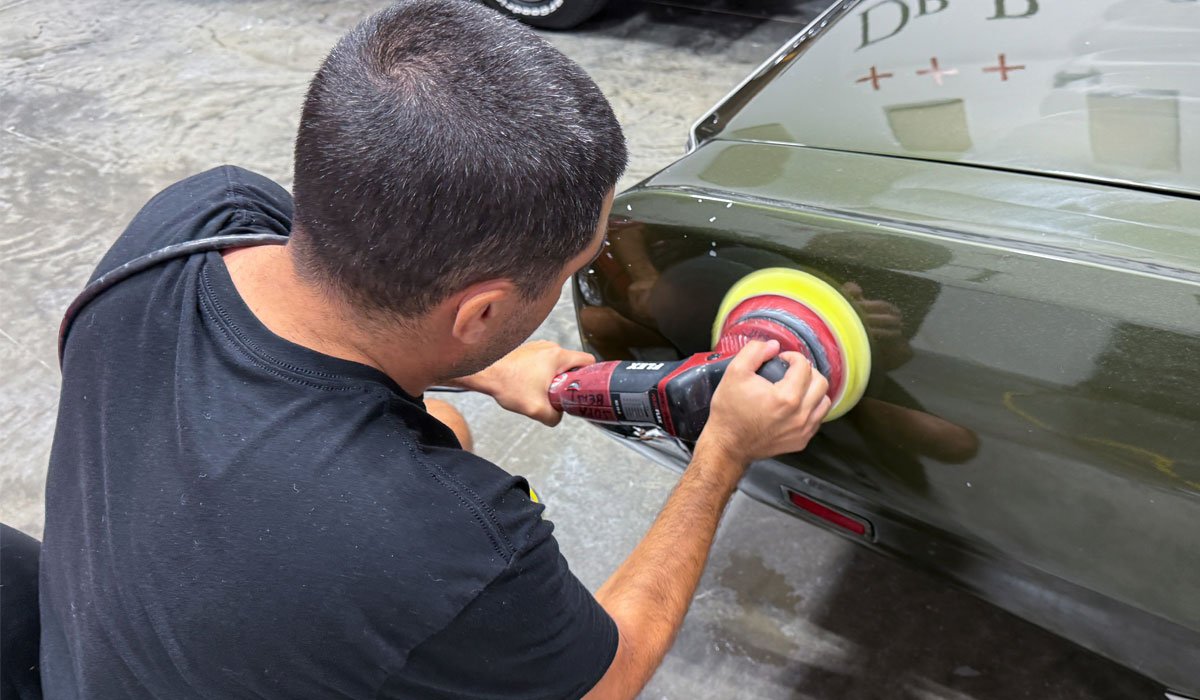
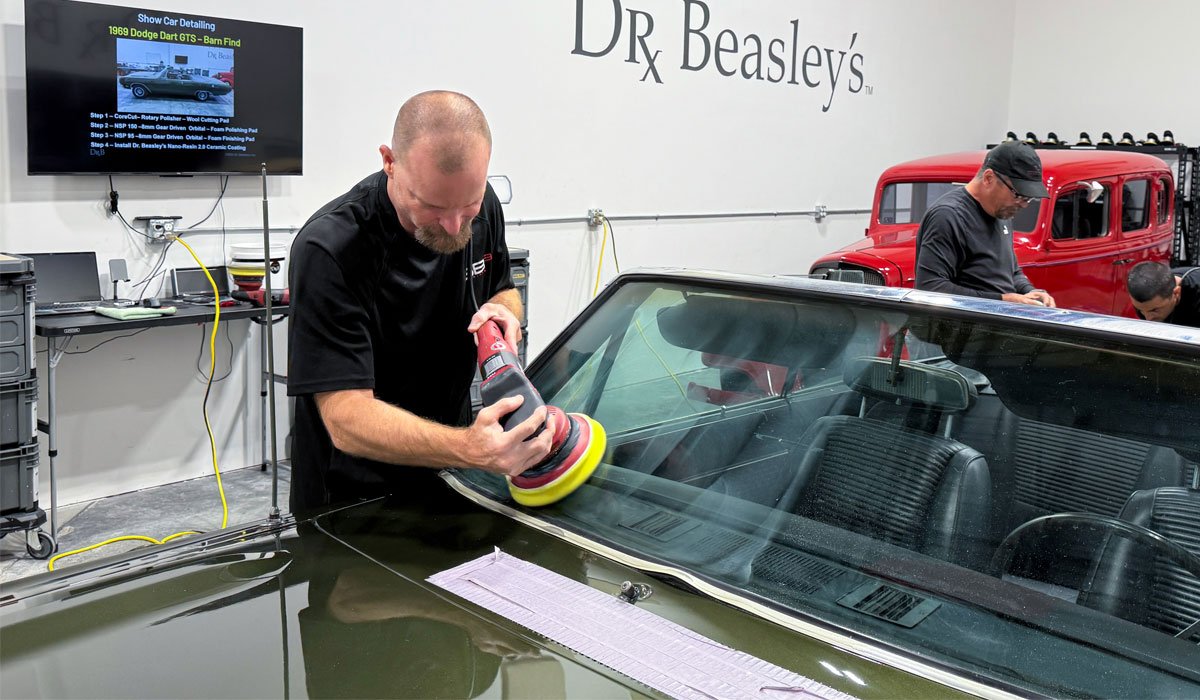
First up, the class learns how to correctly use a rotary polisher with a wool pad and NSP CoreCut. After a few technique demonstrations and an explanation as to how this type of tool works and the various dynamics involved with using this type of tool for a heavy or major paint correction, I turned the class loose.

After turning the class loose, I walk-around non-stop watching each person use the rotary and if they look comfortable using the tool and are doing everything right, I gently interrupt them and let them know they're doing it right. If I see any room for improvement, I politely stop them and then tweak their technique and turn them loose again.

It's GO TIME!
No chairs. Zero sitting. In our classes, you learn by doing not sitting in a chair listening to me drone on and on and on...

full


full


full


full


full


Minimal PowerPoint Presentation
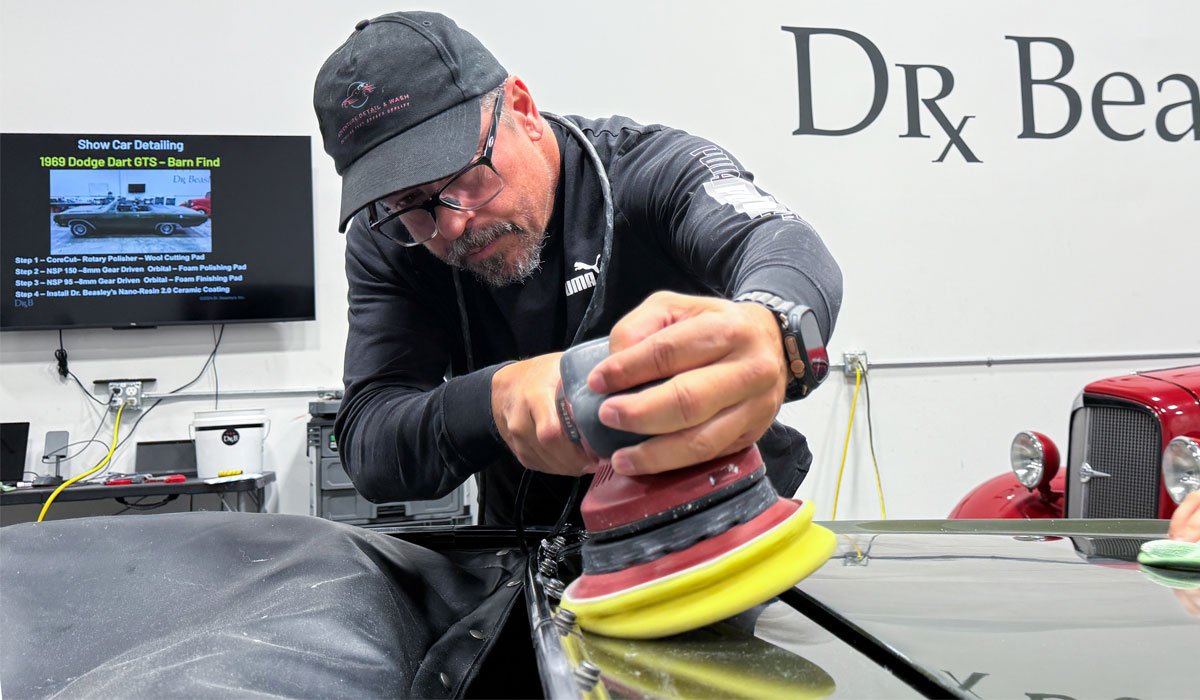
While I promote these classes as having no PowerPoint presentation, this is true and accurate as there is no long drawn out PowerPoint presentation with dozens or even hundreds of slides. What there is however, is a single slide for each car for the class. As you can see by the picture of the slide below - it's very basic and it's primarily for the students to take a picture of it and then they don't have to remember or write down the car and the tools, products and techniques used to take it from neglected to respected.

full


full


full


full


full


full


full


full


full


full


full


Mike
 
Last edited:
  • Like
Reactions: Mak
Continued...

Step 2: How to use Orbital Polishers
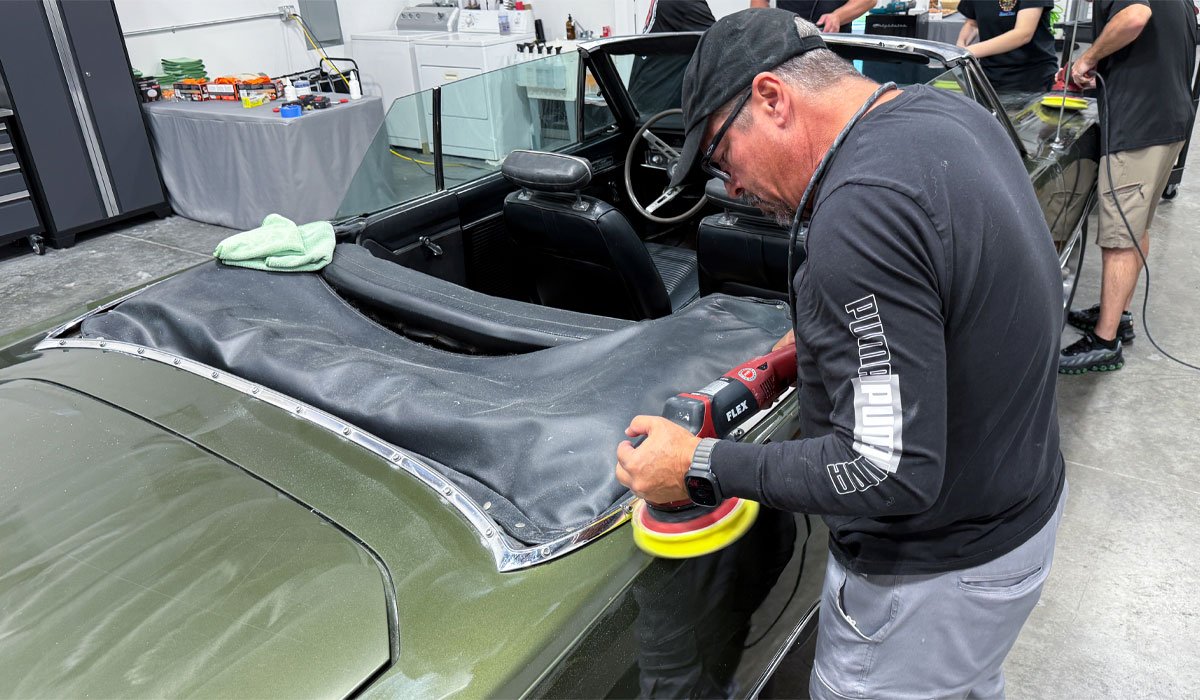
After the class has cut this extremely neglected paint HARD using CoreCut, next it's time to remove any holograms left by the FIBERS that make-up a wool buffing pad to level the surface and create a swirl-free, hologram-free finish.

full


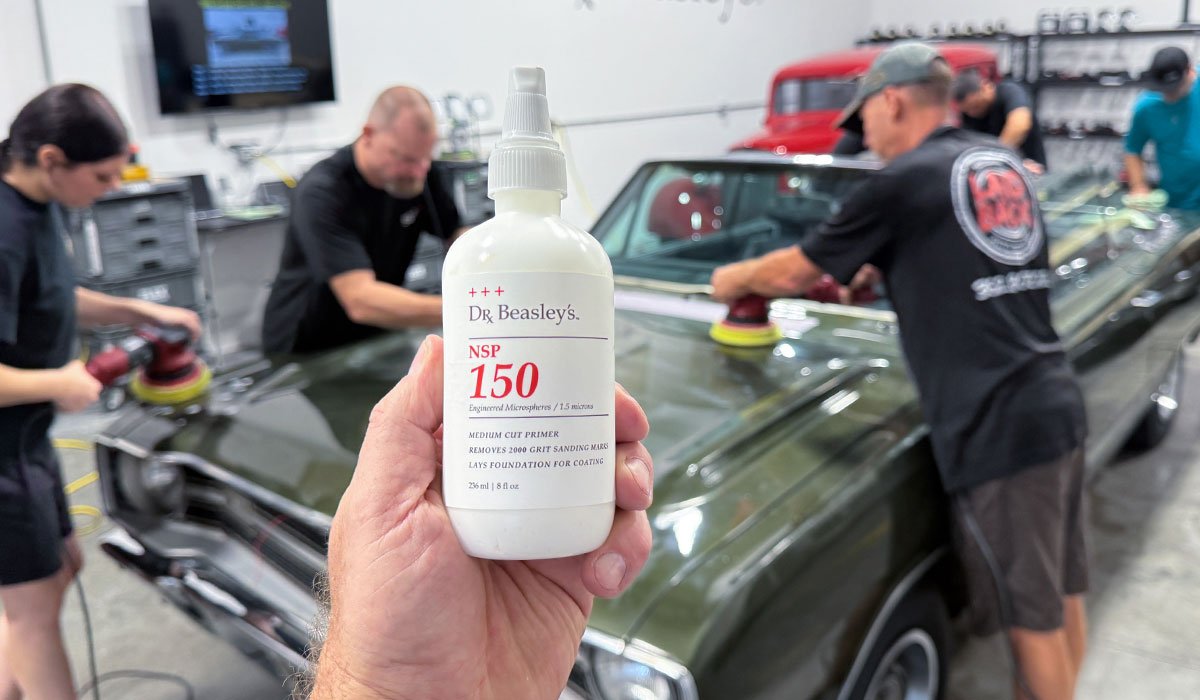
Dr. Beasley's NSP 150
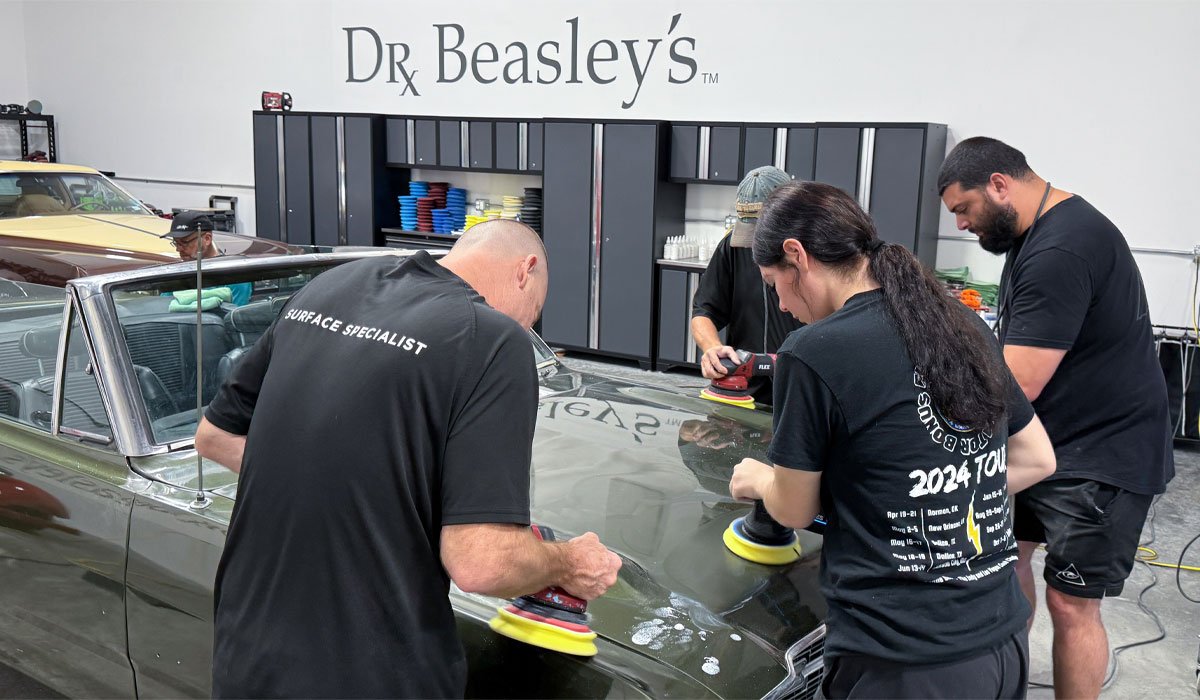
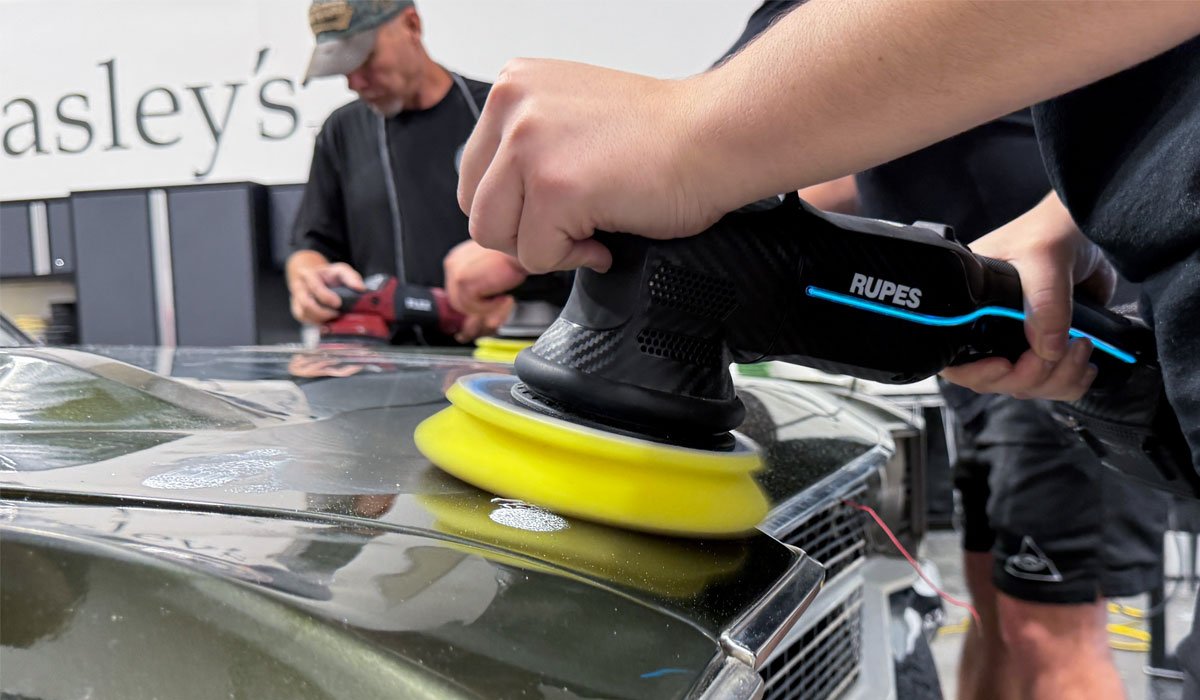
The class started out using the Dr. Beasley's CoreCut, which is a super-fast cutting compound. For the second step, the class switched over to NSP 150 and used this with their choice of orbital polisher and Buff and Shine Yellow Foam Polishing Pads.

full


full


full


full


full


Buff and Shine EdgeGuard Foam Buffing Pads
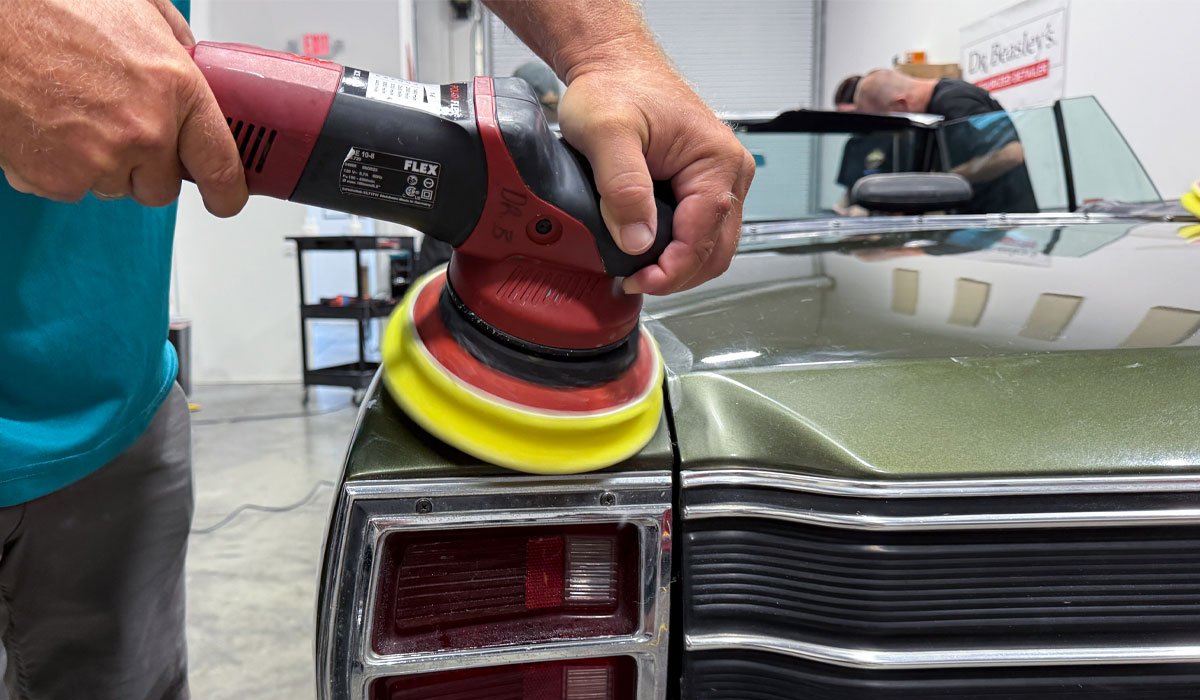
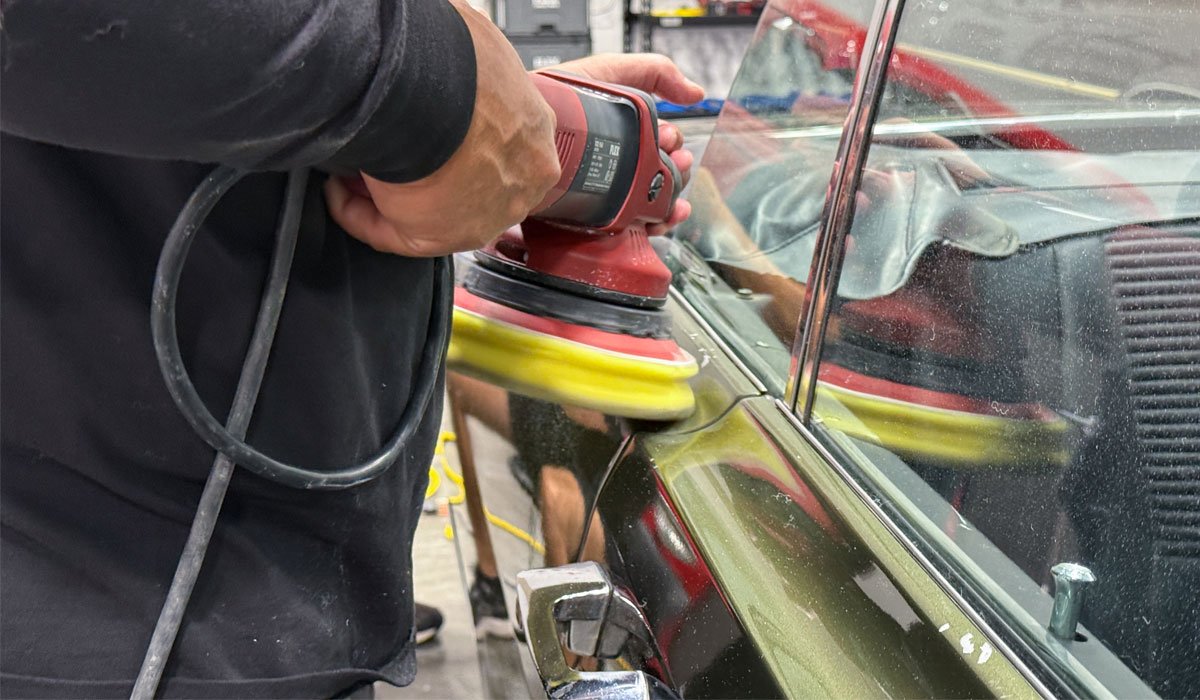
Here's a text-book example of how to go-up-on-edge when using either a gear-driven orbital or a rotary polisher to focus all the paint correction to a precise area or to shrink the pad diameter down to enable you to buff out thinner panels without having to change tools or change backing plates on a tool, in order to use a smaller diameter pad.

My approach to doing the paint correction step is to try to do everything you can with the tool already in your hand. Stopping to get different tools simply because you have a smaller, thinner panel to buff or in the example below, you wan to put focused paint correction to a specific area of paint, simply add more and more time to the job.

full


full


full


full


full


Buff it out - don't tape it off!
If you scroll up the page, you can see what the metal trim looked like BEFORE - stay tuned for the AFTER. As a part of teaching others how to detail cars that came with metal trim instead of plastic trim, after buffing out the paint, I have the class also buff out all the brightwork and also the glass. Sometimes when I'm looking at other detailers pictures, I often see people taping off the metal trim like they would tape-off plastic trim. There's simply no need to do this unless you're working on perfect, flawless trim to start with.


full


full


full


Just like the rest of the car, the huge chrome bumpers were stained with decades of traffic film, oxidation and tarnish. So the class buffs these components as well.

full


full


Topical Glass Polishing
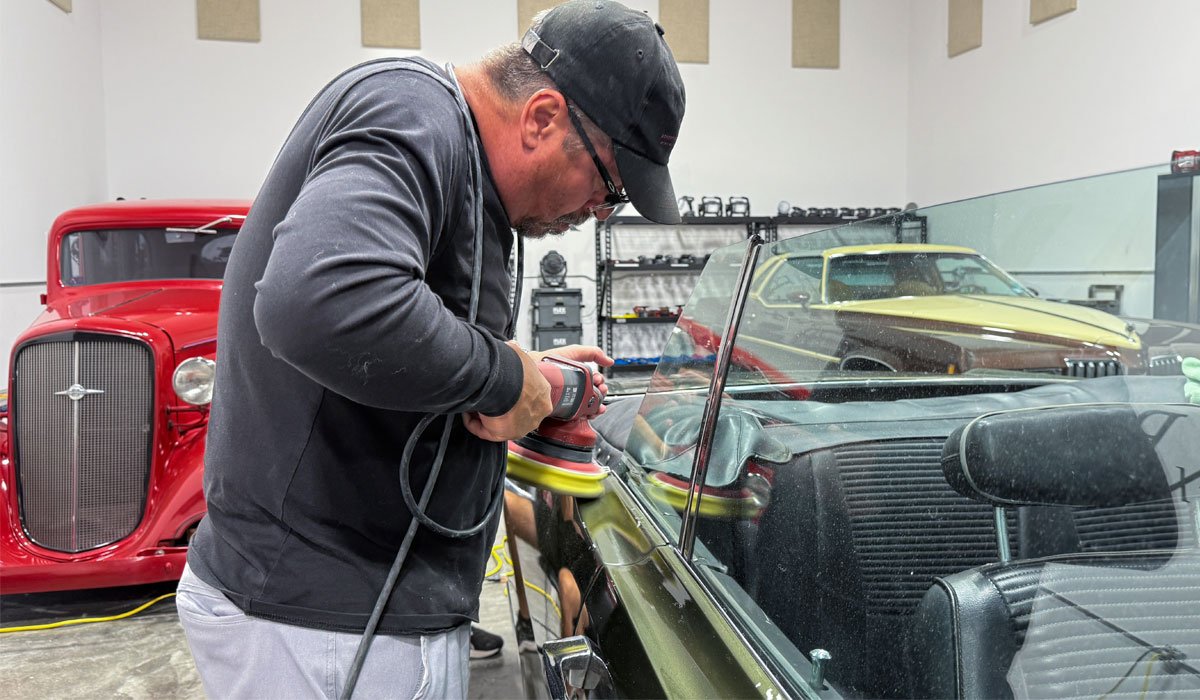
There are two kinds of glass polishing, topical and sub-surface. Most cars need topical glass polishing to remove traffic film and water spots. If a car has wiper scratches in the glass, then you must do Sub-surface Glass Polishing to remove these types of defects in glass. My 1-day classes don't normally cover Sub-Surface Glass Polishing, mostly because it's very time-intensive and as you can see by the other two cars in the background, this is already an intensely busy class. So it's just a time-factor.


full


full


My photographer got busy and didn't get any pictures showing the class installing the Dr. Beasley's Nano-Resin 2.0 Ceramic Coating, but I can guarantee you - the class did in fact coat this car. :)


Mike
 
  • Like
Reactions: Mak
Continued...

Here are the final results!

full


full


full


full


full


full


full


full


full


full


full


full


full


full


full


It's worth your time
Scroll back up and LOOK at the paint surrounding the driver's side door handle.

full


full


full


full


full


full


full


full


full


It's also worth your time
Scroll back up this thread and look at the chrome trim surrounding the windshield - look at the before and after difference!

full


full


full


And you should even scroll back up the page and look at the before pictures of the interior - looks pretty good now!

full


full


full


full


full


full


full


full


full


full


full


And this is just the FIRST car this class tackled on Saturday.


Mike
 
Last edited:
Continued...


Removing Orange Peel
Our one-day classes do not include sanding down an entire car or two, this is what you get to do when you take the 2-day class. That said, the paint on the 1969 Dodge Dart GTS had such HORRIBLE orange peel and lots of super deep scratches in both the hood and the trunk lid, I did share the techniques for machine dry sanding using FLEX cordless sanders and Eagle Abrasives Dry Sanding Discs.

Topics covered,
  1. Hand Wet Sand
  2. Machine Dry Sand
  3. Machine Damp Sand
  4. Re-enforce how to use a rotary polisher.


Here's Alex learning how to Edge a Panel using the FLEX PXE-80 with 3" sanding discs.

full


Here's some of the other class members using the large FLEX 3411 Cordless Sanders with 6" sanding discs.

full


Machine sanded

full


After compounding, polishing and ceramic coating

full


September Class Training Car
I've made the offer to the owner that if he brings this car back for the September 2-day class, that we would sand the rest of the car to remove the orange peel, which will also remove the majority of deeper scratches we could not remove via only by machine buffing.

Here's a picture of the car being loaded onto the trailer to go home.

full


I moved to the other side, (the side in the shade), and took a couple of pictures to show the Orange Peel in the paint.

full


full


Sub-Surface Glass Polishing
And I might have this car here the day BEFORE class starts to teach Sub Surface Glass Polishing to remove the decades of wiper scratches in the windshield.

full


full


full


full


Full, Overhead Sun Reflection Shots!
While she was outside, I took a picture of the hood and the trunk lid to show that even though the class STARTED out using ROTARY POLISHERS with HUGE WOOL CUTTING PADS - the paint is swirl and hologram free.

full


full


And she's gone!

full


Next up - learning how to do a 2-step paint correction package to a 1934 Chevy Streetrod!


Mike
 
Last edited:
  • Like
Reactions: Mak
Continued...

After starting the day learning the most difficult tool to learn how to USE and MASTER, (that's two very different things), and how to incorporate the rotary polisher when doing Show Car Detailing package, next the class will learn how to do a 2-Step Mid-Range Detail Package using gear-driven and free spinning, random orbital polishers.


Minimal PowerPoint Slides - this is 1 of 3 for this class
Here's the 2nd PowerPoint Slide showing the actual car and listing the process so if any student wants to take picture to help jog their memory as to what we did for this car.

full


How to Prep Tires for a Tire Coating
I'm a big fan of tire coatings as compared to tire dressings - but only for the right tires and the right cars. I'm confident I have more articles and videos on this topic. That said, we're not going to use a tire coating on these tires, but I wanted to share our new foaming tire cleaner and walk through the process and thus explain why you want/need a foaming tire cleaner.


Here's what you need to get rubber, tire sidewalls surgically clean to prep them for a tire coating, and/or a tire dressing.
  1. Cordless Rotary Polisher - So you don't get shocked when working in a wet environment.
  2. 5" Rotary Brush - we now carry these on Dr. Beasley's website - if you learned this from me - reciprocate by buying the brush from Dr. Beasley's.
  3. Quality wheel cleaner - I'm using Dr. Beasley's Intensive Brake Dust Remover.
  4. Quality tire cleaner - this is in testing mode.
  5. Wheel brush.
  6. Water sprayer/hose or pressure washer.

full


Look at how gross and neglected these tires are when the 34 Chevy arrived!
full


First Cleaning - see how the foam isn't very foam but is very dirty looking? With tires this neglected, it takes more than ONE cleaning.

full


After scrubbing tires, rinse away all the dirt and browning.

full


And this is KEY - also rinse the brush
If you don't rinse the brush after scrubbing - you'll never see white foam because the brush will continue to contaminate the next machien scrubbing process.

full


Then spray tire cleaner onto sidewall and repeat the machine scrubbing process. NOW look at the foam? Starting to turn white isn't it.

full


Then rinse the tire AND THE BRUSH!

full


full


Third Machine Scrubbing
After machine scrubbing the tire twice and rinsing both the tire and the brush each time, now look at the white foam machine scrubbing is creating? This is what you want to see.

full


When you see white foam
This is a good visual indicator that the tire sidewall is now clean, and you can move onto the next tire and repeat this process.

full


When is the last time you washed a 1934 Chevy Streetrod?
Due to the volume of cars I bring in for our classes, we can't spend too much time learning how to do a proper Extreme Prep Wash. The class did this for the 1969 Dodge Dart, first thing Saturday morning including learning how to do a traditional Wet Wash Engine Detail, Topical Glass Polishing BEFORE washing the car, machine scrubbing tires, and mechanical decontamination.

But to save time, I washed the 34 Chevy a few days before the class including machine scrubbing the incredibly dirt-stained tires.

full


Mike
 
Last edited:
  • Like
Reactions: Mak
Continued...

BEFORE
Here's the 1934 after a thorough bath. Allow me to photo-document the before condition. No other class does this and it's mostly because you never train on actual cars so there's nothing to take before pictures of. LOL.

full


full


full


full


full


full


full


full


full


full


full


full


full


full


full


full


full


full


full


full


full


full


Here's a Test Spot I did before the class just to find out a few things about the paint.

full


full


full


Here's the Test Spot we did in class

full


full


full


Detailometer
We also took some BEFORE measurements for the current paint quality using the Detailometer.

full


full


full


Next up - it's GO TIME!


Mike
 
  • Like
Reactions: Mak
Continued...

How to do a Mid-Range - 2-Step Paint Correction and Ceramic Coating Package - or approach if you're a DIYer
Our Test Spot showed us this streetrod has single stage red paint and Dr. Beasley's NSP 150 with Buff and Shine Yellow EdgeGuard foam polishing pads on orbital polishers was more than enough to remove the defects.

full


full


I always say there are No Chairs - but I do have a couple of rolling chairs that come in handy. The No Chairs speil is that there are not 20 chairs for an academic class. As you can see, these are Hand-on Classes.

full


full


full


full


The PowerPoint mimics the Real World
I personally LOVE how my PowerPoint slide mimics the car the class is actually working on in the background photos. Again, no one else does this. In fact, for the most part you never see any or many pictures taken IN the class. Nothing. And where there are pictures, it's of people sitting in chairs looking at a PowerPoint presentation and/or people running a buffer over a demo hood. LOL

full


full


full


Micro-Tools in Rotary Mode
You also have the chance to use micro-tools like the FLEX PXE-80 as well as the RUPES Nano Long Neck. We primarly use these in ROTARY MODE because neither really have the ability to do paint correction in orbital mode. That's okay, I show the class how to remove micro-tool holograms in the next step.

full


full


full


full


full


Mike
 
  • Like
Reactions: Mak
Continued...

Next up - maximizing gloss, shine and richness of color by refining the first-step results by switching over to an ultra fine cut polish, the Dr. Beasley's NSP 45 and soft BLACK Buff and Shine foam finishing pads on the students-choice of orbital polisher.

full


full


full


full


full


full


full


full


full


full


full


full


Next up, installing the Dr. Beasley's Nano-Resin MX Ceramic Coating


Mike
 
  • Like
Reactions: Mak
Back
Top