
More...
First Tool. First Day. First thing in the morning - the Rotary Polisher
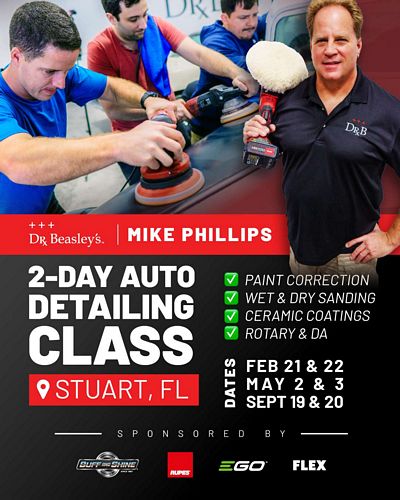
We have over 40 rotary polishers in our Stuart training center, all the 12 gauge power cords to power them up and the electrical supply to never throw a breaker even with 20 rotary pushing hard. We also have 40+ orbital polishers, all makes and models for you to use. This way, you can try before you buy any tool you're interested in or have seen on social media and then make up your own mind which tools are best for you and your style. And "NO" we don't sell tools, so there's never any pressure to use one type or ne brand over the other.
There's an old saying that goes like this,
Use the right tool for the job
Sometimes, in the car detailing world, the right tool for the job is the rotary polisher. When people take any class I'm teaching, when they leave and go back to their world, I want them to possess,
1: Know when to use a rotary polisher.
2: Know how to use a rotary polisher.
3: Feel comfortable using the rotary polisher.
4: Have confidence when using the rotary polisher.
1988 Makita Model 9207 SPC Variable Speed Rotary Polisher
This is my first rotary polisher that I purchased in 1988. This was the
first VARIABLE speed rotary polisher so in its day, it was
King of Rotary Polishers. I cannot count how many cars I've buffed out with this rotary, but I used it until the gears in the head of the polisher were completely wore out. I keep it around and show everyone that takes a class I'm teaching and say,
If you're going to learn how to use a rotary polisher, it's a good idea to learn from someone that's actually used one - a lot.
I can't make you an expert in a single day
But I will give you a SOLID FOUNDATION that you can build on moving forward after the class.
A MUST HAVE skill if you're going to wetsand entire cars
I see all the detailing personalities sharing their opinions on removing sanding scratches using some kind of ORBITAL polishers.
Question: Can you use an orbital polisher to remove sanding marks after wetsanding an entire car.
Answer: Yes - but it's going to take you a much longer time to get the job done as compared to using a rotary polisher.
So use whatever tool you like and follow your choice of detailing personality, but here in the real-world, If you're going to sand down an entire car, you need to be proficient with a rotary polisher with a LARGE WOOL PAD to make quick work of removing 100% of the sanding marks out of the paint. And that is my criteria for myself and my classes - 100% sanding mark removal.
One reason we start the first day, first thing in the morning and the first car using the rotary polisher is because, the next day, in our Stuart classes, we sand down entire cars to remove orange peel and I need my class to,
1: Know when to use a rotary polisher.
2: Know how to use a rotary polisher.
3: Feel comfortable using the rotary polisher.
4: Have confidence when using the rotary polisher.
So I bring in cars in really bad shape and teach the class how to use one so when it comes the sanding car, they have a solid idea as to what to do. In other words, I can't have people LEARNING how to use a rotary polisher with a large wool pad to buff out the sanding marks on a custom paint job. I need them ready to go. So we start all our Stuart classes learning how to use a rotary polisher.
Rotary Polisher Techniques
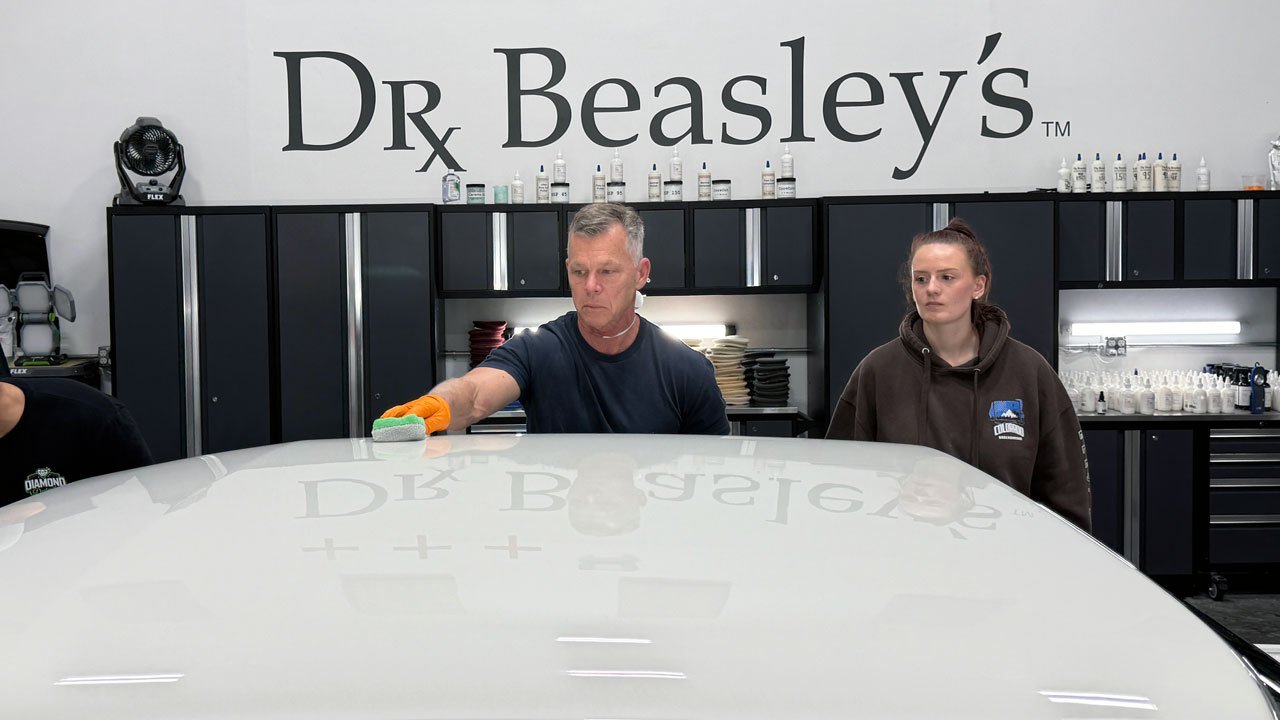
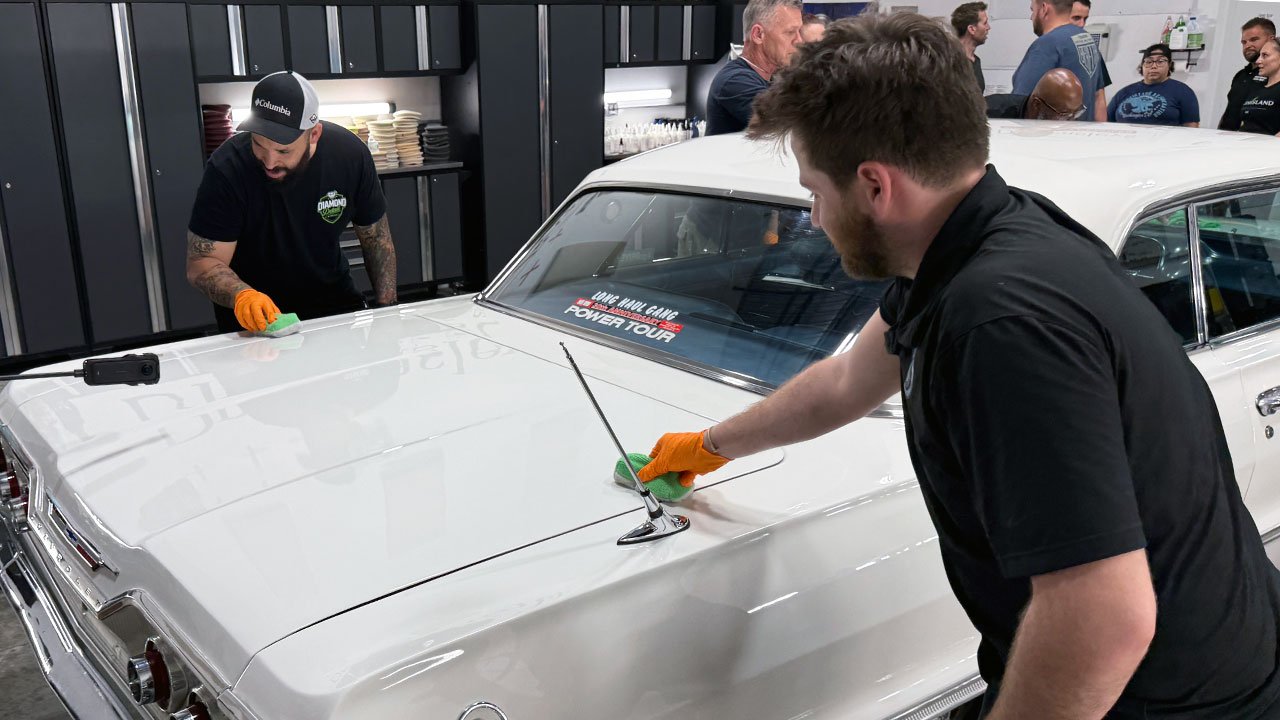
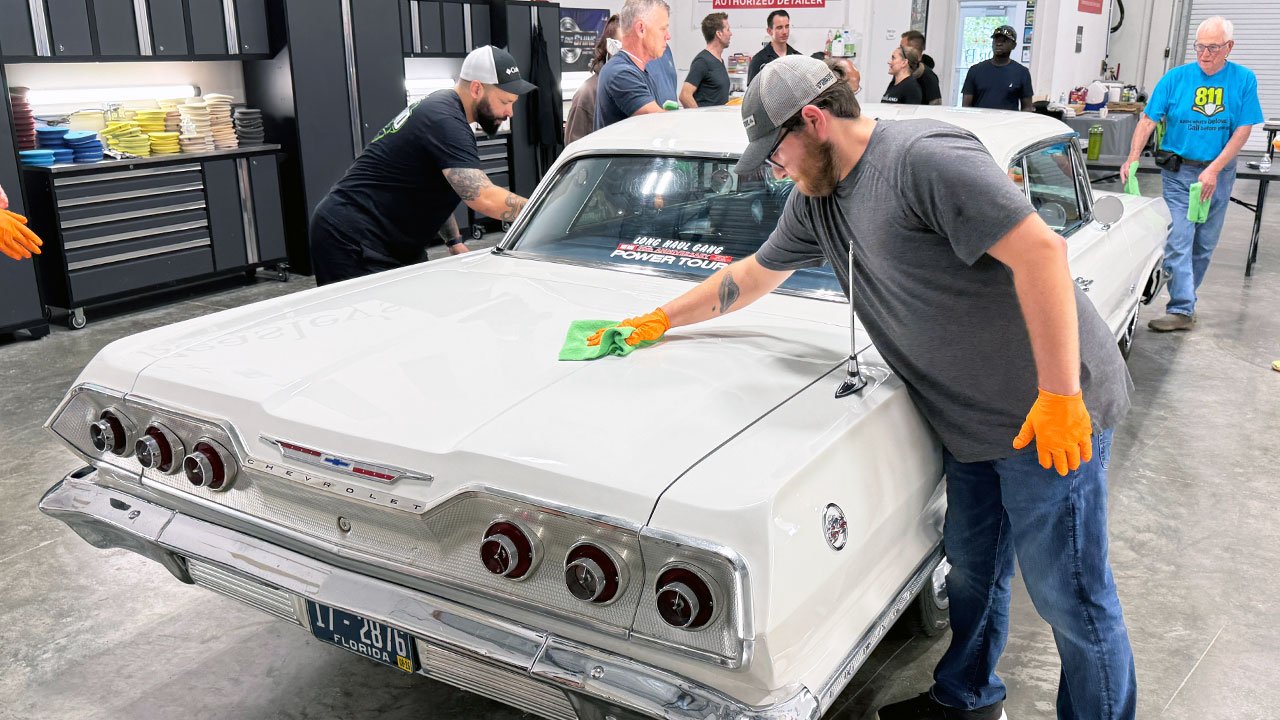
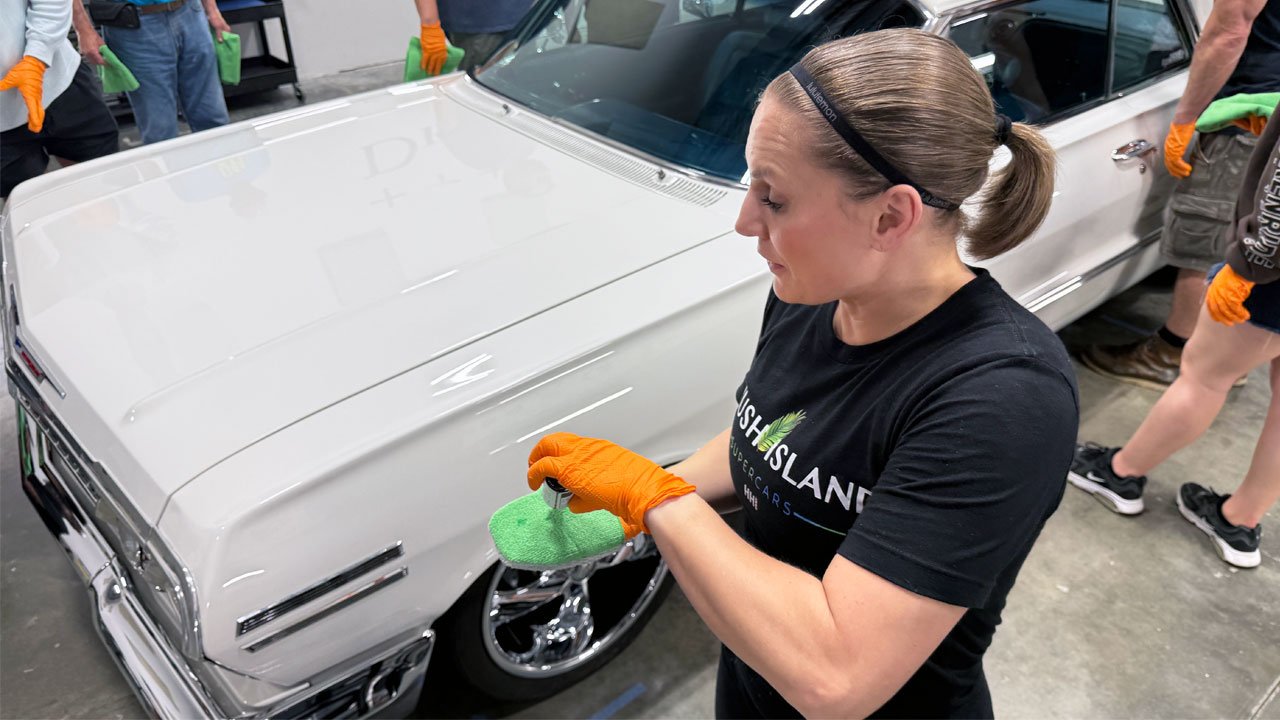
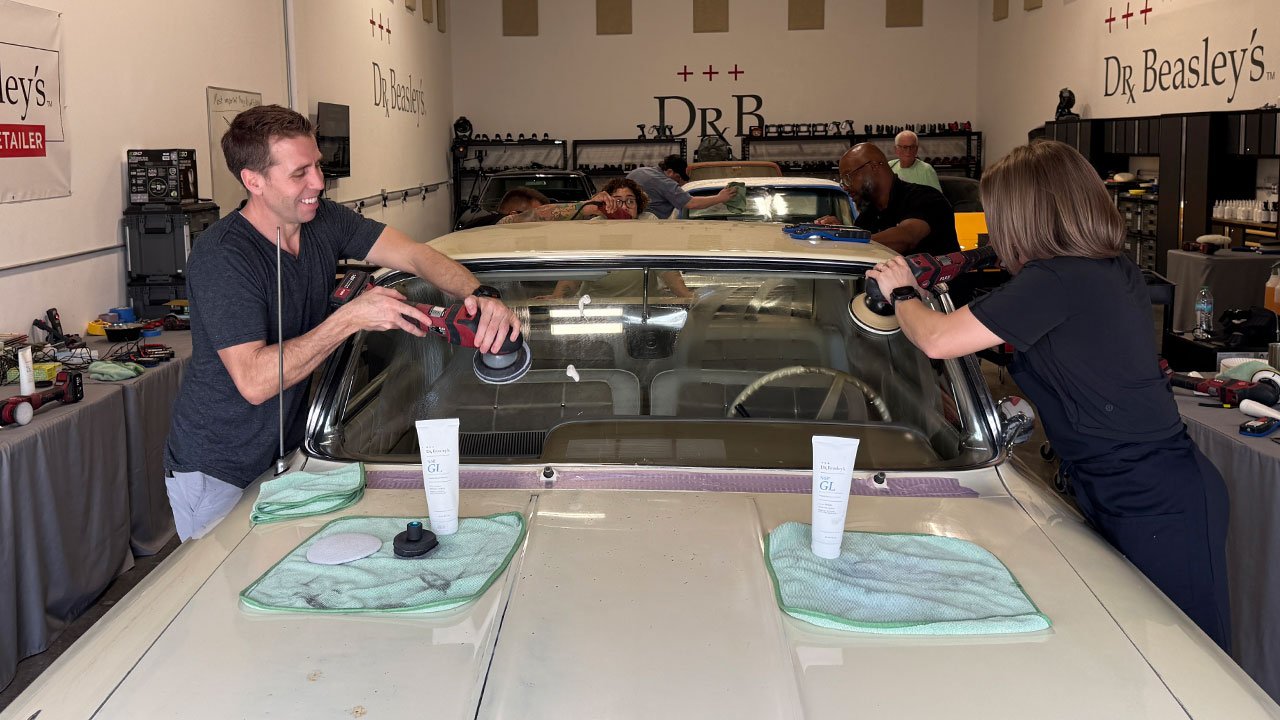
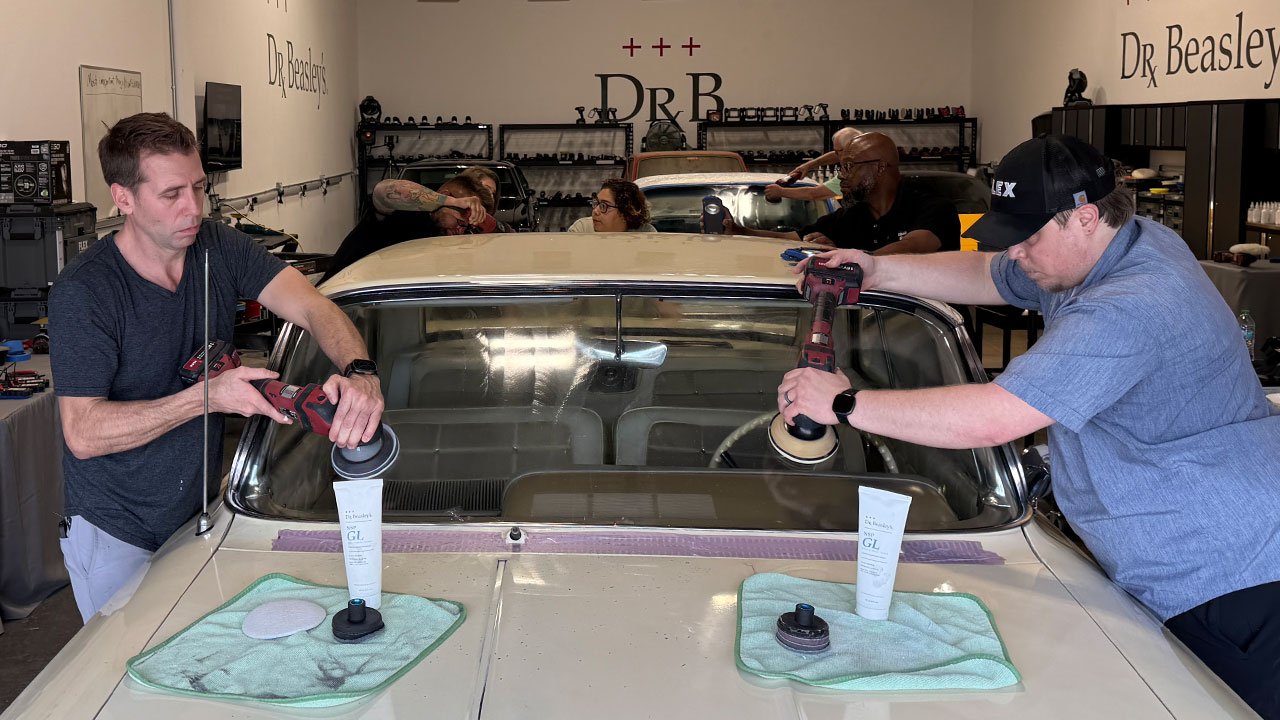
Keep in mind, many of the people in this specific class have never used a rotary polisher. Out of all the different types of polishers, in my opinion and experience, the rotary polisher is the most difficult tool to learn how to use and master. That's two things by the way, not just one thing.
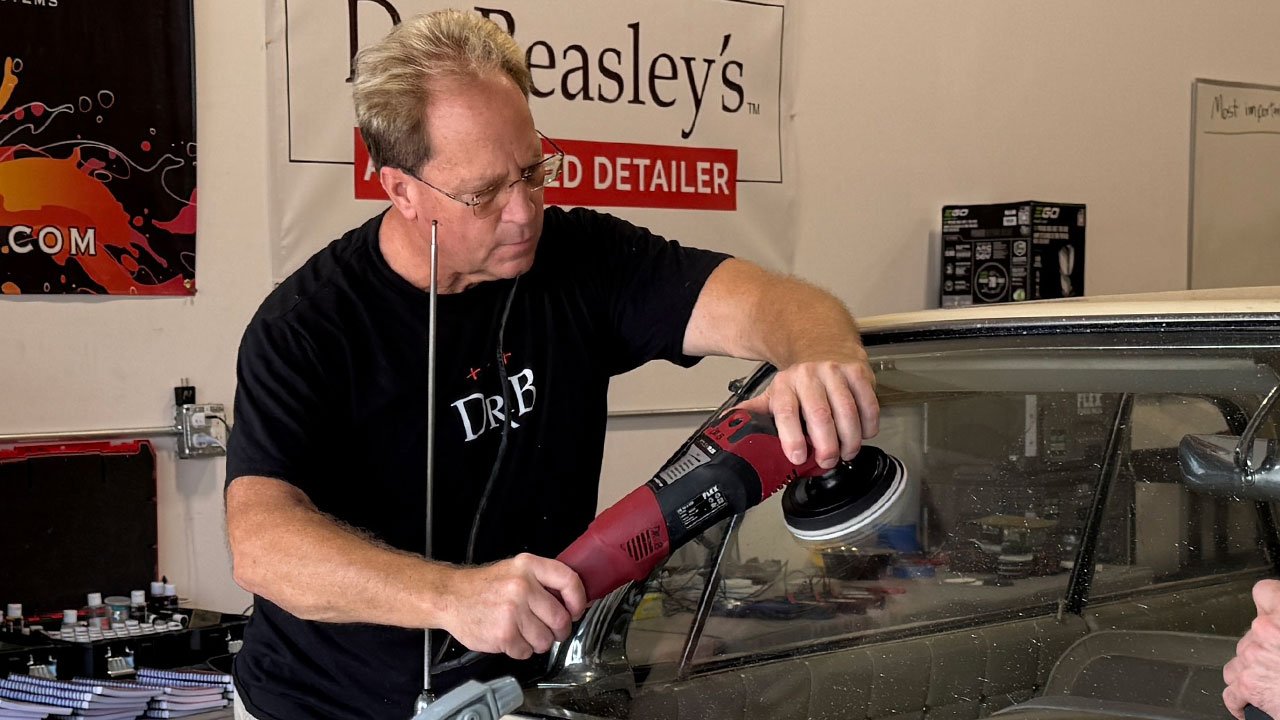
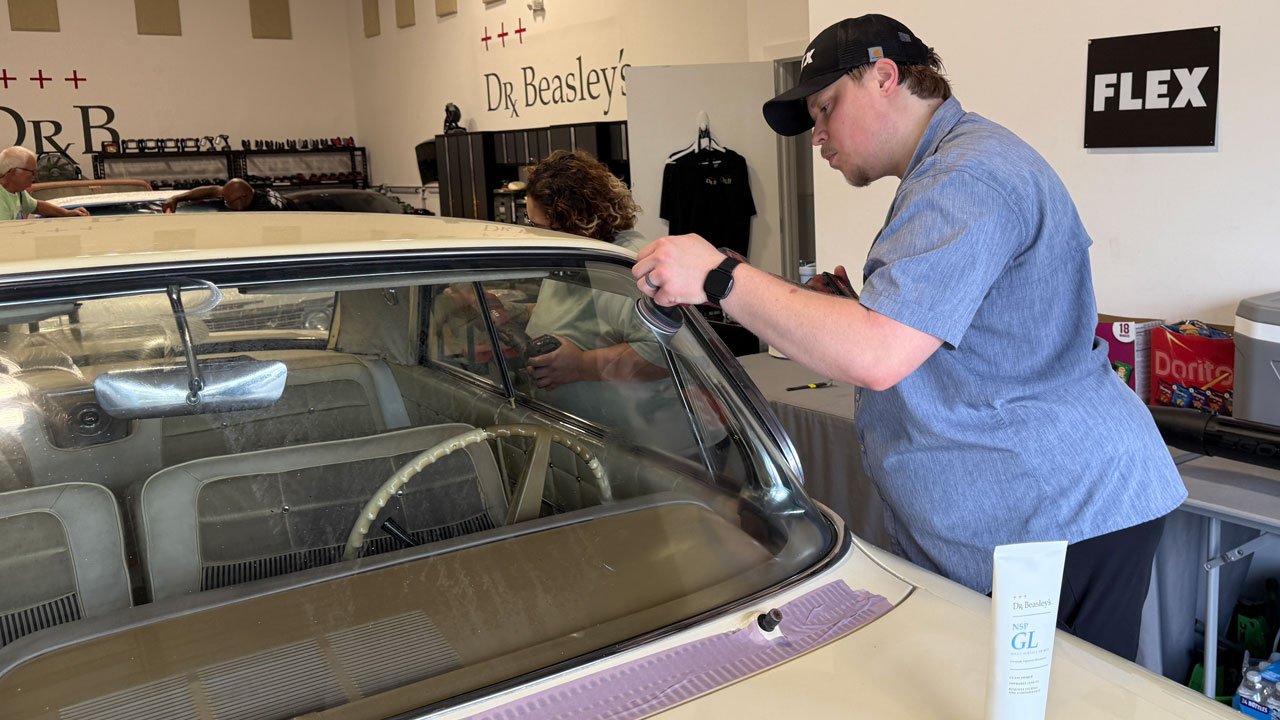
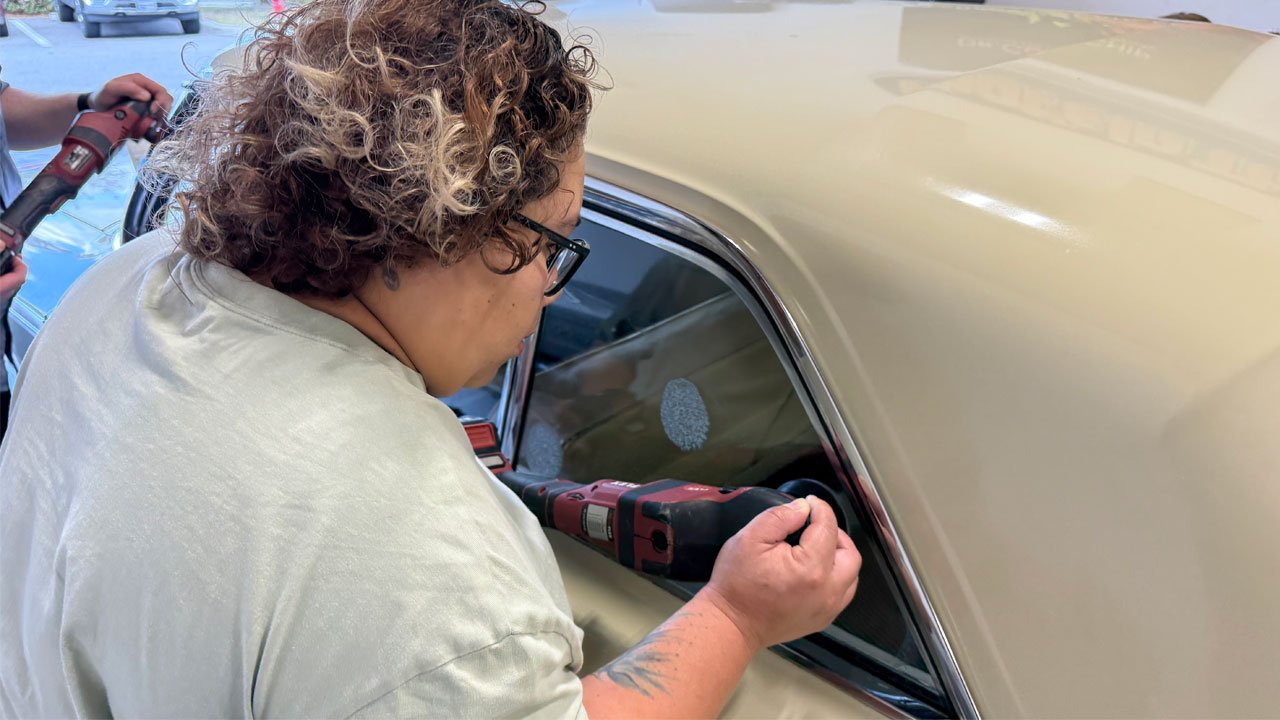
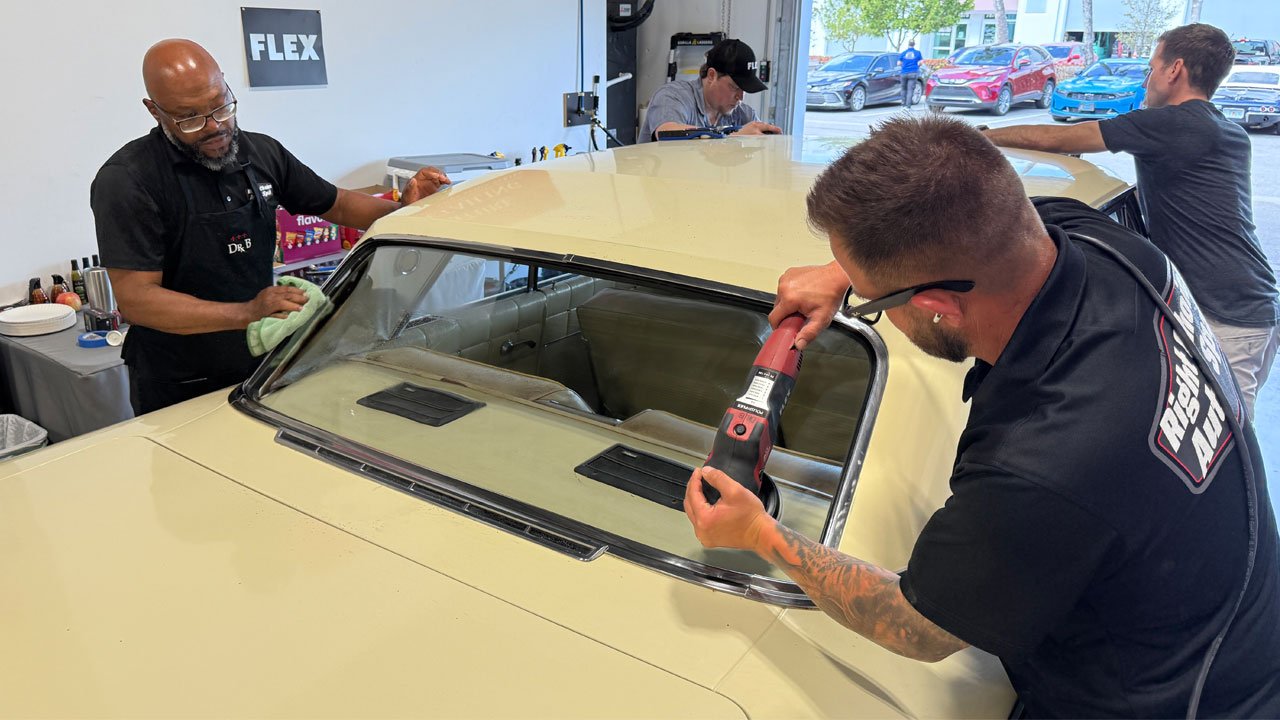
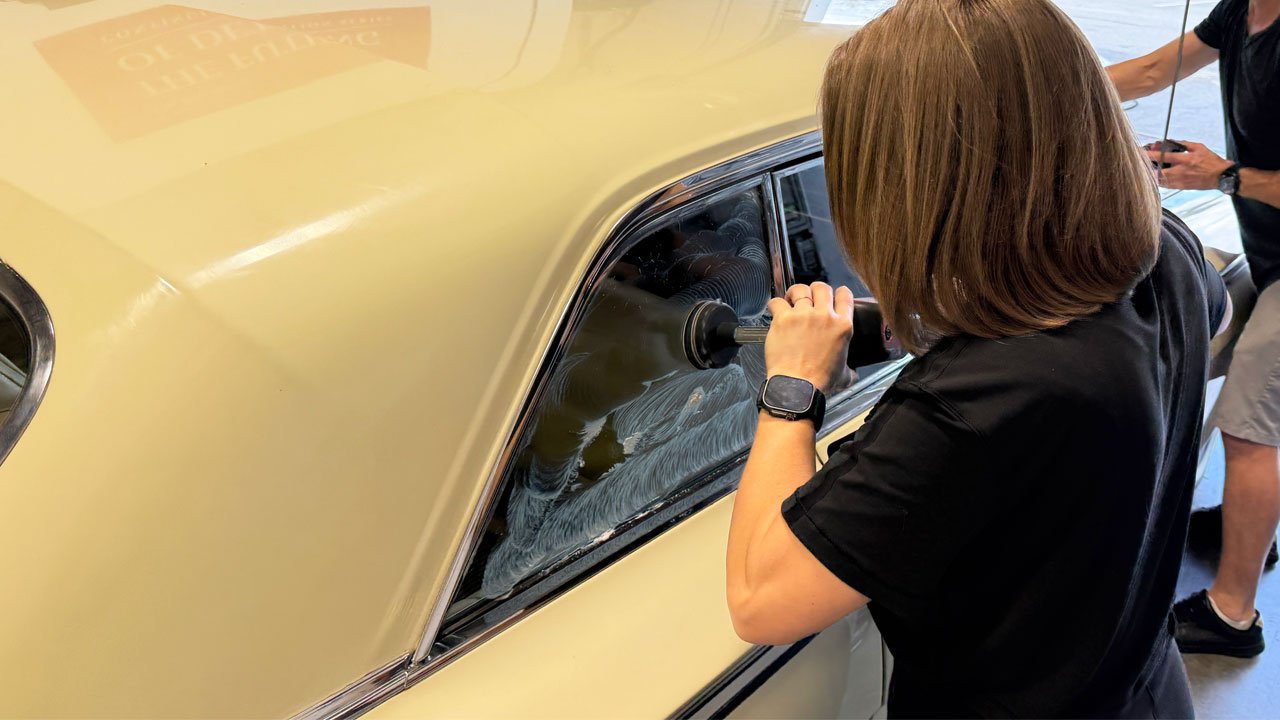
In the below pictures, I'm showing the class how to put a rotary polisher on edge to buff thin panels and intricate areas. NOT PICTURED are when I was showing a list of other techniques, including,
- How to center a pad on a backing plate - most important thing.
- How to use the 10@10 Technique to pick up a strip or bead of product, which is a great skill to have for horizontal panels
- How to apply product directly to the face of the pad to buff out vertical panels.
- How to buff with the pad flat to the surface.
- How to buff by tilting the polisher and going-up-on-edge
- How to buff off an edge
- How to use a spur to clean your pad as you work around a car.
- How to edge a panel with an 8" wool pad - of course, feel free to use tiny 1" pads on microtools. Me? I make the tool already in my hand do what I need it to do.
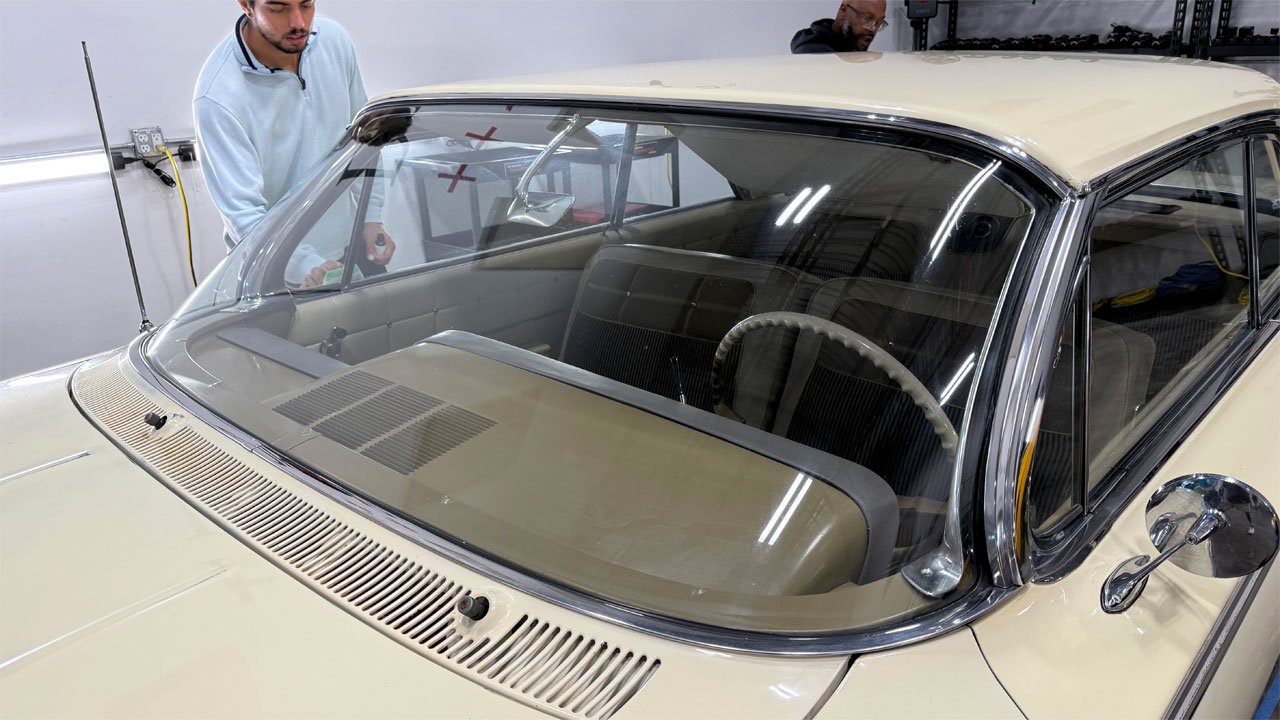
Let's get this Barn Find Party Started!
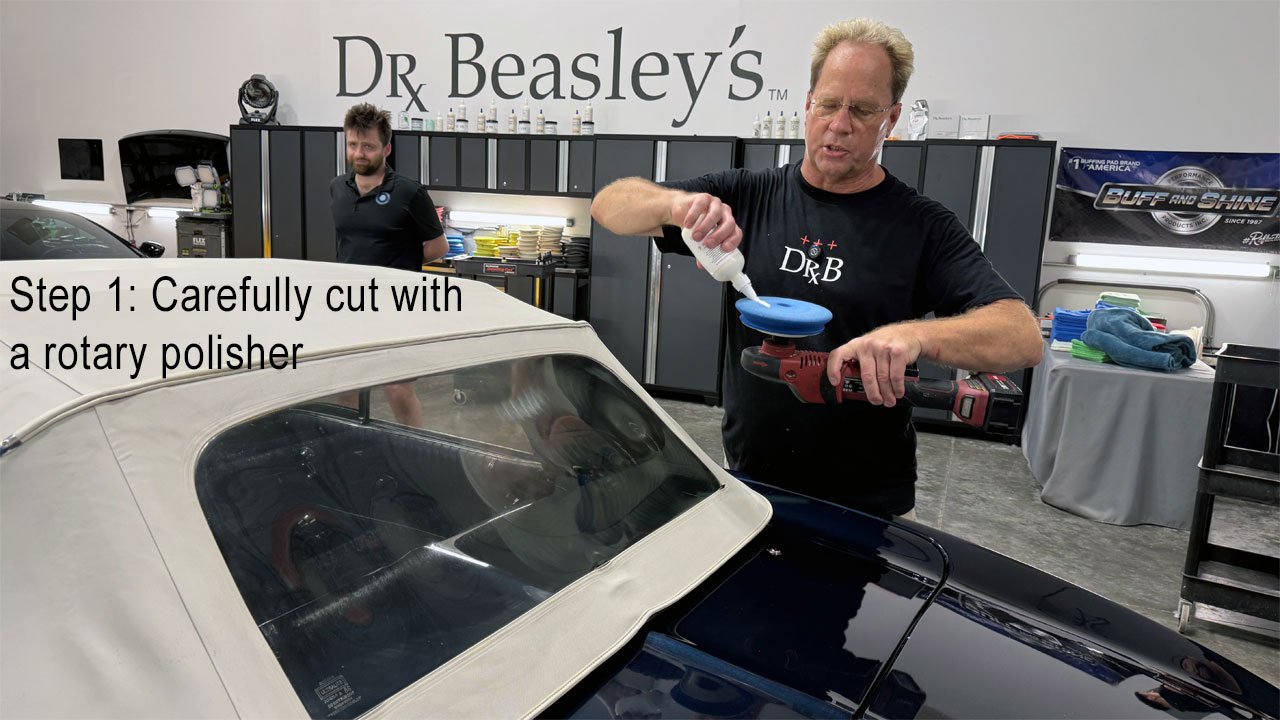
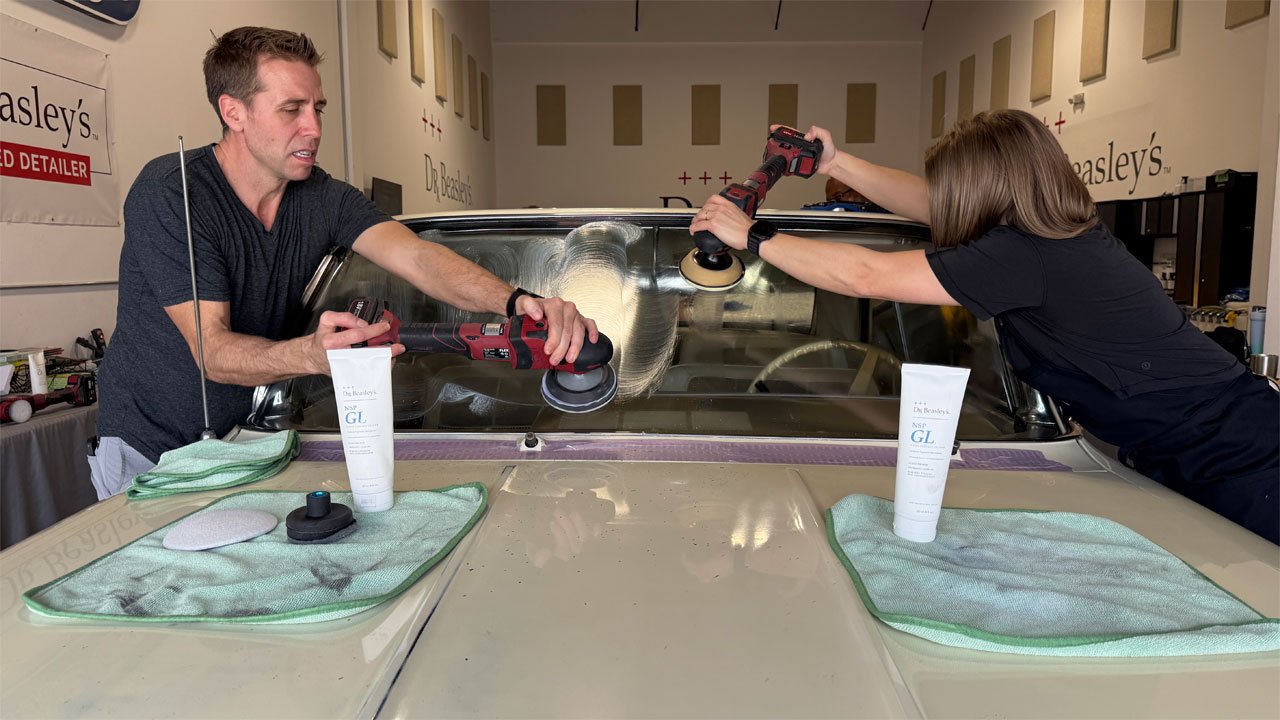
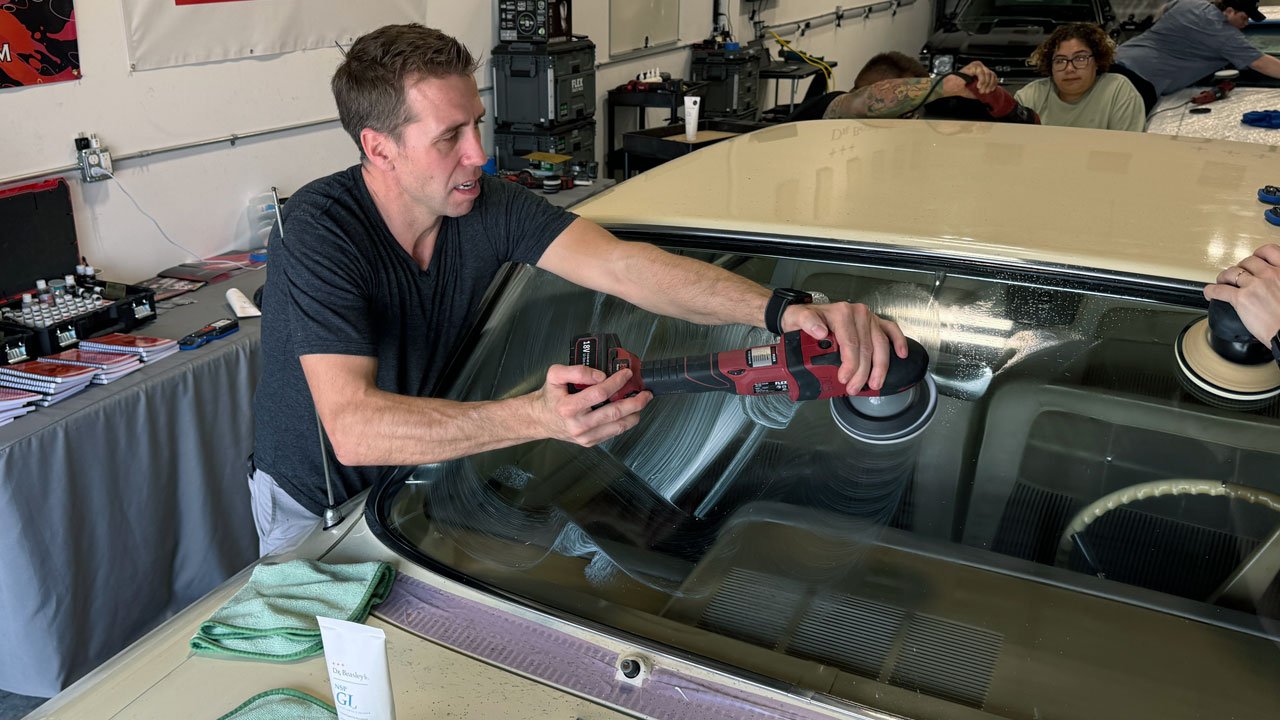
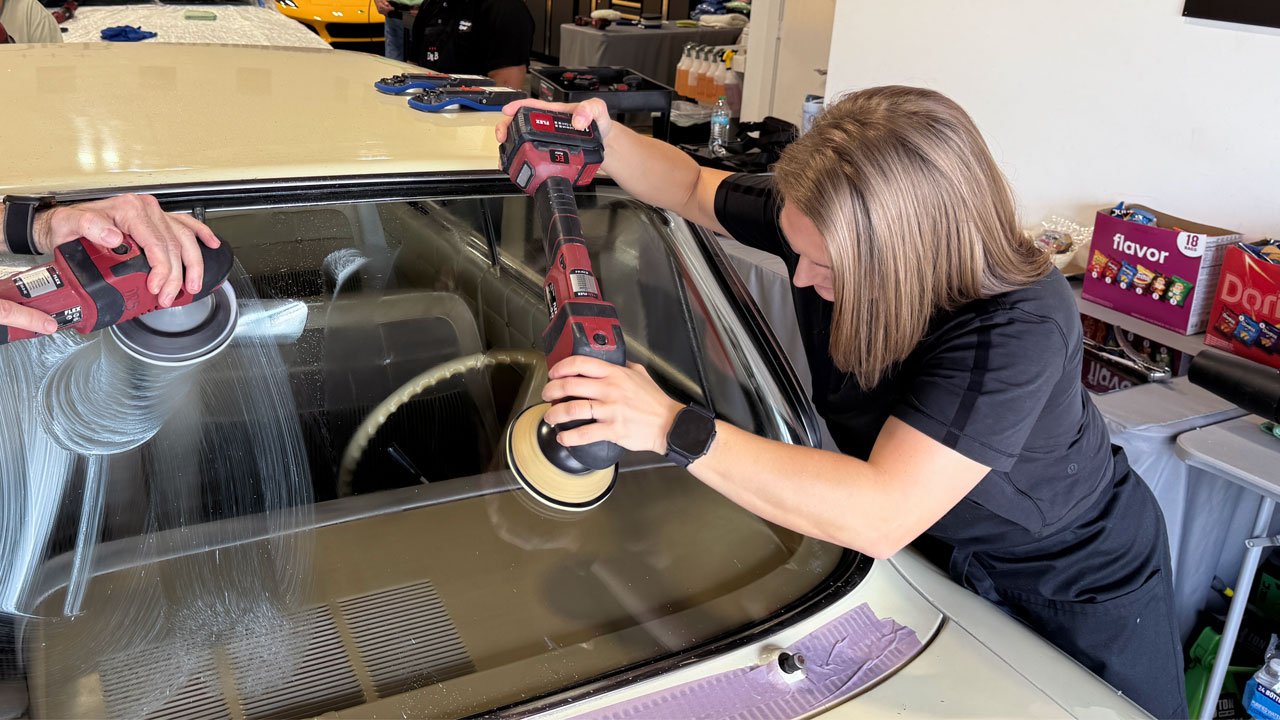
The first thing I like to teach is how to select the right speed setting and then use the speed setting lock button to lock the trigger in place. This enables you to place one hand on the head of the polisher and the other hand at the back of the polisher, which gives you the most leverage over the tool. Because I'm a huge fan of the cordless rotary polishers, I also show the class that besides providing you with the most leverage over the tool, by placing one of your hands at the back of the rotary polisher gripping the BATTERY - you then support the weight of the battery as you buff and this makes buffing a lot more comfortable on you plus the best control over the tool.
How To Buff Out Thin Panels
Buffing out the middle of the hood, a door or the roof is easy. Buffing out thin panels or intricate areas is a tick more tricky, so I simply share tips and techniques to make it both safe and easy on you.
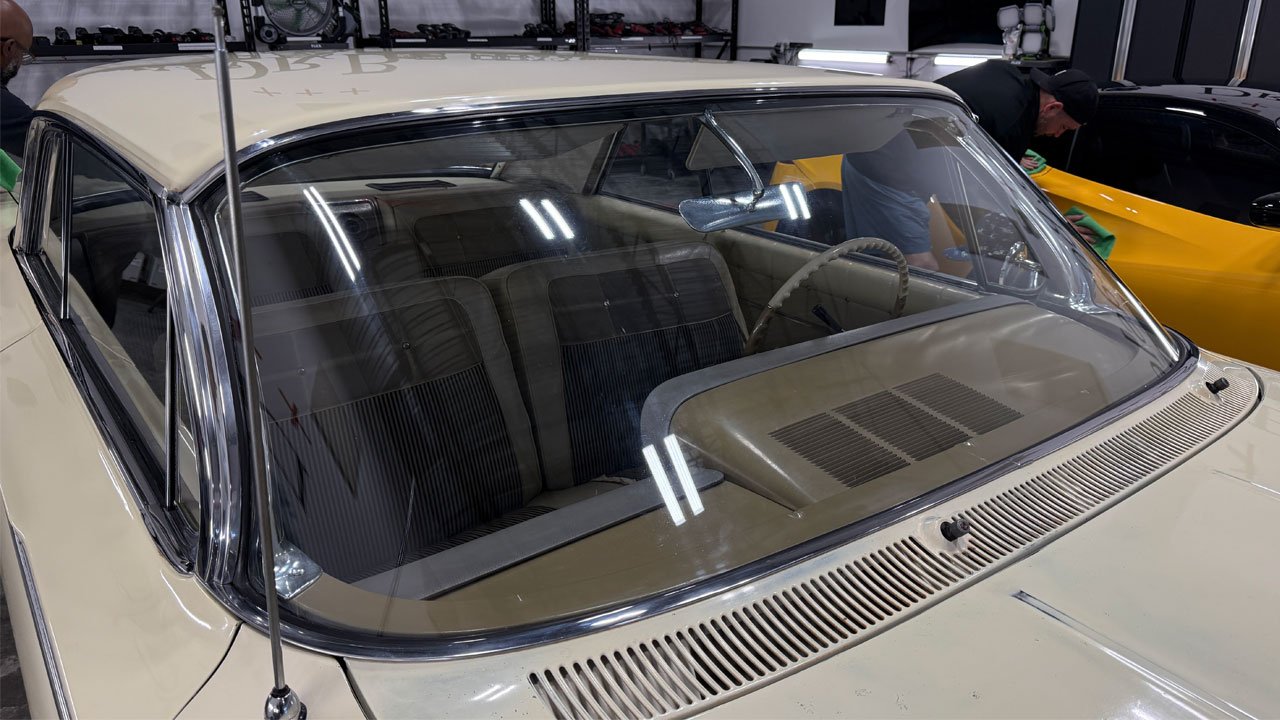
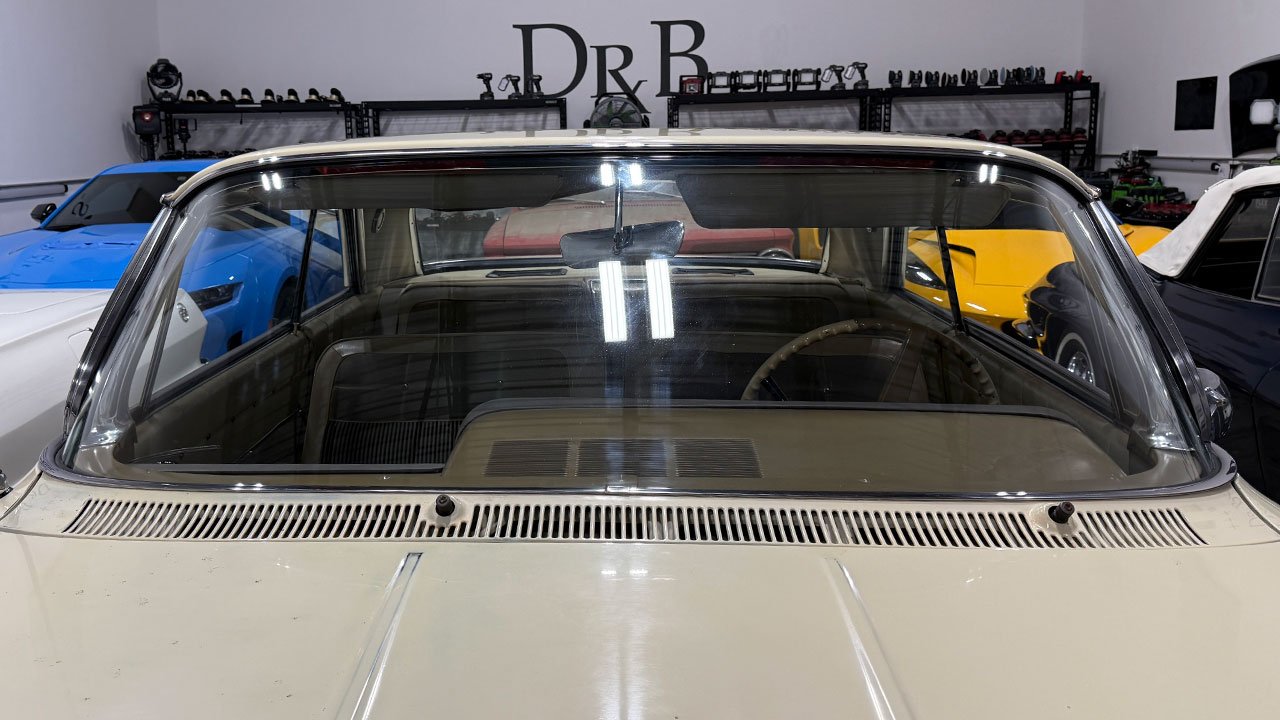
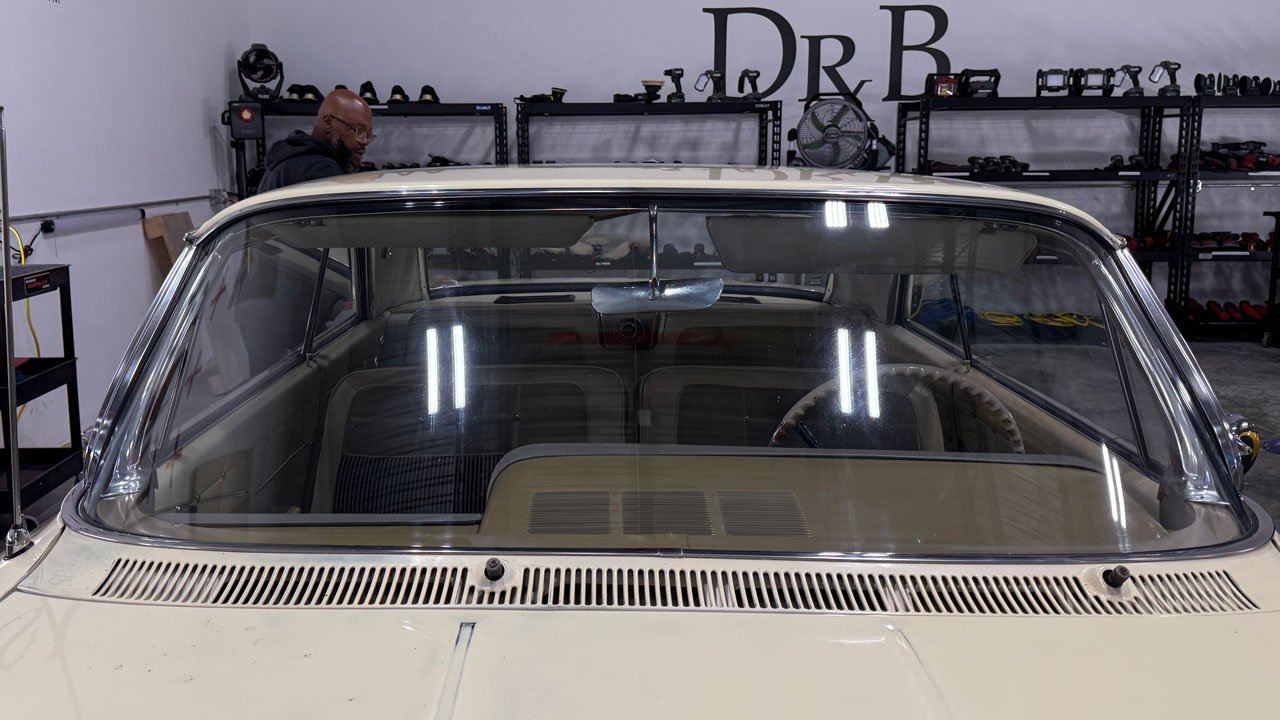
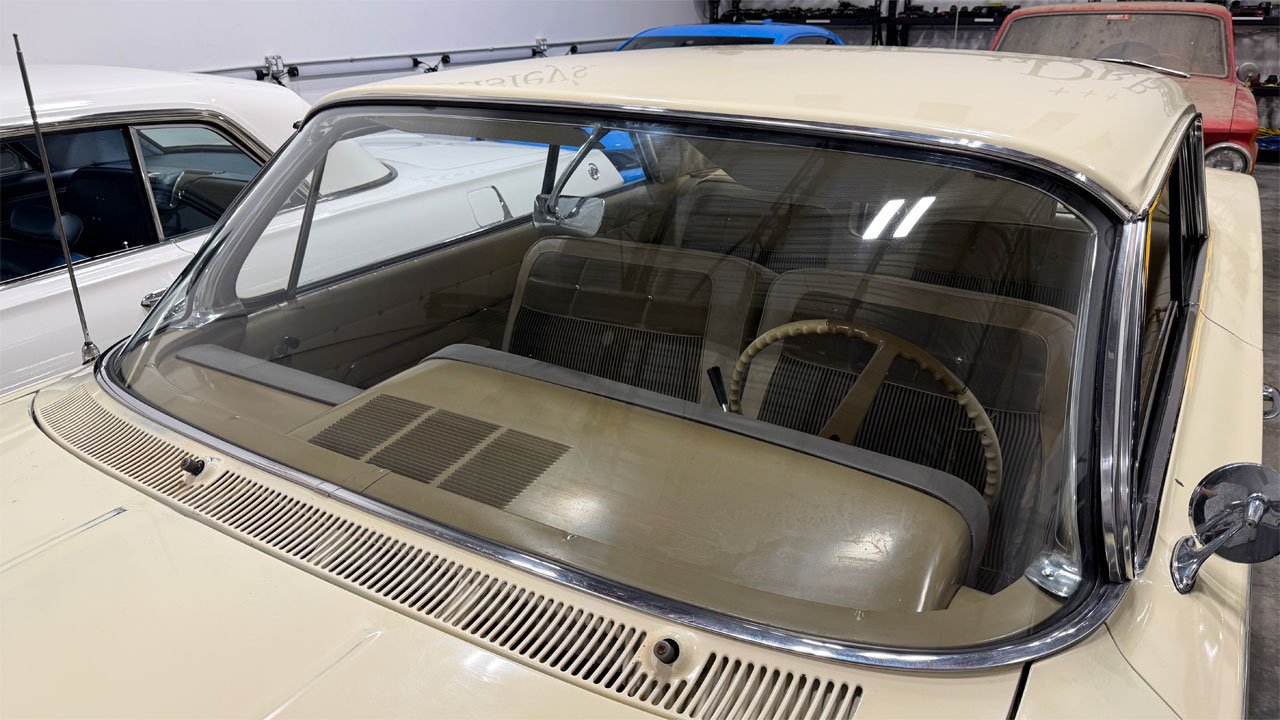
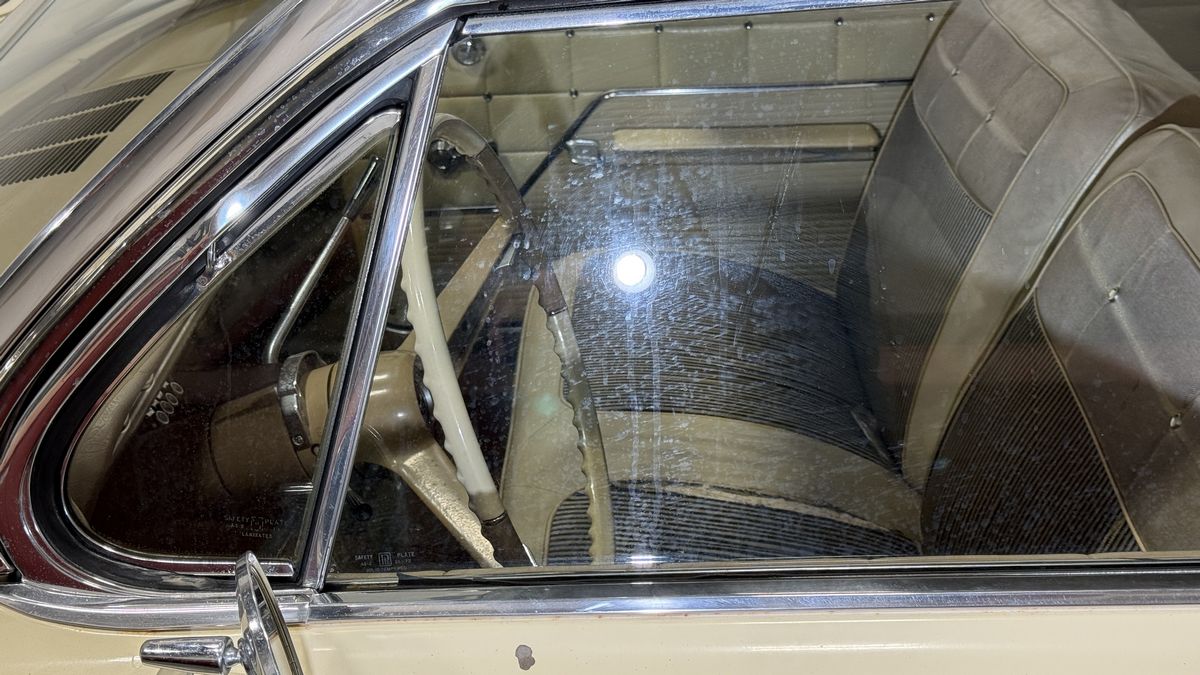
You see me looking at a student answering a question, but at the same time I'm removing years of oxidation on the intricate shaped body panel that surrounds the threaded spline, where the wiper arms attach. I also shared the Dorman Windshield Wiper Arm Removal Tool to safely remove wiper arms off classic cars. These classes are literal brain dumps with 40+ years f buffing-out just about everything under the sun.
Fresh Air Grills - Classic Cars
And of course, after tackling the areas furthest away from me, next I hit the paint next to the tape that's protecting the fresh air grill. Later, I show how to buff out the fresh air grill so the paint on the ribs of the fresh air grill will be just as shiny as the rest of the paint.
Everything gets buffed on a Barn Find!
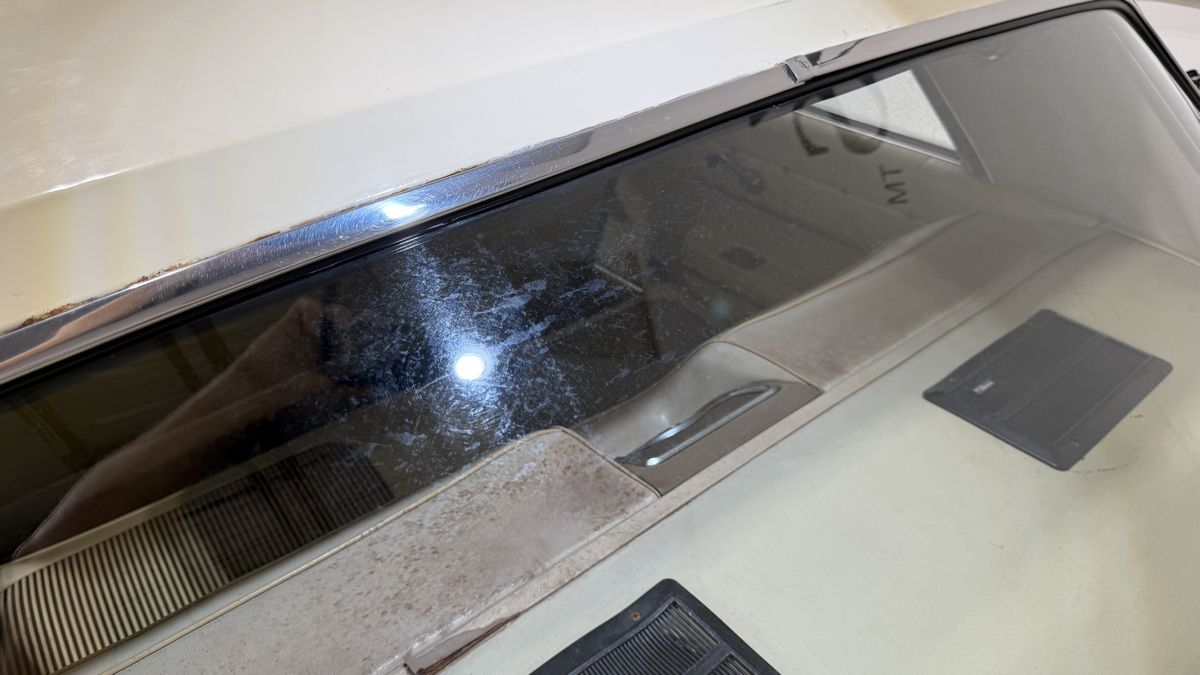
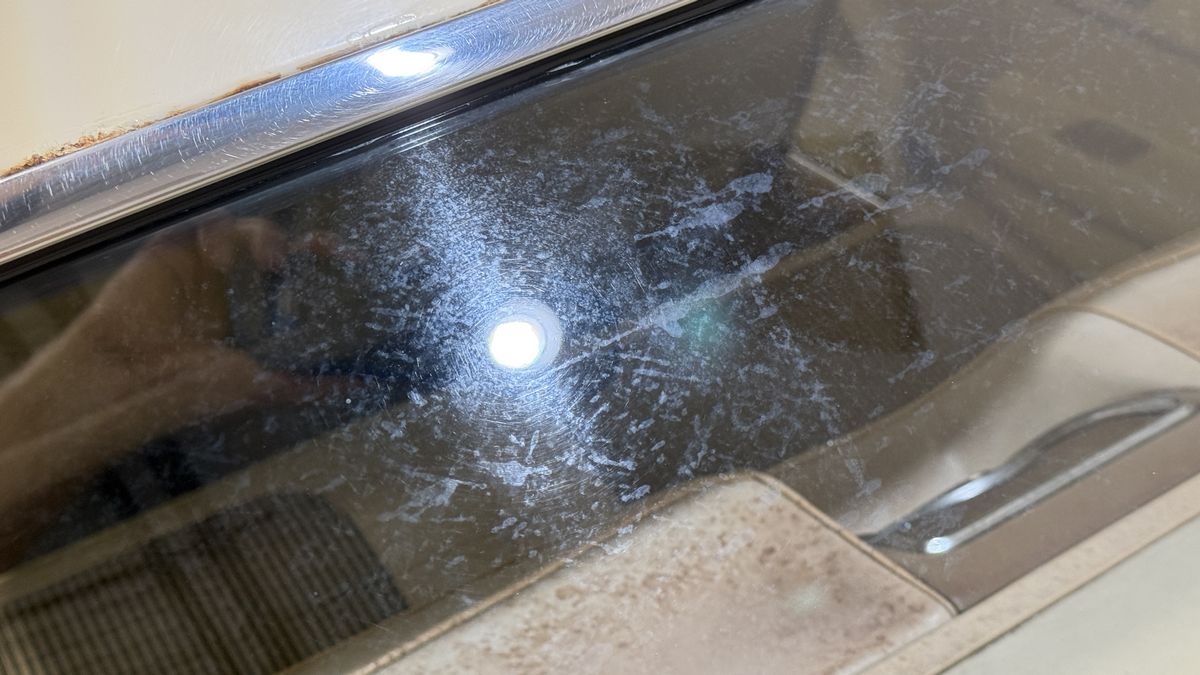
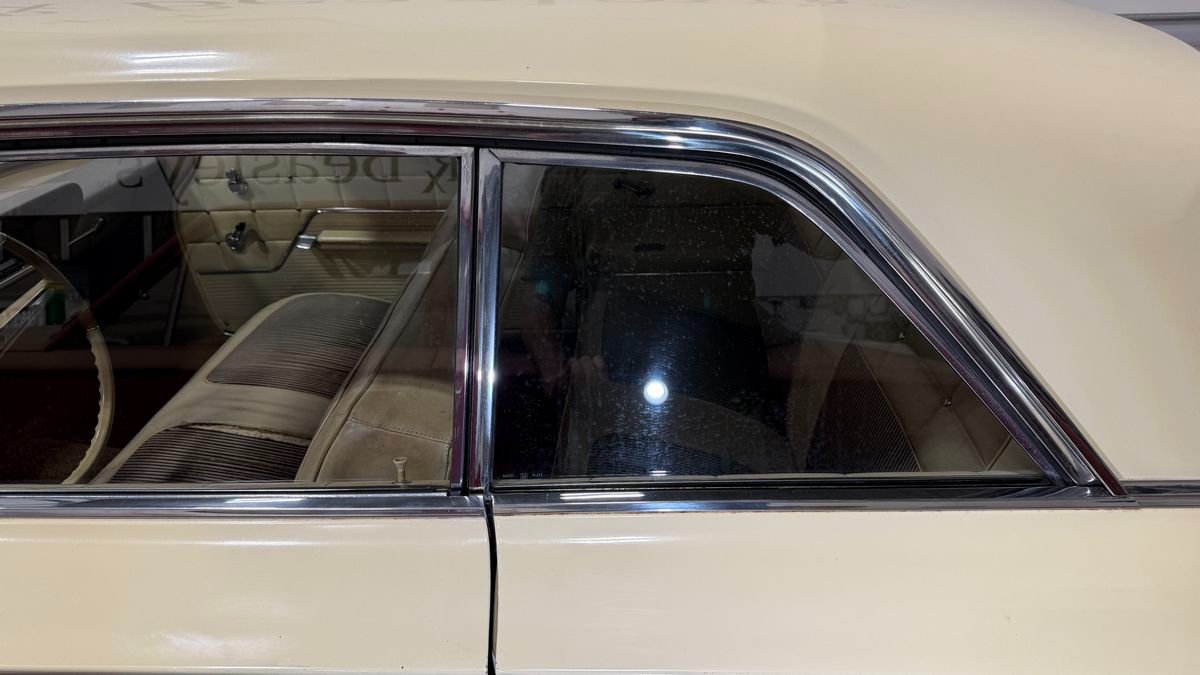
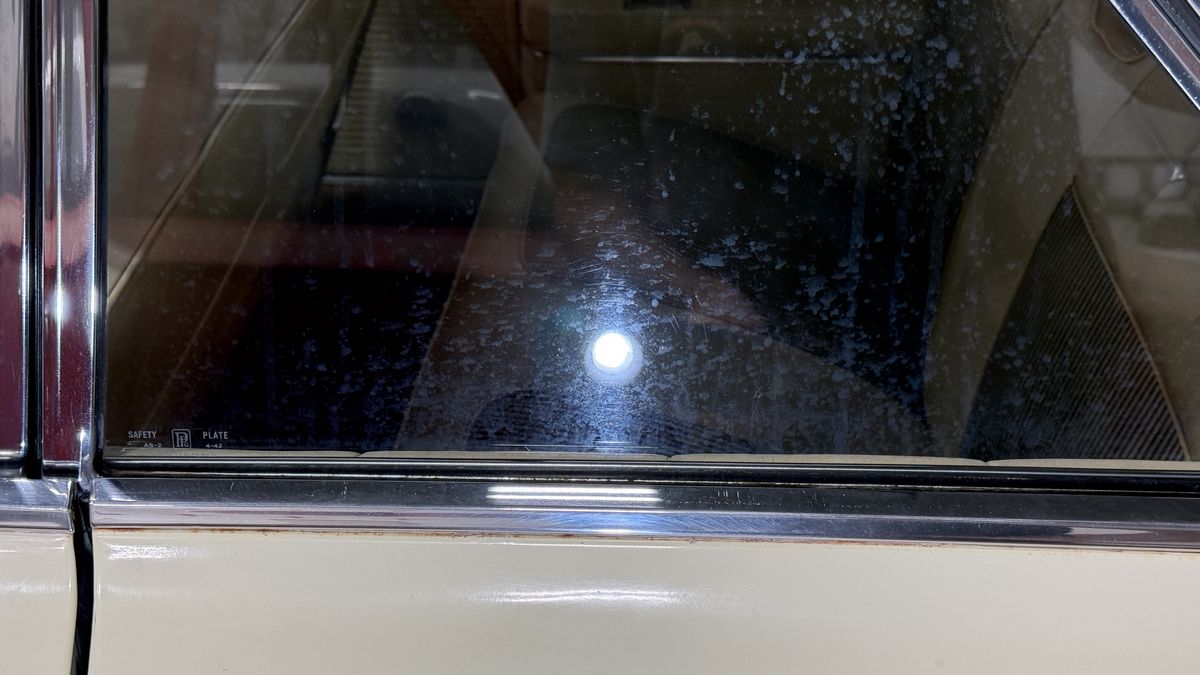
Sure the owner plans to replace the grill, but I shared how to buff out the oxidized aluminum grill, all the brightwork, like door handles and the chrome buffers. When it comes to a Barn Find, it's not like you can hurt anything, the car is already hurting.
Here's another one of my quotes,
If you spend enough time behind any tool you can make it dance on paint
This simply means what I said early, I can't make a newbie to the rotary polisher an expert in a one or even two day class. But I can provide a strong foundation for them to build on. Then if a person is so inclined, if they're willing to put the time in behind the polisher, well that's how you get good.
Mike